Let’s get one thing straight right away: a ceramic coating offers serious scratch resistance, but it is not scratch-proof. I like to tell my clients to think of it like a top-tier screen protector on a new smartphone. It’s designed to take the hit from daily wear and tear—minor scuffs and swirl marks—so the delicate surface underneath stays perfect.
A ceramic coating is a hardened, sacrificial layer for your paint. But just like that screen protector won't save your phone from a big drop, a coating won't stop a deep key scratch or a parking lot fender bender.
The Honest Answer to Ceramic Coating and Scratches
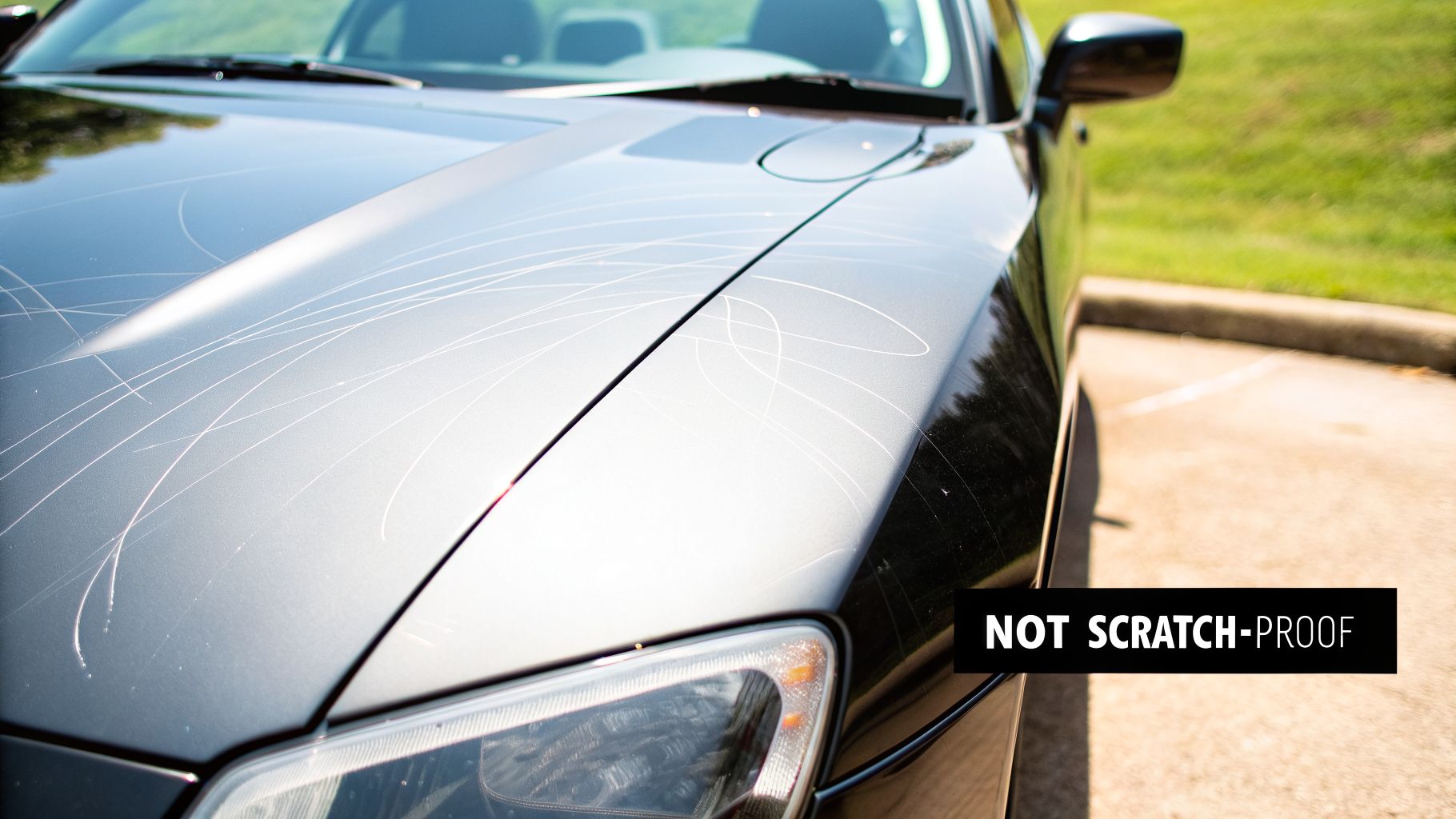
So many car owners ask me, "Does ceramic coating actually prevent scratches?" The honest answer isn't a simple "yes" or "no." There's a persistent myth that these coatings make a car invincible, and it's time to set the record straight. A professionally applied ceramic coating is incredibly tough, but it has its limits.
The real value comes from understanding what kind of damage it’s built to defend against. A good coating excels at stopping the most common and annoying imperfections that build up over time.
What a Ceramic Coating Can Prevent
Think of a ceramic coating as your front-line defense against the small, everyday hazards that dull your car's finish. Its greatest strength is preventing those fine, shallow scratches that look like a spiderweb in the sunlight. Most of the time, these are caused by things you wouldn't even think about:
- Improper Washing: Using dirty wash mitts, old towels, or those abrasive brushes at an automatic car wash.
- Light Contact: A jacket zipper brushing against the door or a grocery bag rubbing on the bumper.
- Environmental Debris: Wiping away dust or grit from a dry surface, which grinds the particles into the paint.
By creating a super-slick, hard barrier, the coating takes the brunt of this damage instead of your car's clear coat. This is the secret to keeping your paint looking glossy and new for years, not weeks.
The Limits of Scratch Protection
It’s just as important to have realistic expectations. A ceramic coating is a thin layer of glass, not a suit of armor. It will not stop damage from a harder, more direct impact. While detailing industry studies show coatings can cut down swirl marks by up to 50% compared to wax, they aren't a magical force field. If you want to dive deeper, detailing experts have extensively covered these protective limitations.
This means a coating won't save your paint from:
- Rock Chips: Small rocks and gravel hitting your car on the highway.
- Deep Scratches: Vandalism from a key or accidentally scraping against a brick wall.
- Impacts: The dents, dings, and paint transfer from parking lot mishaps or minor accidents.
To help clear things up, here’s a simple breakdown of what to expect.
Ceramic Coating Scratch Protection Breakdown
| Scratch Type | Can a Ceramic Coating Prevent It? |
|---|---|
| Fine Swirl Marks | Yes. This is a primary benefit. The hardened layer resists the micro-scratches from washing and daily contact. |
| Light Marring | Yes. The coating's slickness helps prevent light abrasions from dust, clothing, and improper drying. |
| Chemical Etching | Yes. It provides a strong barrier against bird droppings, bug guts, and acid rain, which can etch the clear coat. |
| Rock Chips | No. The force of a rock at speed is too great. This is a job for Paint Protection Film (PPF). |
| Deep Gouges (Keying) | No. A sharp metal object will cut right through the coating and into the paint and primer. |
| Parking Lot Bumps | No. It offers no protection against dents, dings, or paint transfer from another vehicle's impact. |
Ultimately, a ceramic coating is an investment in preserving your vehicle’s factory finish from the slow, steady abuse of daily life. It's about long-term gloss and ease of maintenance, not invincibility.
How a Ceramic Coating Creates a Protective Shield
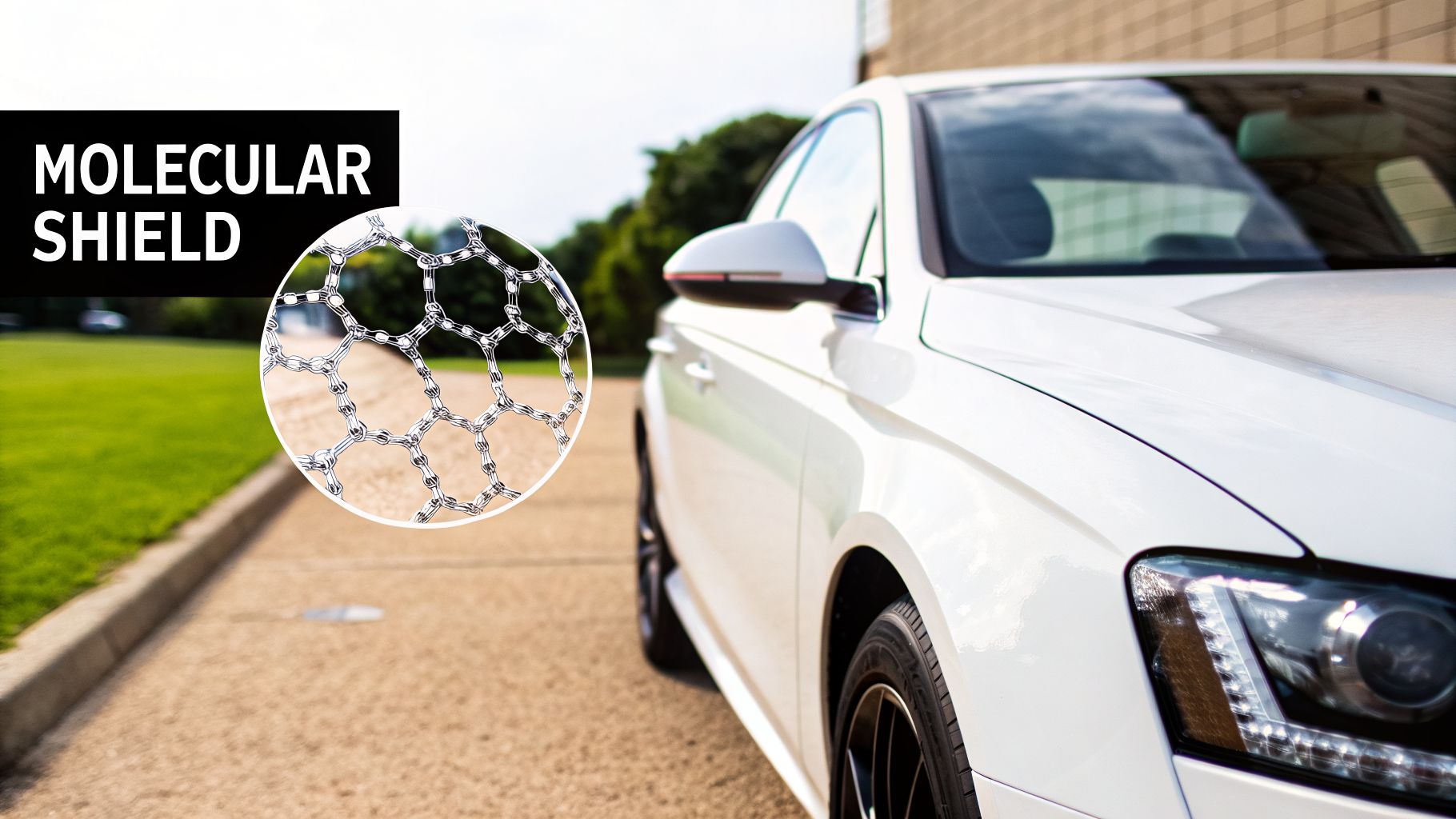
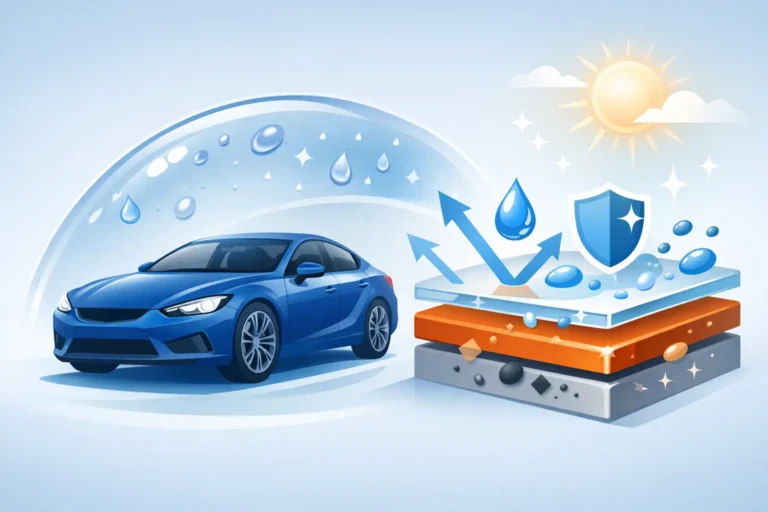
So, how does a simple clear liquid manage to form a shield that’s tougher than your car's own factory paint? It’s not magic; it’s nanotechnology. When we apply a professional ceramic coating, it doesn't just sit on the paint like wax. It actually becomes a functional part of the surface itself.
Think of your vehicle’s clear coat like a sponge. To the naked eye, it looks smooth, but under a microscope, it's full of tiny pores and imperfections. A ceramic coating is a liquid polymer loaded with microscopic nanoparticles, most often Silicon Dioxide (SiO₂).
As the liquid carrier evaporates, these powerful nanoparticles settle into the pores of the paint, locking together and bonding to the surface. This chemical reaction, known as cross-linking, creates a super dense, slick layer that's chemically fused to your car. It’s a bit like pouring liquid glass over the paint, which then cures into a hard, semi-permanent shell.
The Science of Surface Hardness
This newly formed layer is where the real scratch resistance comes from. The chemical bond creates a surface that measures a 9H on the Mohs scale of mineral hardness. To put that in perspective, your factory clear coat is usually only between a 2H and 4H. That jump in hardness is exactly why a coated car can shrug off the light swirl marks and marring that plague unprotected paint.
This formulation relies on key nanoparticles to build a powerful barrier. Ingredients like silicon dioxide (SiO₂) and titanium dioxide (TiO₂) chemically bond with your paint to create a glass-like shield with some serious benefits. This includes blocking over 80% of the damaging UV rays that cause paint to fade, creating incredible water-beading effects, and resisting damage from bird droppings or tree sap. More importantly, this added hardness means that if a light scratch happens, it damages the coating, not your paint. Often, it can be polished away, leaving your factory finish untouched. You can learn more about the science of this protective layer and see the documented results for yourself.
More Than Just Scratch Resistance
While scratch resistance gets all the attention, this molecular shield does so much more. The perfectly smooth, non-porous surface created by the coating is also intensely hydrophobic, which is a fancy way of saying it repels water like crazy.
Instead of water sitting flat on your paint, it forms into tight, round beads that simply roll off the surface. As they go, they take dirt and dust with them. This "self-cleaning" effect is why coated cars stay cleaner for much longer and are an absolute breeze to wash.
This slick, bonded shield is also way more durable than any traditional wax or sealant when it comes to fighting off:
- Chemical Stains: From things like acid rain, bug guts, and bird droppings.
- Oxidation: Caused by the sun’s UV rays that make paint look dull and faded over time.
- Grime Buildup: The slickness makes it incredibly difficult for dirt to stick in the first place.
At the end of the day, a ceramic coating acts as a sacrificial barrier. It takes all the hits from the environment so your car’s fragile clear coat doesn’t have to.
Understanding Different Types of Paint Scratches
So, you’re wondering if a ceramic coating will make your car scratch-proof. It’s a great question, but the honest answer is a bit more nuanced than a simple yes or no. To really get it, you have to know that not all scratches are created equal.
Think of your vehicle's paint like layers, with the clear coat sitting on the very top. How bad a scratch is depends entirely on how deep it goes. Let's walk through the common types of damage your car’s finish faces every day.
Swirl Marks and Micro-Scratches
These are, without a doubt, the most common and infuriating marks you’ll find on your paint. They’re super shallow imperfections that live only in the clear coat, and they usually show up as a nasty spiderweb pattern when the sun hits your car just right.
- Common Causes: The number one culprit is improper washing and drying. Those tunnel car washes with the big spinning brushes, using a dirty wash mitt, or even just drying your car with a bath towel can drag tiny bits of grit across the paint, leaving thousands of these micro-scratches behind.
- Ceramic Coating's Role: This is where a ceramic coating truly shines. The slick, hardened surface is far more resistant to these fine scratches than your car's factory clear coat. It acts as a sacrificial barrier, taking the abuse so your paint underneath stays flawless.
Light Surface Scratches
These are a step up from swirls. You can often feel them with your fingernail, but they haven't cut all the way through the clear coat. They tend to be isolated marks rather than a widespread web.
Imagine squeezing into a tight parking spot for a Huskers game and your jacket zipper grazes the door. Or maybe you brushed up against a low-hanging branch on a quiet Lincoln street. Those minor, everyday moments can easily leave a light scratch.
A ceramic coating provides some serious defense against these light scratches. While it’s not an invincible shield, the coating's 9H hardness often means the scratch is just on the coating itself. In many cases, it can be polished away without ever touching your vehicle's actual paint.
Deep Scratches and Gouges
Now we're talking about the worst-case scenario. This is severe damage where the scratch has blasted right through the clear coat, into the color, and maybe even down to the bare metal primer.
- Rock Chips: Anyone who drives on I-80 knows this pain. Small stones and gravel get kicked up and hit your paint with incredible force.
- Vandalism: A deliberate key scratch is a perfect, and painful, example of a deep gouge.
- Accidents: Scraping your car against a concrete pillar in a parking garage or another vehicle will cause this level of deep damage.
In these situations, a ceramic coating offers no real protection. The force of the impact is simply too much for the ultra-thin coating layer. It will slice right through it and into your paint. Stopping this kind of heavy hit is a job for a much thicker material, like Paint Protection Film (PPF). Understanding this key difference is crucial for setting realistic expectations for what a ceramic coating can—and can't—do for your car.
Ceramic Coating Compared to Other Paint Protection
When you start looking into how to protect your car's paint, the sheer number of options can feel a little overwhelming. You've got ceramic coatings, of course, but there are also traditional waxes, synthetic sealants, and the heavy-hitter: Paint Protection Film (PPF). So, which one is actually best at preventing scratches? The honest answer is that it really depends on what you're looking for, your budget, and how you use your car every day.
Let’s break it down. A traditional car wax is like a basic raincoat. It provides some temporary protection from water and grime and looks great for a little while, but it offers almost zero defense against any real physical scuffs or scratches. It just sits on the paint's surface and wears off in a few weeks, or a couple of months if you're lucky.
Synthetic sealants are a definite step up from wax—think of them as a more modern, durable rain jacket. These are polymer-based products that bond to your paint much better than a natural wax. This gives you longer-lasting protection, usually around 4-6 months, and they hold up better against chemicals and heat. Still, when it comes to scratch resistance, they don't offer much.
Ceramic Coatings vs Paint Protection Film
This is where the conversation gets serious for anyone truly committed to protecting their vehicle. If wax is a raincoat, a ceramic coating is like a thin, super-hardened layer of glass that's chemically bonded to your paint. It’s engineered for incredible durability and provides a fantastic defense against the light scratches and swirl marks that make a car’s finish look dull and tired over time.
Paint Protection Film (PPF), on the other hand, is like a flexible suit of armor for your car. It’s a thick, transparent urethane film that’s physically laid over your paint. When it comes to stopping bigger impacts, PPF is the undisputed champ.
PPF is specifically designed to absorb the energy from rock chips, deep scratches, and significant scuffs. It has self-healing properties, meaning minor scratches on the film can disappear with heat. A ceramic coating, being a thin, hard layer, cannot stop this kind of direct, forceful damage.
The technology behind coatings has come a long way. The first products on the market might have lasted a year or two, but today’s professional-grade coatings offer solid protection for 5 years or more. Studies have even shown they can cut down vehicle maintenance time by up to 50% simply by making your car easier to wash. When you compare that to reapplying wax every few months, the convenience and long-term value really start to shine through. You can read more about the evolution of ceramic coatings to see just how advanced this tech has become.
Comparing Your Paint Protection Options
Choosing the right paint protection is all about finding the right balance between cost, durability, and the level of defense you really need. For most drivers, a ceramic coating is the perfect middle ground, but it’s vital to understand the trade-offs. It's also important to remember that for a flawless result, the coating needs a perfect surface to bond to. That’s where services like our paint correction process are absolutely essential.
To make it easier, here’s a head-to-head comparison of the most popular paint protection methods.
Paint Protection Comparison: Coating vs PPF vs Wax
| Feature | Ceramic Coating | Paint Protection Film (PPF) | Wax / Sealant |
|---|---|---|---|
| Scratch Resistance | Excellent for swirls & light marring. | Superior for deep scratches & rock chips. | Poor. Offers minimal to no scratch protection. |
| Durability | 3-7+ Years with professional application. | 7-10+ Years. Extremely long-lasting. | 2-6 Months. Requires frequent reapplication. |
| Appearance | Incredible gloss, depth, and shine. | High gloss but can have a slight "orange peel" texture. | Good initial shine that fades quickly. |
| Cost | Mid-to-high upfront investment, great long-term value. | Highest upfront cost, especially for full-body coverage. | Very low cost per application, high long-term effort. |
For the vast majority of daily drivers here in Lincoln, a ceramic coating provides the perfect blend of jaw-dropping gloss, long-term durability, and strong protection against the most common types of paint damage. While PPF is the ultimate shield against heavy impacts, a professionally applied ceramic coating delivers unbeatable value for keeping that showroom shine, year after year.
How to Maintain Your Ceramic Coated Vehicle
Getting a ceramic coating is a fantastic way to protect your vehicle and keep it looking incredible, but it's not magic. Think of it less like a permanent suit of armor and more like high-performance athletic gear—it offers amazing protection, but it still needs the right care to keep delivering results.
Protecting that coating is how you protect your investment. The great news? The process is simple and just boils down to gentle, consistent cleaning habits. A little bit of effort goes a long way in making sure those hydrophobic properties and scratch resistance last for the coating's entire lifespan.
The Right Way to Wash a Coated Car
Your washing technique is, without a doubt, the most important part of your maintenance routine. Using the wrong methods can easily inflict the very swirl marks and fine scratches you paid to prevent. Stay far, far away from automatic car washes—their harsh, spinning brushes are the number one enemy of a ceramic coating.
Instead, stick to these detailing best practices:
- Use the Two-Bucket Method: This is the foundation of a safe car wash. One bucket is for your soapy water, and the other is just for clean rinse water. After you clean a single panel, rinse your wash mitt in the plain water bucket before dipping it back into the soap. This simple step keeps dirt and grit from being dragged all over your paint.
- Choose pH-Neutral Soaps: Aggressive, high-alkaline, or acidic soaps can chemically attack and break down your coating over time. You'll want to use a quality car shampoo specifically made for coated vehicles. These soaps are designed to lift dirt gently without stripping away the protective layer.
- Dry Carefully: Never let your car air-dry in the sun. As water evaporates, it leaves behind mineral deposits that can etch into the coating, creating stubborn water spots. To prevent this, gently pat the vehicle dry with a plush microfiber drying towel. For a truly touchless dry, you can even use an electric leaf blower to push the water right off. If you do find some spots have formed, it’s crucial to learn how to remove water spots from car paint the safe way before they cause any permanent issues.
This flowchart is a great visual guide for choosing the right paint protection for your specific goals, whether you're focused on durability, shine, or budget.
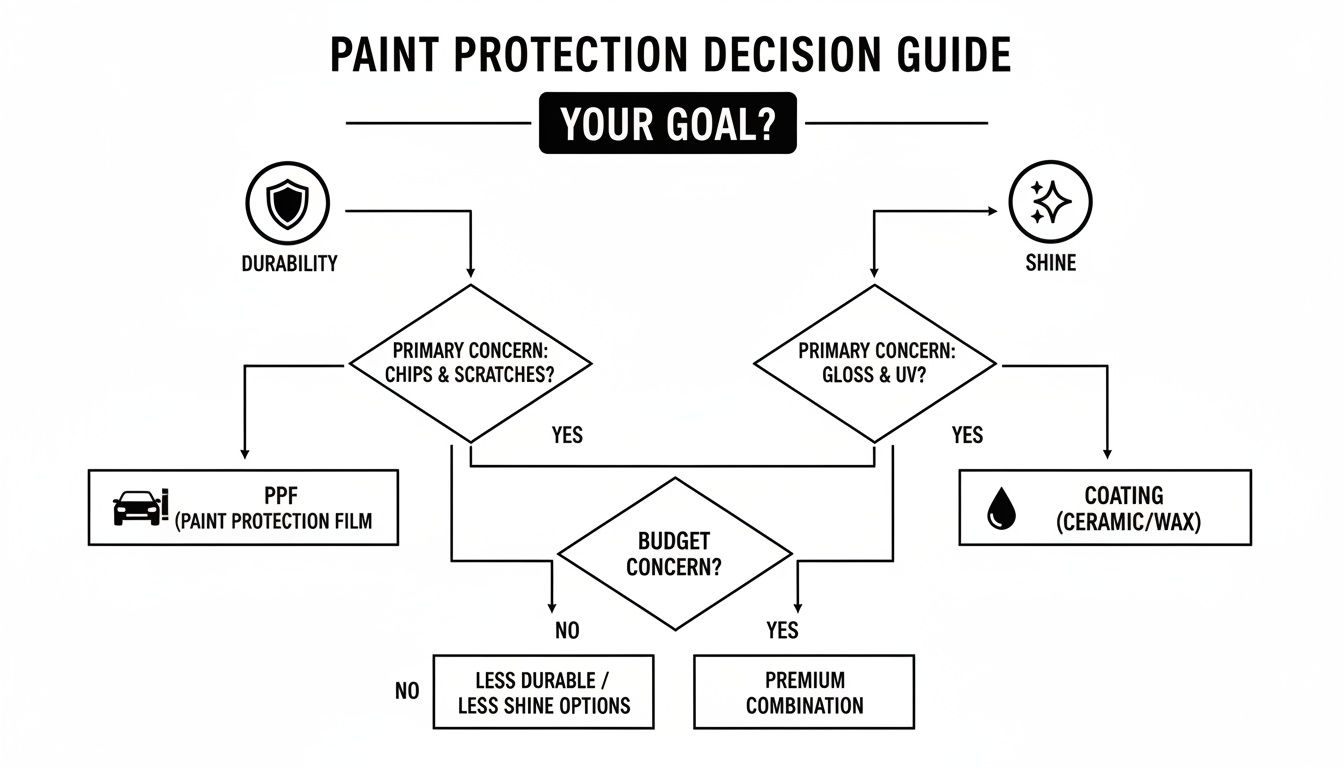
As you can see, if your top priority is an unmatched shine and gloss, a ceramic coating is the clear winner. For maximum physical impact resistance, paint protection film (PPF) takes the lead.
Using Boosters to Rejuvenate Your Coating
To keep your ceramic coating behaving like it was just applied, using a "booster" or "topper" spray every few months is a game-changer. These are incredibly easy-to-use spray products that lay down a fresh, slick layer of hydrophobic protection right on top of your coating.
Think of a booster spray like a leave-in conditioner you'd use after shampooing. It’s a quick maintenance step that revives the surface, makes the water-beading go crazy again, and brings back that slick, just-coated feeling.
Your Professional Ceramic Coating Solution in Lincoln
Now that you’ve seen what a ceramic coating can do, the next step is the most important one: getting it done right. Let’s be clear—the final performance of any coating hinges entirely on the quality of the prep work and the skill of the application. A professionally installed coating is your best line of defense against swirl marks and chemical stains, but it also delivers that unbelievable gloss and makes washing your car a breeze.
Here at GP Mobile Car Wash & Detail, we’re the trusted choice for professional ceramic coating application in Lincoln. We know that a perfect finish can only be achieved on a perfect surface. That’s why our process always starts with intense paint decontamination and correction to create a flawless canvas. Only then do we lock it all in with our top-tier ceramic coatings, creating a tough, durable bond with your paint.
Your vehicle is a major investment. A professional ceramic coating is the smartest way to protect its value and appearance from the harsh Nebraska elements for years to come.
Our commitment goes beyond just making a car look good for a week. We deliver a finish that is genuinely spectacular and provides long-lasting, real-world protection. This dedication to quality is why so many car owners in the area trust us with their prized vehicles.
Ready to give your car the durable protection it deserves? It’s time to see the benefits of our mobile car detailing near you and lock in that showroom shine for good.
Contact GP Mobile Car Wash & Detail today for a personalized quote and to schedule your ceramic coating service.
Frequently Asked Questions About Ceramic Coatings
We get a lot of questions about ceramic coatings from drivers here in Lincoln. It’s a big investment, so it’s only natural to want to clear up the details before you commit. Let's tackle some of the most common questions we hear every day.
Can You Apply a Ceramic Coating Over Existing Scratches?
That’s a hard no. Applying a ceramic coating over scratches, swirl marks, or any other paint damage is a recipe for disaster. It will essentially "lock in" those flaws, making them even more noticeable under the new glossy layer.
A ceramic coating needs a pristine surface to bond correctly and deliver that signature liquid-glass look. This is why professional paint correction isn't an optional add-on; it's a mandatory first step. We have to meticulously polish the paint to create a perfectly smooth, flawless canvas for the coating to adhere to.
How Long Does a Professional Ceramic Coating Really Last?
When it's installed by a pro using a high-quality product, you can expect a ceramic coating to last anywhere from 3 to 7+ years. The final lifespan really comes down to a few key things:
- The quality and type of coating we install.
- Your daily driving habits and environment.
- How well you maintain it after the fact.
Keeping up with proper hand washing and staying away from harsh automatic car washes will go a long way in protecting your investment and getting the maximum durability.
There's a common misconception that ceramic coatings are a "set it and forget it" solution. The truth is, its longevity is directly tied to consistent, gentle care. Good maintenance is what ensures you get years of performance.
Is a Ceramic Coating Worth the Cost in Nebraska?
For a car that sees daily use in Nebraska, we'd say it's absolutely worth it. Our weather throws everything at your paint—from corrosive road salt in the winter to baked-on bug guts in the summer. A coating acts as a sacrificial barrier against all of it.
Even more, its incredible hydrophobic properties make washing off that grime and road film almost effortless. It’s a practical investment that not only keeps your car looking incredible but also helps preserve its value in the long run.
Ready to give your car the durable gloss and protection it deserves? The team at GP Mobile Car Wash & Detail is here to help. Book your professional ceramic coating service online today