
If your truck has been running Nebraska highways through salt, slush, dust, and bug-heavy summer miles, you can usually see the damage before you notice the cost. Mirror housings haze up. Aluminum loses its bite. The cab picks up dust, food residue, and that tired smell that never really leaves. Underneath, the frame and chassis keep collecting the kind of grime that gradually shortens service life.
That’s why semi truck detailing isn’t just about making a rig look sharp at the fuel island. A proper detail protects one of the biggest working assets an owner-operator or fleet manager has. It helps keep the truck easier to inspect, safer to operate, and more professional on the road.
In Lincoln and across eastern Nebraska, the overlooked part is often the most important part. Everybody notices polished tanks and clean paint. Fewer people pay attention to the undercarriage and chassis, where road salt and packed debris do significant long-term damage.
Why Professional Detailing is a Smart Investment for Your Rig
A rig comes off a Nebraska run looking passable from ten feet away. Then you get up close. Salt is packed behind the steps, diesel film is sitting on the tanks, bugs have dried into the front cap, and the frame is holding grime that traps moisture against bare and coated metal. That is where detailing pays for itself, especially on trucks that see winter roads, gravel lots, and long interstate miles.
A semi is a working asset. Every surface on it wears differently, and every neglected area costs money in a different way. Paint oxidizes. Polished metal stains. Rubber seals dry out. Interior plastics hold grime. The undercarriage and chassis collect the kind of buildup that leads to rust, harder inspections, and more time spent cleaning around problems instead of catching them early.

That is why professional detailing is a maintenance decision, not just a cosmetic one. A proper service reaches the spots a quick wash misses, uses the right chemistry for each material, and puts extra attention on the lower body, frame, suspension areas, and other places where Nebraska salt and road debris stay lodged.
What detailing protects
- Corrosion-prone areas: Salt and packed grime build up in seams, behind mud flaps, around brackets, on steps, and across the chassis.
- Driver visibility: Clean glass, mirrors, lights, and reflective surfaces are easier to inspect and safer in bad weather and night driving.
- Brand image: A clean truck gives customers, shippers, and inspectors a better read on how the equipment is maintained.
- Cab condition: Drivers spend enough hours in the seat that cleanliness affects comfort, odor control, and how well the interior holds up.
Practical rule: If grime is hiding leaks, rust, cracked lines, or loose hardware, the truck is harder to inspect properly.
I have seen owner-operators spend money on repeat washouts and quick spray-downs, then still fight corrosion on the frame rails and hardware because the buildup underneath was never fully removed. A professional detail resets the truck properly. After that, maintenance washes take less effort, inspections go faster, and the rig stays in better condition between jobs.
The Full Scope of Professional Semi Truck Detailing Services
A proper semi truck detail is a system, not a quick wash with stronger soap. Every surface on the truck holds contamination differently, and each one reacts differently to chemicals, brushes, heat, and pressure. Paint, polished aluminum, rubber, glass, plastic trim, frame rails, and suspension parts all need their own approach if the goal is to clean the truck without creating new damage.
That matters most underneath.
On Nebraska trucks, the undercarriage and chassis usually carry the worst mix of road salt, mud, calcium chloride, grease, and packed debris. If that material stays lodged around brackets, crossmembers, air lines, spring mounts, and behind steps or mud flaps, corrosion keeps working long after the outside panels look clean. A professional detail addresses the visible surfaces, but it also goes after the buildup that shortens service life and hides problems during inspection.
Exterior decontamination
Exterior work starts with an inspection of what is on the truck. Bug residue on the front cap, diesel film on lower panels, black streaking around rivets, and road grime on a trailer door do not release the same way.
On neglected units, detailers may start with a high-pH bug remover for organic residue, then use a citrus-based degreaser or traffic film remover on oily contamination. After that, a controlled hand wash lifts what is left without dragging loosened grit across painted panels.
A sound exterior process usually includes:
- Pre-rinse work: Remove loose grit before any mitt or brush touches the surface.
- Targeted chemical use: Match the product to bugs, soot, grease, road film, or mineral staining.
- Hand washing: Reduce swirl marks on large painted surfaces and sleeper panels.
- Spot-free or careful final rinse: Limit hard-water spotting on glass, paint, and polished parts.
Pressure washing still has a place, but pressure is only one part of the job. Used carelessly, it can leave film behind, drive grime into seams, or damage decals, trim edges, and oxidized surfaces.
Chassis, undercarriage, and lower-body cleaning
This is the area too many services rush.
Lower rails, frame sections, suspension components, wheel wells, steps, fuel tank straps, and the backsides of brackets collect the contamination that does the most long-term damage. On trucks running through Nebraska winters, these areas deserve more than a cosmetic rinse. They need enough flushing, dwell time, and agitation to remove packed residue before it hardens again.
A thorough undercarriage and chassis detail often includes:
- Frame and crossmember flushing
- Degreasing around suspension and driveline areas
- Cleaning behind steps, mud flaps, and brackets
- Attention to wheel wells and lower cab corners
- Rinsing salt and mud from hard-to-see pockets
This work protects more than appearance. It makes leaks, rust, loose hardware, and damaged lines easier to spot. For fleets trying to standardize that kind of upkeep, a documented fleet vehicle maintenance checklist helps define what gets cleaned and inspected on a repeat schedule.
Wheels, tires, tanks, and brightwork
Wheels and polished metal show whether the detailer rushed the job. Brake dust, road tar, oxidation, and greasy sling build up fast in these areas, and they usually need stronger chemistry and more patience than painted body panels.
Aluminum tanks and brightwork should be cleaned with products that remove grime without staining or dulling the finish. Tires need to be scrubbed clean before any dressing is applied. If dressing goes over old browning and residue, the result is uneven shine, sling down the side of the truck, and a surface that attracts more dirt by the next run.
Clean metal should look sharp and dry, not oily or smeared.
For many working trucks, the target is not full show-level polishing. The better standard is a finish that looks professional, holds up through regular use, and does not waste labor on areas the customer does not need restored.
Trailer washouts and cargo-sensitive cleaning
Trailer interiors affect the next load, the odor inside the box, and in some cases whether the trailer is ready for service at all. Dry vans, reefers, and utility trailers all collect different contamination, so the washout process has to match the trailer’s use.
Typical trailer washout work includes:
- Sweeping and debris removal
- Interior rinsing and detergent cleaning
- Cleaning corners, thresholds, and door tracks
- Odor treatment when needed
Food-related hauling and reefer work usually require more attention to residue and odor than general freight. A proper washout removes what the next shipper will notice first.
Complete cab deep-clean
The cab takes a different kind of wear than the outside of the truck. Dust settles into vents, sleeper areas trap odor, food residue works into seams, and plastics dry out after long sun exposure through the windshield.
A professional interior detail typically includes vent and crevice cleaning with compressed air, top-down dust removal, vacuuming, fabric or leather-safe seat cleaning, glass cleaning, and a non-greasy protectant on dash and trim surfaces, as noted in these semi-truck cab detailing benchmarks.
What gets addressed inside
| Area | Typical focus |
|---|---|
| Dashboard and console | Dust removal, residue cleanup, interior surface protection |
| Vents and crevices | Compressed air and small detailing tools to lift embedded dust |
| Seats | Fabric extraction or leather-safe cleaning and conditioning |
| Sleeper area | Surface wipe-down, vacuuming, spot treatment, odor control |
| Door panels and touch points | Cleaning where hands, oils, and grime build up fast |
| Glass | Interior haze removal for clearer visibility |
Interior shortcuts show up fast. If dust is blown around instead of removed in the right order, sunlight will expose it the next day. If a greasy dressing is used on hard surfaces, it can create glare and pull in more dust.
Engine bay and finishing details
Engine bay cleaning is useful when handled carefully. It can make oil leaks, coolant seepage, cracked hoses, and general maintenance issues easier to spot. The job is controlled cleaning around sensitive components, not soaking everything under the hood.
The finishing work matters too. Clean glass, wiped door jambs, dry mirror housings, dressed trim, and no standing water around seals or hardware are what separate professional semi truck detailing from a fast lot wash. A truck should look right up close, not only from across the yard.
Advanced Protection and Specialized Fleet Services
Standard cleaning removes contamination. Protection services decide how quickly that contamination comes back and how much damage it causes the next time the truck hits the road. For commercial equipment, that difference matters more than shine alone.
Fleet programs that stay ahead of buildup
Fleet work runs best on a schedule. Waiting until trucks look bad almost always means more labor, more downtime, and a harder reset. Regular maintenance cleaning keeps grime from hardening on paint, metal, and lower panels, and it keeps the brand image consistent across the whole lineup.
For managers trying to structure repeat service, a practical starting point is a documented maintenance routine. A fleet vehicle maintenance checklist helps define what gets cleaned, what gets inspected, and which units need heavier attention.
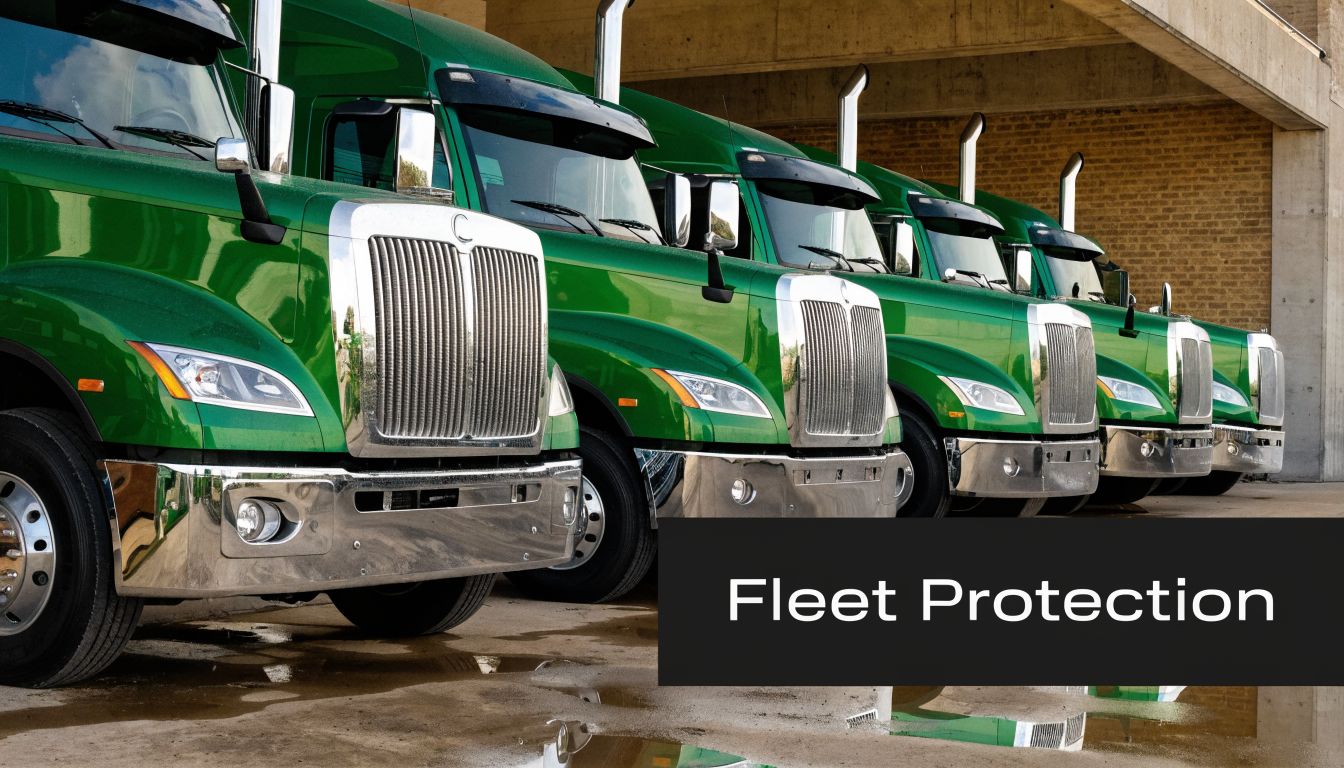
The biggest advantage of scheduled fleet detailing is consistency. Trucks don’t reach the point where every visit becomes a restoration job. Drivers also notice when equipment is being maintained on purpose, not only when a unit is about to be sold or reassigned.
Paint protection and surface preservation
Cabs take abuse from UV exposure, bug residue, road film, and frequent washing. Protective products help by creating a barrier between that abuse and the finish itself. On some rigs, that means a durable sealant. On others, especially newer or better-kept equipment, it can mean a ceramic coating.
Ceramic protection isn’t magic. It won’t stop every chip, and it won’t replace washing. What it does well is make the painted surfaces easier to clean and less likely to hold onto contamination. That’s useful on tractors that need to stay presentable without spending too much time out of service.
The undercarriage work most shops skip
This is the part too many operators miss. In Nebraska, underbody contamination is often more expensive than faded paint. Salt, slush, and packed grime sit on the chassis, suspension components, wheel wells, and frame rails where nobody sees them during a quick walkaround.
A critical but often overlooked issue is corrosion-related value loss. Truck maintenance reports suggest that up to 30% of a semi’s resale value can be lost due to corrosion, as noted in this undercarriage wash guide focused on rust prevention.
Don’t judge the truck’s condition by the hood and tanks alone. The underbody often tells the real maintenance story.
Systematic undercarriage and chassis detailing focuses on removing salt residue, packed mud, oily buildup, and moisture-holding debris from the places where rust gets established first. On working trucks in the Midwest, that isn’t a cosmetic add-on. It’s asset protection.
The Semi Truck Detailing Workflow From Start to Finish
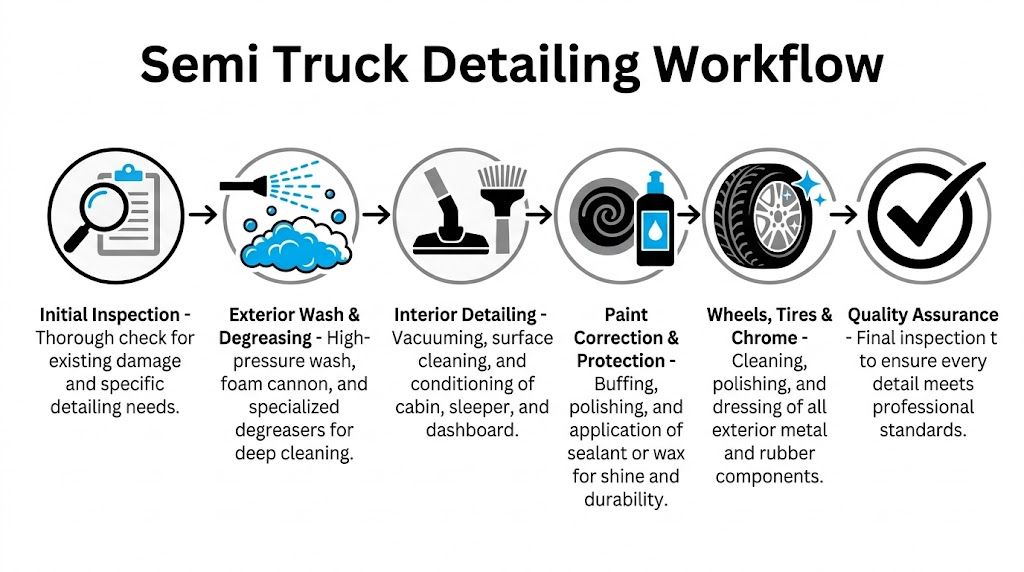
A truck can look acceptable from twenty feet away and still be carrying weeks of salt, grease, and road film in the frame, suspension, and step areas. That is why a professional detail starts with condition, not appearance. On Nebraska trucks, the chassis and undercarriage often show the first signs of neglect, and that is where a disciplined workflow protects value.
Professional crews follow a set order because efficiency matters on working equipment. Analysts covering the truck wash sector note that the semi-truck washing industry has reached a $12 billion market, and mobile crews can handle 5-8 semi-trucks per hour while managing the 22 gallons required per tractor-trailer wash with water reclamation systems, according to this overview of the semi-truck washing industry.
Step one and step two
The first step is inspection. Existing damage, loose trim, polished aluminum that can stain, oxidized paint, torn seats, and heavy buildup around the fifth wheel or frame rails all need to be identified before any chemical touches the truck. That protects the owner from surprises and keeps the crew from using the wrong product in the wrong place.
Prep comes next. We rinse loose grit first, then pre-treat by contamination type. Bug residue on the front cap, diesel film around saddle tanks, and carbon buildup behind stacks do not break down at the same rate, so the dwell time and product choice have to match the material.
This is also where experienced detailers separate maintenance work from recovery work.
Step three and step four
After prep, the exterior wash starts from the top down. That reduces the chance of dragging abrasive grime across cleaner panels and keeps runoff moving in one direction. Brushes, mitts, and pressure all have to be adjusted to the truck’s condition and finish.
Then the slow labor starts. Wheels, tires, wheel wells, suspension components, crossmembers, and the lower chassis take more time than many operators expect because the buildup is heavier and access is tighter. On Nebraska equipment, this stage matters for more than appearance. Salt residue and packed mud hold moisture against metal, and if that material stays in place through winter and spring, corrosion gets a head start in places the driver rarely sees during a quick walkaround.
The lower half of a semi usually needs the most labor, not the least.
A shop that rushes the undercarriage can still leave a truck looking clean in photos. It just does not leave it properly detailed.
Interior work and finishing passes
Once the exterior is stable, the cab is cleaned in sequence so dust and debris do not end up back on finished surfaces. Trash comes out first. Then vacuuming, compressed-air blowout, dash and panel cleaning, cup holder and console work, upholstery or leather treatment, sleeper cleanup, and interior glass.
The final pass is quality control. Good crews check the details that show up after the truck starts drying, especially around mirrors, emblems, door jambs, steps, and trim edges. Sling on polished surfaces, streaking on glass, and residue in corners are easier to catch before sign-off than after the truck is back on the road.
For operators comparing service levels, our semi truck and fleet detailing package options make it easier to see what is included in a maintenance wash versus a more involved detail.
Understanding Semi Truck Detailing Prices and Packages
A Nebraska tractor can look decent from ten feet away and still be carrying the kind of chassis buildup that shortens the life of crossmembers, brackets, airlines, and suspension components. That is why pricing for semi truck detailing varies so much. You are paying for labor, access, condition, and how far below the cab the crew is expected to go.
A quick maintenance service on a day cab is a different job from a full reset on a sleeper with road film baked onto the paint, salt packed into the frame, and an interior that has not been properly cleaned in months. Owners usually get confused on price when both services are labeled "full detail." In practice, they are not close.
What actually drives the price
These factors change a quote more than anything else:
- Truck configuration: Day cabs, sleepers, aerodynamic kits, and custom accessories all change labor time.
- Soil level: Routine maintenance cleaning costs less than bringing back a neglected truck.
- Undercarriage and chassis condition: In Nebraska, mud, salt, and calcium residue underneath the truck often add the most time and the most long-term value.
- Requested service depth: Exterior wash, interior cab cleaning, metal polishing, trailer work, and protectants are usually priced separately or grouped differently by shop.
- Surface type: Polished aluminum, chrome, wraps, painted fairings, and delicate interior materials need the right products and a slower hand.
That last point matters. Cheap work often gets expensive later when the wrong acid dulls aluminum or a harsh cleaner stains interior trim.
Package names matter less than scope
The better way to compare packages is to ask what is included, what is excluded, and where the crew stops. One shop's full detail may mean wash, wheels, vacuum, and glass. Another may include bug removal, decontamination, sleeper cleanup, tank polishing, frame rinse-out, and protectant on high-wear surfaces.
For that reason, I tell truck owners to review the line items before they compare the dollar amount. Our semi truck detailing packages and fleet vehicle cleaning options show the kind of scope differences that affect price in practice.
| Package Name | Best For | Includes | Starting Price Range |
|---|---|---|---|
| Fleet Maintenance Wash | Regular route trucks and repeat service units | Exterior wash, wheel face cleaning, glass touch-up, basic wipe-down of entry areas | Quote based on truck condition and service frequency |
| Full Exterior Detail | Owner-operators and image-focused units | Exterior decontamination, hand wash, wheel and tire cleaning, trim treatment, glass, attention to tanks and brightwork | Quote based on truck size and finish condition |
| Cab Deep Clean | Trucks with heavy driver use or sleeper buildup | Vacuuming, compressed-air dust removal, dash and panel cleaning, seat treatment, sleeper cleanup, interior glass | Quote based on cab layout and soil level |
| The Works | Trucks needing the most complete reset | Full exterior and interior detail, chassis attention, undercarriage focus, finishing protectants | Quote based on overall condition and requested service depth |
How to budget without paying for the wrong service
Match the package to the truck's job and condition. A local fleet unit on a maintenance schedule usually needs consistent washes and periodic interior work. An owner-operator truck with polished metal, custom paint, or resale plans often needs more correction and more protection.
The undercarriage is where I would not cut corners on Nebraska trucks. Cosmetic work sells the service. Chassis cleaning protects the asset.
If a quote comes in higher than expected, ask what labor it prevents later. Removing fresh salt and packed grime from the frame is straightforward. Correcting corrosion, staining, and neglected buildup after a season of hard use is slower, more expensive, and in some cases no longer reversible.
Choosing Your Service Mobile vs In-Shop Detailing
Where the work gets done matters almost as much as what gets done. Some trucks are better candidates for on-site service. Others benefit from a controlled shop environment. The right choice depends on downtime, access, and the level of correction needed.
When mobile detailing makes sense
Mobile service works best when convenience is the priority. If a truck is parked at a yard, office, or jobsite, on-site detailing cuts out transport time and simplifies scheduling. For fleets, that can make routine maintenance much easier to coordinate.
Mobile detailing is usually the better fit when:
- You want less disruption: The truck stays where it already is.
- You’re managing multiple units: Servicing several vehicles in one place is more efficient.
- The work is maintenance-focused: Washes, cab cleaning, and regular upkeep often work well on-site.
If you’re comparing scheduling options, reviewing a mobile detailer service model can help clarify what’s practical at your location.
When in-shop service is the better call
Shop service has one big advantage. Control. Lighting is better, tools are easier to stage, and technicians can work without weather, wind, or lot conditions getting in the way. That matters for more involved jobs.
In-shop detailing is often the stronger option for:
| Situation | Better fit |
|---|---|
| Heavy interior restoration | In-shop |
| Paint correction or coating work | In-shop |
| Routine fleet washes at a depot | Mobile |
| Multi-vehicle convenience | Mobile |
| Detailed underbody treatment | Often in-shop, depending on equipment and access |
If the truck needs precision work, stable conditions help. If the truck needs convenience, mobile usually wins.
Neither option is universally better. For many owners, the answer is both. Maintenance work can happen on-site, while occasional deeper restoration or protection work is easier to complete in the shop.
Owner-Operator Tips for Preparation and Maintenance
A detail goes smoother when the truck shows up ready for it. That doesn’t mean pre-cleaning it. It means clearing out the things that slow down the work or hide the areas that need attention.
Before your appointment
Take a few minutes to prep the cab and note problem areas. That helps the crew spend more time cleaning and less time moving personal items around.
Use this quick checklist:
- Remove personal belongings: Clothes, paperwork, chargers, food containers, and valuables should come out first.
- Flag trouble spots: Point out spilled coffee, smoke odor, pet hair, salt staining, or bug-heavy front panels.
- Empty storage areas you want cleaned: If a compartment is packed full, it may only get cleaned around.
- Mention surface concerns: Custom wrap, polished aluminum, sensitive trim, or previous damage should be identified up front.
Between professional details
Maintenance doesn’t need to be elaborate. It just needs to be consistent. A few simple habits keep a clean truck from sliding back into a full reset.
- Wipe bug residue early: The longer it sits on the nose and mirrors, the harder it gets to remove safely.
- Keep a microfiber towel in the cab: It helps with quick dust control on hard surfaces.
- Shake out mats regularly: Dirt carried in on boots spreads fast through the cab.
- Watch lower panels and step areas: These collect grime quickly and usually show neglect first.
A truck stays cleaner longer when the driver handles small messes before they turn into set-in stains.
A good daily walkaround can also do more than check tires and lights. It can reveal fresh tar, fluid residue, or packed grime around the chassis before those problems sit there for weeks. That habit won’t replace professional semi truck detailing, but it will make every detail more effective.
Frequently Asked Questions About Semi Truck Detailing
How often should a semi truck be detailed
It depends on route conditions, weather, and how the truck is used. A highway truck running through winter roads and truck-stop grime will need attention more often than a lightly used unit. Most owners do better with a maintenance schedule plus occasional deeper service rather than waiting until the truck looks worn out.
Are the chemicals safe for aluminum, chrome, and wraps
They should be, if the detailer is using the right product on the right surface. That’s one reason surface identification matters before washing starts. Aggressive chemicals used carelessly can dull metal, stain trim, or shorten the life of a wrap.
How long does a complete detail take
There isn’t one fixed answer. A maintenance wash moves faster than a full reset with cab deep-cleaning, undercarriage work, and brightwork attention. Condition matters as much as truck size.
Do I need to provide water and power for mobile service
That depends on the company’s setup and the service requested. Some mobile crews arrive fully equipped, while others may need site access for certain jobs. It’s best to confirm that during scheduling so there are no surprises on appointment day.
Is undercarriage detailing really necessary
In Nebraska, yes. If the truck sees winter roads, the underbody takes on the kind of contamination that causes expensive corrosion over time. A shiny hood doesn’t protect a dirty frame.
Is detailing worth it if the truck is a working rig, not a show truck
Yes, because the value isn’t only visual. Clean glass, cleaner interiors, easier inspections, reduced grime buildup, and better preservation all matter on a working truck. The goal is durability and presentation, not perfection for its own sake.
If your truck or fleet needs professional care in Lincoln or the surrounding area, GP Mobile Car Wash & Detail offers mobile and shop-based detailing built around convenience, careful surface-safe cleaning, and long-term vehicle protection. Reach out for a quote and get your semi truck detailing scheduled before grime, salt, and underbody buildup turn into a bigger repair bill.