You wash the car, step back, and for a minute it looks right again. Then the Nebraska reality shows up. Salt film around the rocker panels. Hard water spots on the hood. Fine wash marks catching the sun. By late winter, a vehicle that looked sharp in October can look tired.
That’s the situation a lot of Lincoln drivers are in. You’re not chasing a show car finish. You just want your paint to hold up, clean up easier, and not take a beating every season. That’s where the conversation around the best ceramic coating for cars gets practical. Not hype. Not miracle claims. Just what helps in a place with cold snaps, road brine, summer sun, dust, and daily driving.
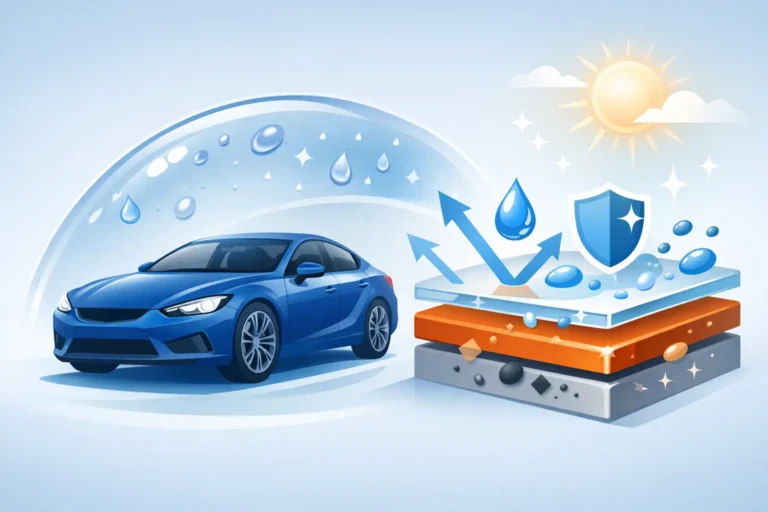
Ceramic coating isn’t magic, and it isn’t a substitute for good washing. But when it’s chosen well and applied correctly, it acts like a long-wearing raincoat for your paint. Dirt doesn’t hang on as stubbornly. Water beads and sheets. Maintenance gets easier. Your finish keeps its gloss longer.
Your Car Deserves Better Than a Nebraska Winter
A Lincoln winter doesn’t just make your car dirty. It drags grime into every lower panel, leaves salty residue behind trim edges, and turns simple maintenance into a chore. Then spring shows up and reveals what the cold months left behind. Dull paint, embedded contamination, and water spotting from rushed driveway washes.
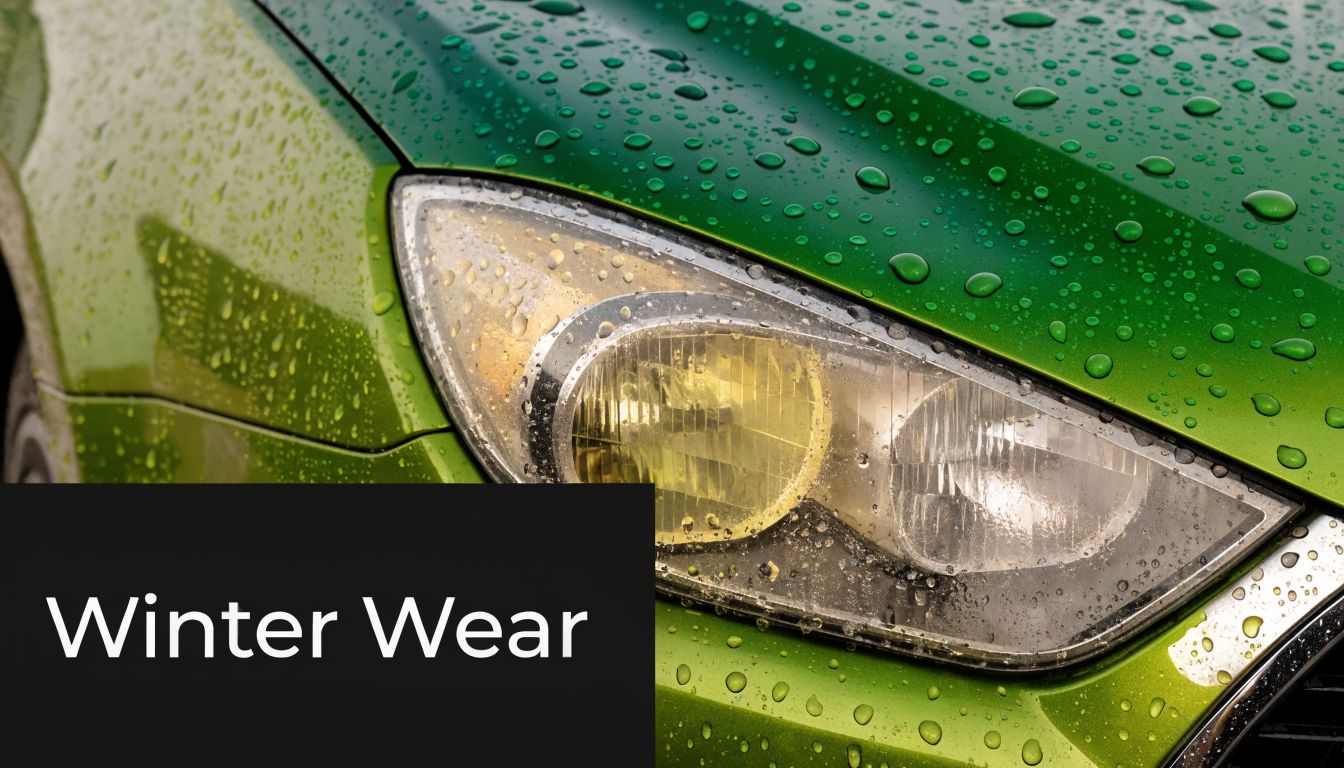
That cycle is why more drivers are moving past old-school wax. Wax still has a place, especially for someone who enjoys frequent upkeep, but Nebraska weather is hard on short-term protection. You can spend a Saturday polishing and waxing, then lose most of that satisfaction after a few slushy commutes and one careless rinse with hard water.
What Lincoln drivers are up against
A ceramic coating makes the most sense when you accurately assess local conditions:
- Road salt and winter grime: These don’t just make paint look bad. They sit on the surface and push you to wash more often.
- Hard water spotting: If you wash outside and the sun is working against you, minerals can dry on the finish fast.
- Summer UV exposure: Dark colors in particular start showing every defect.
- Daily use: School drop-offs, office parking lots, grocery runs, highway miles. Normal life is rougher on paint than commonly realized.
Good protection isn’t about making a car untouchable. It’s about making real-world abuse easier to manage.
For a lot of owners, ceramic coating is the point where paint protection starts feeling worth the effort. The vehicle stays cleaner between washes, cleanup is less frustrating, and the finish keeps that tighter, glossier look instead of fading into “daily driver dull.”
That’s also why local application matters. Lincoln conditions aren’t abstract. The right prep and product choice should account for winter contamination, summer exposure, and whether the vehicle lives outside or in a garage.
What Exactly Is a Ceramic Coating
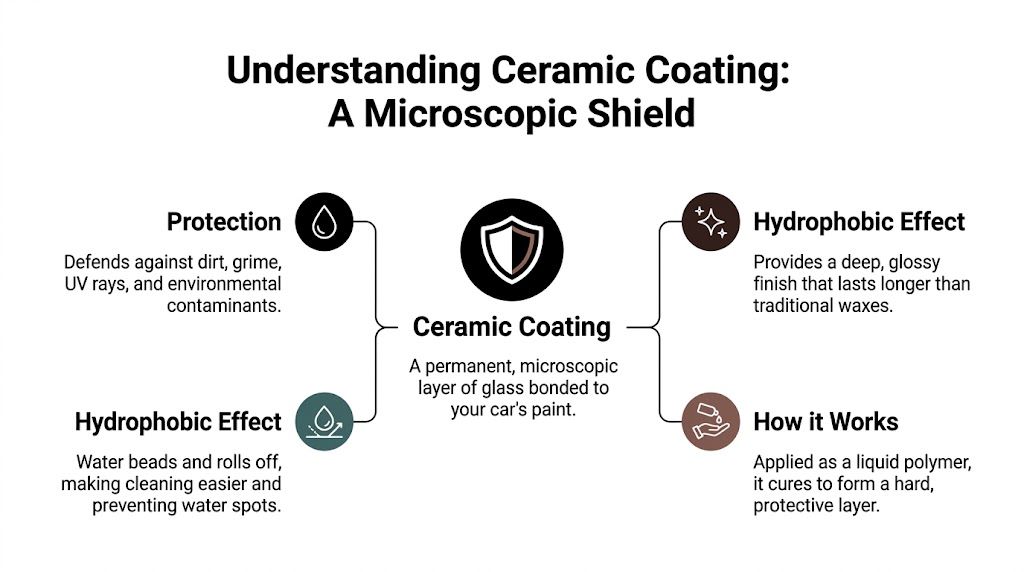
A ceramic coating is a liquid polymer that bonds to your vehicle’s clear coat and cures into a hard, protective layer. The simplest way to think about it is this. It’s like a high-tech, microscopic raincoat for your paint, except it doesn’t just sit on top the way wax does. It chemically bonds to the surface.
What makes it different from wax
Wax and sealants are surface protectants. They add gloss and some short-term repellency, but they wear away relatively quickly. Ceramic coating is different because it’s built around bonding and curing.
Professional nano-ceramic products, first introduced around 2009, can reach up to 9H hardness, form a semi-permanent bond, and can last 5 to 10 years, while traditional waxes usually last 3 to 6 months, according to Road & Track’s ceramic coating overview.
That difference is why people who’ve only used wax often notice ceramic coating in a very practical way. The car doesn’t just shine on day one. It stays easier to wash and better looking over time.
What the coating is actually doing
Most ceramic coatings use SiO2 chemistry. Once applied to a properly prepared surface, that chemistry cross-links and cures into a slick shell over the clear coat. It’s not thick like a wrap or paint protection film. It’s thin, but it changes the surface behavior.
That shows up in three ways:
- Water behavior changes: Water tends to bead and roll off rather than spread out and cling.
- Contaminants release easier: Dirt, road film, and bug residue usually come off with less effort.
- The finish looks tighter: Gloss and clarity improve because the surface is more uniform.
Why the bond matters
If you’ve ever waxed a hood and watched it fade after repeated washes, you’ve seen the weakness of a product that mostly sits on top. Ceramic coating works better long term because the protection is tied to the paint instead of loosely resting on it.
Practical rule: Ceramic coating protects best when the paint underneath is already clean and corrected. It doesn’t hide defects. It preserves whatever is there.
That’s the part some marketing skips. Coating a scratched, swirled, or contaminated vehicle won’t fix the finish. It will lock in the current condition and make that condition easier to maintain.
Where product choice starts to matter
Not every coating serves the same owner. Some consumer products are easy to apply and good for beginners. Others aim for stronger long-term durability. In recent comparative testing, products like Chemical Guys Carbon Force, Cerakote Platinum Rapid, and Turtle Wax Hybrid Solutions were highlighted for different use cases, from overall performance to value and beginner-friendly application. That tells you something important. There isn’t one universal answer. The best ceramic coating for cars depends on how you drive, where you park, and how much maintenance you’re willing to do.
Decoding Ceramic Coating Performance
People shopping for ceramic coating usually hear the same terms over and over. Hydrophobicity. Hardness. Lifespan. Those words matter, but only if you connect them to daily driving in Lincoln.
Hydrophobicity in real life
Hydrophobicity is the coating’s ability to repel water. On a coated vehicle, water beads tighter and moves off the panel faster. That matters after a wet commute, after snowmelt sprays up the doors, and after a rinse when you’re trying to avoid water spots.
A slick, water-repelling surface also tends to hold less grime between washes. Dirt has a harder time sticking, so maintenance feels less like scrubbing and more like rinsing and light contact washing.
According to a 2022 Ceramic Pro study cited in Dmitry’s Garage, 9H coatings can reduce swirl marks from automated car washes by up to 70%, and their hydrophobic properties can cut cleaning time by 40 to 50%.
For a busy owner, that’s one of the biggest quality-of-life benefits. The car doesn’t stay perfectly clean on its own, but it gets dirty slower and washes easier.
Hardness doesn’t mean scratch-proof
Expectations need to be realistic. A 9H rating is a hardness measurement tied to coating performance. It helps with resistance to light marring, swirl formation, and chemical abuse. It does not mean your paint becomes immune to scratches.
Keys, sharp debris, bad wash tools, and deep contact damage can still mark the surface. If you want the full breakdown of what coatings can and can’t do, this guide on whether ceramic coating prevents scratches is worth reading.
What hardness does help with is everyday wear:
- Automatic wash marring
- Light towel-induced swirls
- Minor contact during normal maintenance
- Chemical etching from common contaminants
If your goal is “never scratch again,” ceramic coating will disappoint you. If your goal is “less wash damage and easier upkeep,” it makes much more sense.
Lifespan depends on category and care
Lifespan is where coatings separate sharply. Some are closer to maintenance products with a ceramic label. Others are professional systems designed to stay on the vehicle for years. That’s a huge range, and it’s why “best ceramic coating for cars” can’t be answered without talking about use case.
Here’s the practical version:
| Performance area | What it means on paper | What it means in Lincoln |
|---|---|---|
| Hydrophobicity | Strong water beading and sheeting | Easier cleanup after slush, rain, and dusty driving |
| Hardness | Better resistance to swirls and light marring | Less wash-induced damage if you maintain it correctly |
| Lifespan | How long the coating remains effective | Fewer reapplications, but only if washing habits support it |
What works and what doesn’t
What works is matching the product type to the owner.
- A quick spray ceramic works for someone who likes frequent upkeep and wants an easy weekend project.
- A professional multi-year coating fits the owner who wants lower day-to-day effort and plans to keep the vehicle looking sharp long term.
- A premium coating on neglected paint usually doesn’t make sense until the paint is corrected first.
What doesn’t work is buying based on labels alone. A high hardness claim doesn’t help if the prep was rushed. Long durability claims don’t matter if the car gets run through harsh washes every week.
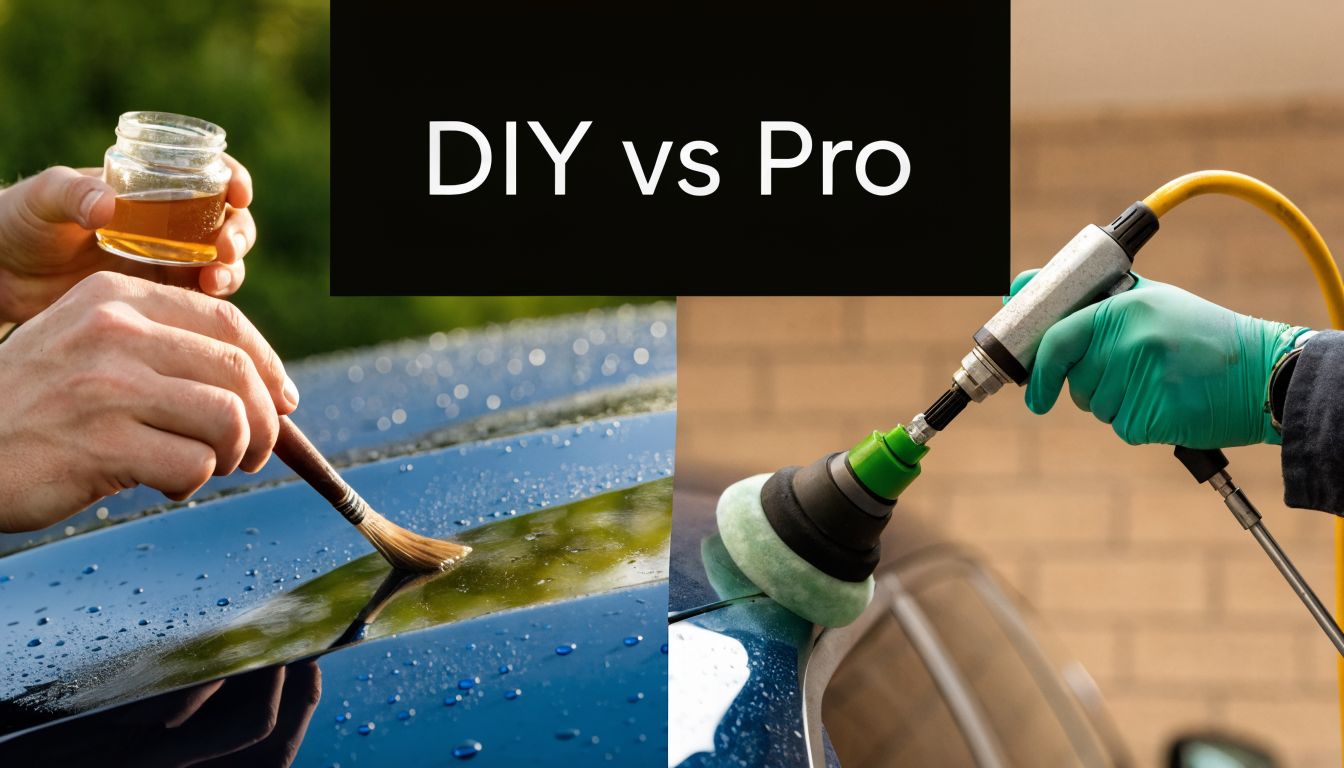
DIY Kits Versus Professional Application
A Lincoln winter is a tough place to learn ceramic coating by trial and error. If you apply a kit in a cold garage, miss a few high spots, then send the car out into salt, slush, and hard-water drying, those mistakes stay visible.
That does not mean DIY is a bad idea. It means the margin for error is smaller than the box makes it sound.
Why DIY makes sense for some owners
A home kit can work well for the right person. The upfront cost is lower, you stay in control of the process, and plenty of owners enjoy doing their own paint care. If you already wash properly, have good lighting, and can keep the vehicle indoors while it cures, a consumer coating may be a practical fit.
Prep is the part that usually decides the outcome.
The coating bottle gets the attention, but the finish depends on what happens before it touches the paint. Any bonded contamination, leftover water spots, polishing dust, or oils can interfere with bonding. On darker vehicles, poor leveling also shows up fast, especially once the sun hits the panel.
Where DIY jobs usually fail
In the shop, the same problems show up over and over.
- The paint was washed, not fully decontaminated. It looked clean, but the surface still had embedded grime or mineral buildup.
- Defects were sealed in. Swirls, haze, and etching do not disappear under a coating. They often stand out more afterward.
- High spots were missed. That leaves darker streaks or patchy gloss once the coating flashes and cures.
- The workspace fought the installer. Wind, dust, humidity, cold temperatures, and surprise moisture all make application harder.
- Curing time got cut short. The car went outside too soon, got wet too soon, or was washed before the coating had settled in.
That last issue matters a lot in Nebraska. Sudden temperature swings, overnight condensation, and winter moisture make home curing less forgiving than people expect.
What you are paying for with professional application
Professional application costs more because the service is bigger than the bottle. You are paying for paint inspection, decontamination, machine polishing when needed, panel wipe, controlled application, and a better chance of getting an even result the first time.
You are also paying to reduce risk.
On a newer black truck, a missed high spot can bother you every time the sun hits it in a grocery store parking lot. On an older daily driver with hard-water spotting, skipping correction means the coating locks those marks in place. A pro helps match the prep and product to the actual condition of the vehicle.
| Factor | DIY kit | Professional application |
|---|---|---|
| Upfront spend | Lower | Higher |
| Time required | High | Low for the owner |
| Prep quality | Depends on your skill and tools | More consistent |
| Risk of high spots | Moderate to high | Lower with experience and lighting |
| Paint correction | Often skipped | Commonly included or recommended |
| Curing control | Harder at home | Easier in a managed workspace |
A coating preserves the surface you give it. If the paint is already in good shape and you know how to prep properly, DIY can be worthwhile. If the paint needs correction, or the vehicle lives outside year-round in Lincoln weather, professional installation usually makes more sense.
Here’s a useful walk-through of the process in action:
A simple way to decide
DIY is a reasonable choice if you have all three of these:
- Indoor space with stable conditions
- Basic polishing and decontamination knowledge
- Time to let the vehicle cure without weather exposure
Professional application is the better fit if any of these sound familiar:
- You want a cleaner finish without learning on your own vehicle
- The paint has swirls, water spots, or oxidation
- You drive the car daily and cannot leave it parked for proper curing
- You want long-term protection and do not want to gamble on prep
I usually give owners a plain answer here. If it is a garage-kept project car and you enjoy the work, DIY can be satisfying. If it is a newer vehicle, dark paint, or a daily driver that has to face Lincoln salt and summer sun, paying for pro prep is often the cheaper decision in the long run.
How to Choose the Right Coating for Your Car
A Lincoln winter will answer this question fast. If your car sits outside through salt, slush, hard water sprinkler spots, and July sun, the right coating is the one that fits that abuse and the way you care for the vehicle afterward.
That means choosing by use, not hype.
Start with the car’s real life
A garage-kept weekend car and a daily driver parked outside in Nebraska need different protection. The same goes for a newer truck you plan to keep for years versus an older sedan you mainly want to wash with less effort.
Ask these questions first:
- Where does it park most of the time? Outside storage puts more pressure on the coating.
- What does it see every week? Road salt, bug residue, tree sap, hard water, and strong sun all matter.
- How do you wash it? Careful hand washing gets more from a coating than inconsistent drive-through washes.
- How long are you keeping it? A longer ownership window makes a better coating easier to justify.
- What shape is the paint in right now? A coating preserves condition. It does not hide neglected paint.
Those answers narrow the field quicker than any brand list.
Ceramic Coating Tiers Compared
| Coating Tier | Typical Lifespan | Estimated Total Cost | Application Method | Best For |
|---|---|---|---|---|
| DIY Consumer Kits | Shorter-term than pro coatings | Lower upfront cost, but maintenance and reapplication matter over time | Owner applied at home | Hands-on owners with indoor workspace and realistic expectations |
| Professional-Grade Standard | Multi-year protection | Mid-range investment with ongoing maintenance | Applied by a detailer after proper prep | Daily drivers that need easier upkeep and solid gloss |
| Professional-Grade Premium | Long-term protection, often in the 5 to 10 year class when maintained | Highest initial investment and maintenance commitment | Professional-only application with correction and controlled curing | Owners keeping the vehicle long term or protecting higher-end paint |
Labels can muddy the water. A spray ceramic used every few months does not belong in the same bucket as a true cured coating, even if both promise gloss and water behavior.
Match the coating to the owner
Daily commuter parked outside
This is the most common Lincoln scenario. The car lives outdoors, gets blasted with winter salt, and picks up hard water spots in warmer months.
For that owner, I would usually point toward a professional standard or premium coating. The goal is not showroom bragging rights. The goal is easier washing, less grime sticking to the paint, and better day-to-day protection through rough weather.
Newer vehicle you plan to keep
A longer-term coating makes more sense here, especially if the paint is still in strong condition. Good prep, solid gloss retention, and easier maintenance add up over time.
Some coatings in this category are marketed around multi-year durability, including products discussed in Chemical Guys’ ceramic coating comparison guide. The useful takeaway is simple. Multi-year protection is realistic when the surface is prepared correctly and the owner keeps up with proper washing.
Older vehicle with decent paint
Older paint can still be a great candidate. I see this a lot with well-kept vehicles that have some age but no major failure in the clear coat.
The deciding factor is condition. If the finish can be corrected to a level you are happy with, coating it helps keep that result. If the paint is heavily oxidized or scratched up, fix that first or adjust expectations.
Be honest about maintenance
Ceramic coating works like a permanent raincoat for your car, but even a raincoat needs to be cleaned if you want it to keep performing well.
Owners who enjoy careful washing can do well with a lighter-duty ceramic or hybrid product. Owners who want fewer redo cycles usually get more value from a professionally installed coating. Owners who know they will use harsh washes and ignore contaminants should avoid paying for the top tier and expecting top-tier results.
For a practical example of what upkeep looks like, this guide on how to maintain a ceramic coated car lays out the habits that keep the coating behaving the way you paid for.
The right coating matches your parking, your wash habits, and how long you plan to keep the car.
One local option among the choices
If you want a professional route in Lincoln, one option is GP Mobile Car Wash & Detail’s ceramic coating service. For some owners, mobile service is a better fit than arranging drop-off and pickup at a shop, especially when the goal is protecting a daily driver without adding more hassle.
A quick filter before you choose
- Choose by parking situation: Outside-stored vehicles need stronger real-world protection.
- Choose by wash habits: Better maintenance supports better coating performance.
- Choose by ownership timeline: Longer ownership usually supports spending more up front.
- Choose by paint condition: Correct the finish first, then protect it.
- Choose by local conditions: In Lincoln, salt, hard water, and summer UV are not side issues. They should shape the decision.
The True Cost and Maintenance of a Ceramic Coating
Ceramic coating costs don’t stop on application day. That’s where some owners get surprised. They budget for the coating, then forget the washing products, booster products, and maintenance habits that keep it performing the way they expected.
The real cost is ownership, not just install
A coating can deliver strong long-term value, but only if you care for it properly. If you treat a coated car the same way you treated an unprotected car, performance drops earlier and disappointment sets in fast.
One of the clearest examples is Gtechniq Crystal Serum Light, which is engineered to tolerate pH 3 to 12 washes and has a 3 to 5 year lifespan, but Gtechniq still emphasizes pH-neutral shampoos to prevent premature degradation and maximize durability.
That tells you something important. Strong coatings are tough, but they still reward correct maintenance.
What maintenance usually includes
A coated car doesn’t need obsessive treatment, but it does need smarter treatment.
- Use pH-neutral shampoo: This is the baseline for preserving coating behavior.
- Wash with good media: Clean microfiber mitts and drying towels matter.
- Remove contaminants early: Bird droppings, bug remains, and heavy film shouldn’t sit.
- Use booster products if your coating system calls for them: Some do, some don’t.
- Avoid harsh automatic washes: Especially those with aggressive brushes.
For a more complete care routine, this guide on how to maintain a ceramic coated car covers the practical side well.
What people often underestimate
The coating saves time on cleaning, but it doesn’t eliminate cleaning. You’re buying easier maintenance, not no maintenance.
The second thing people miss is that wrong washing can erase the advantage. If you drag dirt across the surface with poor wash technique, you can still mar the finish. If you let hard water dry repeatedly, you can still end up with spotting issues.
Ceramic coating lowers effort. It doesn’t replace care.
How to think about value
A good way to judge value is simple. Ask whether you’d rather spend more now for a finish that stays easier to live with, or spend less up front and re-do protection more often.
For a daily driver in Lincoln, a ceramic coating usually makes the most sense when you hate constant reapplication and want the car to stay presentable with less struggle through the seasons.
The GP Mobile Detail Ceramic Coating Experience
A coating job usually succeeds or fails before the installer ever opens the bottle. Around Lincoln, that matters even more because winter salt, hard water, and summer sun all leave their own mark on paint. If prep is rushed, the coating locks those problems in and the finish never looks as clean or sharp as it should.
Prep decides the finish
Good professional work starts with inspection under proper lighting. Swirls, water spot etching, embedded contamination, worn trim, and old residue all need to be identified before any coating goes on.
Then the meticulous preparation begins. The vehicle gets washed, decontaminated, and corrected as needed so the coating bonds to clean paint instead of sitting on top of grime or defects. If the paint has haze or swirls, those should be addressed first because ceramic coating preserves the surface underneath. It does not hide sloppy prep.
Why local conditions matter
Lincoln vehicles usually show the same trouble areas. Lower panels pick up winter grime and salt film. Horizontal panels collect pollen, dust, and sun exposure. Hard water spotting is common, especially if the car is rinsed and left to dry outside.
That changes how a detailer should approach the job. A local vehicle often needs extra attention on rocker panels, behind wheels, around badges, and on any surface where minerals or road residue like to cling. The aftercare advice should match that reality too, especially for owners who park outside or drive through Nebraska winters every day.
What the service process should include
A solid coating appointment should include:
- A paint and vehicle assessment: How the car is used, where it sits, and what condition the finish is in.
- Wash and decontamination: Removal of dirt, bonded contaminants, and residue that interfere with bonding.
- Paint correction when needed: Swirl removal, gloss improvement, and defect reduction before protection is applied.
- Panel prep and coating application: Careful wipe-down and even application across properly prepared surfaces.
- Cure guidance: Clear instructions for the first several days so the finish has a fair chance to perform well.
That process is what separates a coating that looks crisp and behaves properly from one that looks uneven, grabs water spots, or disappoints a few months later.
Convenience matters, but process matters more
A lot of busy owners put this off because scheduling feels like a hassle. Mobile service or a straightforward drop-off setup helps, especially if the car needs correction work before the coating can go on.
If you want to compare what that service looks like locally, GP Mobile Car Wash & Detail's ceramic coating service in Lincoln gives a clear picture of the process. The useful takeaway is simple. Product claims matter less than prep quality, application control, and realistic guidance for living with a coated car in Nebraska.
The bottle gets the attention. The wash, correction, panel prep, and cure time are what make the result hold up.
Frequently Asked Questions About Ceramic Coatings
Can ceramic coating fix scratches or rock chips
No. A ceramic coating does not repair scratches, chips, or failed paint. It goes over the existing finish. If the paint has swirls or water spot etching, those should be corrected before coating whenever possible.
Is ceramic coating worth it on an older car
Yes, if the paint is still in workable condition and you’re willing to prep it properly. Older vehicles often benefit a lot because coating helps preserve gloss and makes routine cleaning less frustrating. The key is correcting the finish first if appearance matters to you.
How soon can I wash the car after coating
You need to respect the curing period recommended for the coating that was applied. Washing too early can interfere with how the coating settles and performs. When in doubt, follow the installer’s aftercare instructions exactly.
Will ceramic coating stop water spots
No coating completely eliminates water spots. It helps water release from the surface more easily, which lowers the chance of stubborn buildup, but mineral-heavy water can still spot if it dries on the paint.
Does ceramic coating replace waxing forever
For most owners, yes, in the sense that you don’t need traditional wax as your primary protection. But some coating systems use maintenance sprays or toppers to keep hydrophobic behavior strong over time.
Is a spray ceramic the same as a professional coating
No. Spray ceramics can be useful and convenient, but they’re not the same as a properly applied professional coating. The durability, prep requirements, and long-term performance are different.
What’s the best ceramic coating for cars if I use an automatic wash
A harder, professionally applied coating gives you better resistance to wash-induced wear than unprotected paint, but brush-style automatic washes are still not ideal. If convenience matters, touchless washing and careful maintenance are a better match for preserving the coating.
Should I coat a brand-new car right away
Often, yes. New cars usually still need prep, but they’re good candidates because you can protect the finish before years of wear build up. “New” does not mean the paint is flawless, though. Dealership washing often leaves marks.
If you want straightforward advice on ceramic coating for your vehicle, GP Mobile Car Wash & Detail serves Lincoln drivers with mobile and shop-based detailing options. If you’re weighing DIY against a professional install, or trying to figure out what level of protection fits your daily driver, truck, RV, or boat, reaching out for a vehicle-specific recommendation is the simplest next step.