You clean the car. You vacuum it. You hang a freshener from the mirror. For a day or two, it seems better. Then the smell comes back the first hot afternoon, or after a rainy night, or the moment you start the fan.
That's the part most drivers in Lincoln get tired of. The odor isn't just “in the car.” It's usually buried somewhere specific. Seat foam, carpet padding, a damp trunk liner, a headliner that soaked up smoke, or the HVAC system pushing old contamination back into the cabin. Until that source is found and removed, the smell keeps winning.
That's why odor removal car detailing is different from a basic interior cleanup. It isn't about making the car smell stronger, sweeter, or more perfumed. It's about getting the interior back to neutral, clean air.
That Lingering Smell Your Car Just Won't Forget
A stubborn car odor usually falls into one of two categories. It's either being masked, or it's being removed. Most off-the-shelf sprays only mask. They put a fragrance over the problem and buy you a little time. Once the fragrance fades, the original smell is still there because the source never left.
Professional odor work starts from a different mindset. The goal is to remove what's creating the smell, not to compete with it. That matters for comfort, but it also matters for hygiene. When odors come from old food, pet accidents, mildew, smoke residue, or moisture trapped under carpet, the smell is a symptom of contamination sitting in the vehicle.
The demand for that kind of deeper cleaning is growing. The global car detailing services market was valued at USD 41.40 billion in 2024 and is projected to reach USD 58.06 billion by 2030, with the auto deodorizing segment growing faster as more drivers pay attention to in-car hygiene and air quality, according to Grand View Research's car detailing services market report.
What drivers usually try first
Many vehicle owners follow a specific routine before contacting a professional detailer:
- Air fresheners: Fast, cheap, and temporary.
- A quick vacuum: Helpful for loose debris, but not enough for embedded odor.
- Wiping surfaces: Good maintenance, poor odor correction.
- Rolling windows down: Fine for airing out a car, useless against contamination in fabric or padding.
None of those steps is wrong. They just don't go deep enough when the odor has settled into absorbent materials.
Practical rule: If a smell disappears when the cabin is cool but returns in heat or humidity, it's usually still embedded in the interior.
Lincoln drivers see this a lot because cars go through cold winters, humid stretches, spilled coffee on commutes, sports gear in the trunk, and family use that adds up. A vehicle can look clean and still smell off because odor lives below the visible surface.
What real odor removal looks like
Permanent improvement comes from three things done in the right order:
- Find the source
- Remove or neutralize the source
- Dry and ventilate the interior completely
Skip the first step and you guess. Skip the second and you only improve the smell for a while. Skip the third and you can create a new problem.
That's where trade experience matters. The best odor removal jobs aren't the ones with the strongest chemical smell afterward. They're the ones where the cabin smells clean, with no perfume trying to prove a point.
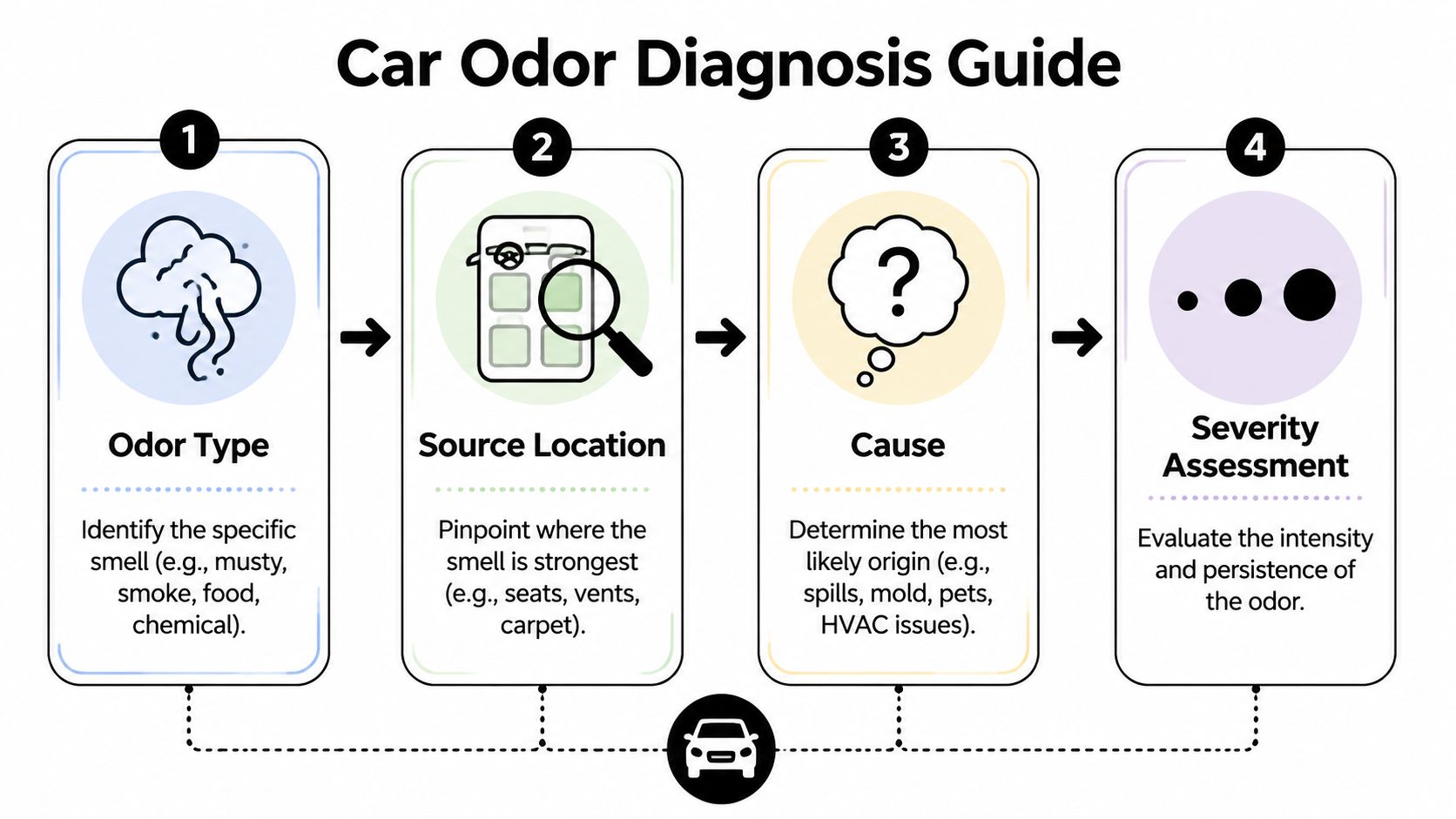
Pinpointing the Problem Your Odor Diagnosis Guide
Professional detailers don't start with a machine; instead, the primary job is diagnosis before any cleaner touches the interior. They start with questions, then they track the odor to its strongest point. That matters because the same smell category can hide in very different places depending on what caused it.
Pet owner odor and cleanup advice becomes especially useful when the smell seems to move between seats, cargo areas, and fabric trim, because pet odors often spread wider than the original accident site.
Start with the odor family
Different odors behave differently. Treating them all the same wastes time.
| Odor family | What it usually smells like | Common hiding places | Main challenge |
|---|---|---|---|
| Smoke | stale, ashy, burnt | headliner, vents, seat fabric, cabin filter areas | residue coats many surfaces at once |
| Biological | sour, rotten, acidic | seat foam, carpet, padding, under seats | source material may still be present |
| Environmental | musty, damp, earthy | carpet padding, trunk, vents, under mats | moisture keeps reactivating it |
| Pet | musky, oily, urine-like | rear seats, cargo area, belts, padding | proteins soak deep and spread |
How detailers narrow it down
A good odor inspection is simple but disciplined:
- Check when the smell appears: Only with the fan on suggests HVAC involvement. Stronger in heat suggests embedded contamination.
- Check where it's strongest: Lean over the seats, floor, trunk, and vents separately.
- Check what changed recently: A spill, a used-car purchase, a pet ride, water leak, or smoking history all matter.
- Check for moisture: Damp carpet and trunk liners change the whole repair plan.
If you can't answer where the odor is strongest, you're not ready to choose a treatment yet.
The biggest mistake with biological odors
Old milk, food spills, vomit, and pet accidents fool people because the visible mess may be gone. The odor remains because the spill traveled below the surface. Professional detailers use a diagnostic approach first, and for biological contamination incomplete extraction is a critical pitfall. If the source material stays embedded in carpet padding, odor recurrence is inevitable, as explained in this interior detailing and deodorizing guide.
That's the trade secret many drivers never hear. Surface cleaning can leave the worst part behind.
Quick self-check before you buy anything
Use this short test in your driveway:
- Smell the vents with the fan off
- Smell again with the fan on
- Press on the carpet near the front footwells
- Lift floor mats and smell underneath
- Check the trunk and spare tire well
- Smell the headliner near the driver's seat
If one area clearly spikes stronger than the others, that's your lead. If the entire cabin smells evenly contaminated, smoke is often the culprit. If one seat or floor section is much worse, think spill, pet, or moisture source first.
DIY Odor Removal Methods That Actually Work
Some odors can be improved at home. That's worth saying plainly. Not every smell needs advanced treatment, and not every vehicle needs heavy chemicals. For light, recent odors, simple methods can help a lot if you use them correctly and keep your expectations realistic.
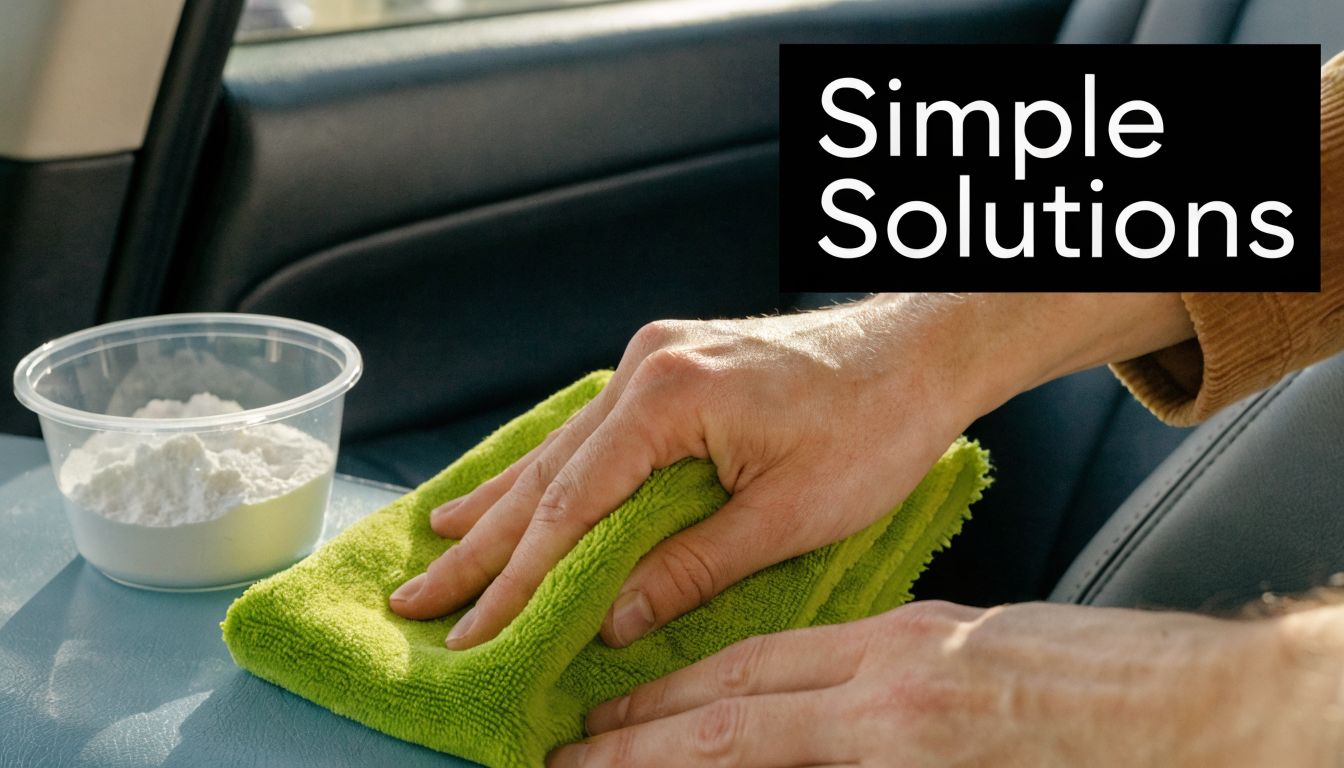
There's also a growing demand for odor correction that avoids synthetic fragrances and harsh residues. Many guides still lean hard on chemical-heavy solutions, but health-conscious drivers often prefer approaches built around steam extraction and targeted, naturally-derived enzyme cleaners, as discussed by Clean Mobile Detailing's odor elimination treatment page.
What works for light odors
These methods are useful when the odor is recent, mild, and not tied to soaked padding or a moisture problem.
- Baking soda on removable mats: Use it on dry mats only, let it sit, then vacuum thoroughly. It can absorb some light odor, but it won't remove contamination deep in carpet backing or seat foam.
- Activated charcoal bags: Good for passive odor absorption between drives. Best for mild stale smells, not for a real source like pet urine or mildew.
- White vinegar wipe-down on hard surfaces: Helpful for food film, drink residue, and light sour smells on plastic or rubber surfaces. Keep it off sensitive materials unless you know the surface can handle it.
- Fresh air and dry-out time: If moisture caused the smell, airflow matters. Open the car on a dry day and let trapped humidity escape.
Where DIY usually fails
DIY methods break down when the smell is embedded, not just present.
A few examples:
- Spill reached the padding under carpet
- Smoke residue settled into the headliner and vents
- Pet accident soaked through upholstery foam
- Musty smell comes from an ongoing leak or damp insulation
In those cases, the home method may improve the first layer and leave the source underneath.
A car that smells better for one day and worse on the next warm day wasn't fixed. It was temporarily suppressed.
A safer home process
If you want to try odor removal car detailing at home before booking service, follow a clean sequence instead of throwing products at the problem.
- Remove trash and loose debris
- Take out mats and dry them separately
- Vacuum thoroughly, especially seams and under seats
- Clean the exact area where the odor is strongest
- Let the cabin dry fully before judging results
- Use charcoal as a follow-up, not as the main treatment
For broader step-by-step help, this guide on getting rid of bad smells in a car lines up well with what works in real interiors.
A practical demo helps here:
What not to do
A lot of odor problems get worse because the wrong product gets used first.
- Don't soak seats blindly: Too much liquid can push contamination deeper.
- Don't spray heavy fragrance over mildew: You'll get mildew plus perfume.
- Don't judge results before the car is dry: Wet fabric can hide or distort the actual odor.
- Don't ignore the cabin air path: Sometimes the smell returns when the fan runs because the vents or filter area are involved.
DIY is a good first move for a mild issue. It's not a cure for contamination you can't reach.
When to Call a Professional Advanced Odor Elimination
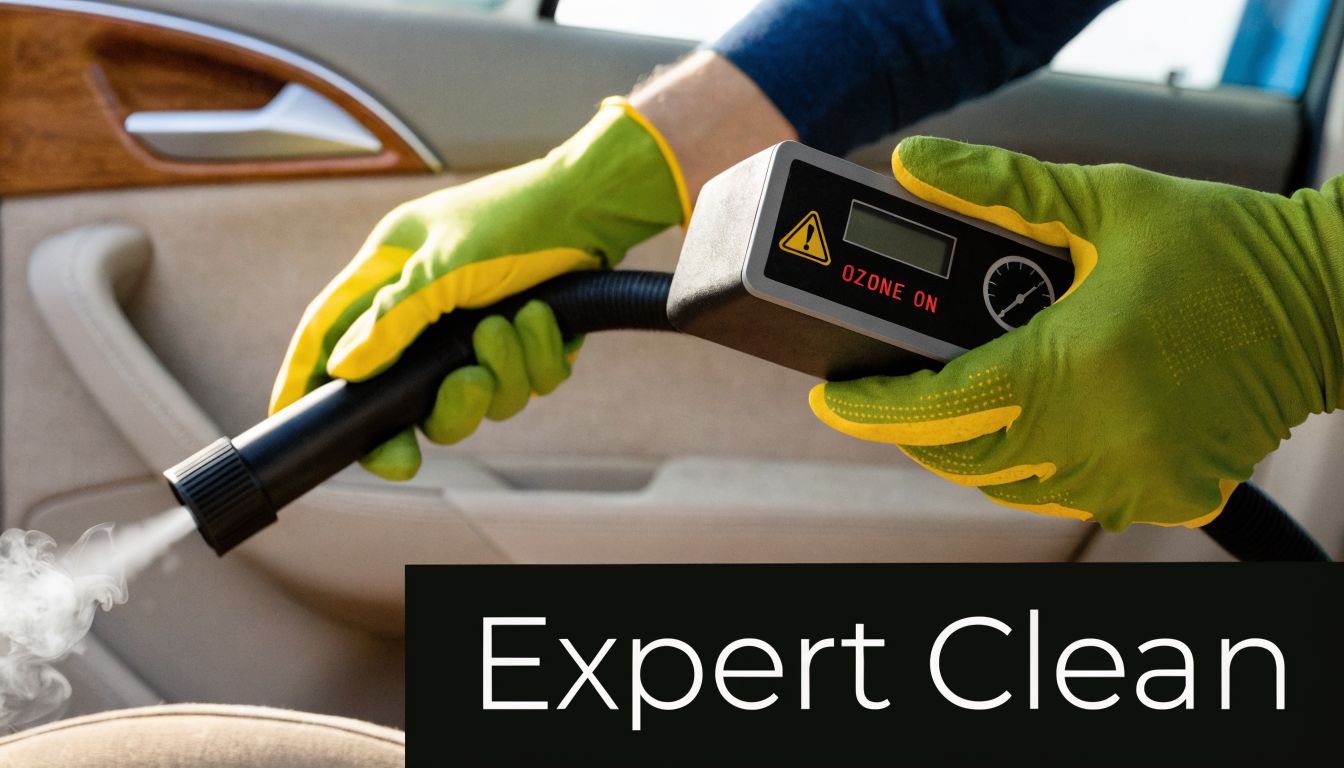
Some odor jobs cross the line from cleaning to remediation. That's when the tools matter, but the sequence matters even more. Professional odor removal works because it combines physical removal, chemical or enzymatic neutralization, and, when needed, gas treatment that reaches areas cloths and brushes can't.
The three methods that matter
Steam and extraction
Steam helps loosen contamination from fabric and textured surfaces. Extraction matters because it removes loosened material instead of leaving it behind. This is the backbone of serious interior odor work, especially for spills, food, and biological residue.
If the source is organic, extraction is often the difference between temporary improvement and a true reset.
Enzyme treatment
Enzyme cleaners target organic residue rather than covering it. That makes them useful for milk, vomit, pet accidents, and other biological odors. In family vehicles, this is often the safest middle ground because it addresses the source without relying on a strong perfume finish.
For drivers who want a non-toxic, fragrance-free approach first, this is usually the direction to explore before jumping straight to gas treatment.
Ozone treatment
Ozone has a place, but it's not magic and it's not step one. Ozone works by oxidizing odor-causing molecules at the molecular level, which is why it can penetrate ventilation systems and fabric fibers that resist standard cleaning. Professional ozone treatment has high success rates for several odor types, including 90 to 95 percent for smoke and 85 to 90 percent for pet odors. The process typically takes 30 to 60 minutes and requires mandatory post-treatment ventilation for occupant safety, according to this explanation of professional car ozone treatment.
What ozone can't do
Ozone doesn't replace cleaning. If spoiled milk is still in the carpet pad, or pet contamination is still in seat foam, ozone may improve the odor but won't solve the underlying source.
That's why good detailers use it after physical cleaning, not instead of it.
Shop-floor reality: The dirtiest part of many odor jobs isn't the visible stain. It's what migrated underneath.
When professional help is the right move
Call a pro when any of these are true:
- The odor returns after DIY cleaning
- You smell it strongest with heat or humidity
- The fan system spreads the smell
- You bought a used car with smoke or pet history
- A spill soaked through fabric
- There's any sign of mildew or moisture
A dedicated interior service such as deep interior cleaning for heavily used vehicles is often the right starting point because it handles the contamination before any finishing treatment is chosen.
The trade-offs most shops don't explain well
Here's the honest version.
| Method | Strength | Limitation | Best use |
|---|---|---|---|
| Steam and extraction | removes physical contamination | may not reach sealed vent systems alone | spills, grime, biological residue |
| Enzyme treatment | targets organic odor source | needs correct dwell time and full removal process | food, vomit, pet accidents |
| Ozone | reaches deep, effective on smoke and mildew-type odors | requires ventilation and doesn't replace cleaning | persistent residual odor after cleaning |
GP Mobile Car Wash & Detail offers an odor treatment service as part of its detailing packages using a machine placed in the closed vehicle for an extended treatment cycle, which fits situations where deeper deodorization is needed after interior cleaning.
The best result usually comes from matching the tool to the source, not from picking the strongest-sounding treatment.
Keeping It Fresh Long-Term Odor Prevention Strategies
Most odor articles stop at removal. That misses the part owners care about after they pay for the service. They want to know how to keep the problem from coming back.

That gap is real. Existing odor removal content rarely talks about recurrence or prevention, even though customers want to know how long a $50 to $300+ treatment may last and what simple habits reduce return odors, especially in climates with temperature and humidity swings, as noted by Westchester Detailing's odor removal discussion.
Prevention beats retreatment
Lincoln weather makes prevention more important than people think. Heat wakes up old residue. Humidity can reactivate musty smells. Wet shoes, sports gear, takeout spills, and winter slush all feed the cycle.
The easiest way to protect your odor removal result is to reduce two things: absorbed moisture and delayed cleanup.
Habits that actually help
- Use real floor protection: All-weather mats catch slush, mud, and drink drips before they soak into carpet.
- Clean spills the same day: Fresh contamination is far easier to remove than old contamination.
- Empty the trunk regularly: Gym bags, groceries, and damp gear create slow-building odor.
- Dry the interior after storms or snow: If mats or carpet get wet, don't leave the car sealed up overnight.
- Pay attention to the first faint smell: The easiest odor to fix is the one you catch early.
What families should keep in the car
A simple spill kit prevents a lot of expensive odor work later.
| Keep in the car | Why it helps |
|---|---|
| microfiber towels | blot spills fast without grinding them in |
| a small trash bag roll | removes food waste before it lingers |
| unscented surface wipes | handles fresh residue on hard surfaces |
| spare mat or towel | protects carpet under child seats or pet crates |
The best odor prevention product is fast cleanup. Nothing else comes close.
The long-term mindset
A car interior stays fresh when you treat odors like leaks, not annoyances. If something smells off, something caused it. Handle the cause early and you usually avoid the big remediation job later.
That's also why heavy fragrance isn't a good maintenance plan. A neutral-smelling cabin is easier to monitor. You notice change faster, and you catch problems before they move into padding, vents, or trim.
Choosing Your Detailing Solution in Lincoln NE
If the odor is light, recent, and easy to trace, a careful DIY cleanup may be enough. If it keeps returning, gets worse in heat, or seems buried in the car rather than sitting on the surface, it's time for professional odor removal car detailing.
That decision usually comes down to three questions:
- Is the source known or are you guessing?
- Did the contamination soak below the surface?
- Do you want the smell gone, or just less noticeable?
For busy Lincoln drivers, convenience matters too. Mobile service makes sense when the vehicle just needs targeted interior work at home or at the office. A shop setting makes more sense when the odor issue needs longer treatment time, controlled drying, or more intensive equipment use.
The other factor is product philosophy. Some owners want the strongest possible deodorization approach no matter what it smells like afterward. Others want a safer, family-friendly result with non-toxic, fragrance-free cleaning solutions and no heavy perfume left behind. Neither preference is wrong, but it should shape the treatment plan from the start.
The honest path is simple. Diagnose first. Use mild, safe methods when the problem is small. Bring in professional tools when the odor is embedded, recurring, or tied to smoke, mildew, pet contamination, or a spill that reached the padding. That's how you get from “the car still smells weird” to a cabin that feels clean.
If your vehicle still has a smell that keeps coming back, GP Mobile Car Wash & Detail can help you narrow down the source and choose the right treatment, whether you need mobile convenience in Lincoln or a more intensive shop-based interior service with a fragrance-free, family-conscious approach.