
Many small business owners address fleet maintenance scheduling only after a van misses a delivery, a service truck fails to start, or a crew loses half a day waiting on an emergency repair. That is usually when the true cost shows up. Not just the invoice from the shop, but the missed work, the upset customer, the rescheduling, and the scramble to cover routes with the vehicles you have left.
If you run even a small fleet, you need a system that keeps vehicles available, safe, and presentable without constantly pulling them out of service. The mistake I see most often is treating maintenance as mechanical only. Oil changes get planned. Brake work gets planned. Washing, interior care, and paint protection get pushed off until the vehicles look rough or corrosion starts showing up.
That split is expensive. A workable fleet maintenance scheduling program should cover both mechanical health and asset preservation. When you do that well, you reduce breakdown risk, control downtime, and protect the value of the vehicles you already paid for.
The Foundation of Your Fleet Maintenance Program
The most expensive maintenance event in a fleet is usually the one you didn't schedule.
A delivery van breaks down on a busy day, and the problem spreads fast. One driver sits on the roadside. Another route gets delayed. A customer calls asking where the crew is. Someone in the office starts moving jobs around. Then the towing bill, the emergency repair, and the lost work all hit at once.

That's why the first shift in mindset matters. Fleet maintenance scheduling isn't mainly about fixing vehicles. It's about controlling when problems get handled so they don't interrupt revenue-producing work.
Control is the point. If you choose when a vehicle comes off the road, you can protect the schedule. If the vehicle chooses for you, the day usually gets worse.
Reactive work costs more
The clearest business case for a structured schedule is simple. Fleets that reach a scheduled maintenance ratio of 65 to 75 percent tend to be more cost-effective, and reactive maintenance can cost 4 to 10 times more than planned work because of towing, emergency repairs, and lost productivity, according to Geotab's fleet management KPI guidance.
That range tells you something important. Preventive work doesn't just trim costs around the edges. It changes the shape of your operating budget.
A formal schedule also helps with the problems owners tend to underestimate:
- Service planning: You can line up work before the vehicle is urgently needed.
- Driver accountability: People know when inspections, clean-outs, and reports are due.
- Duty of care: Written policies make it clear when oil changes, brake service, tire work, and other recurring tasks need to happen.
- Asset life: Vehicles usually stay useful longer when small issues get handled early.
What a real program looks like
A real fleet maintenance program isn't a reminder in someone's phone and a stack of repair receipts in the glovebox. It's a repeatable operating system.
At a minimum, that system should include:
- A written service policy that tells drivers and managers what gets checked and when
- A checklist by vehicle type so each van, truck, RV, or boat gets the right recurring tasks
- A live schedule that staggers service instead of pulling too many assets offline at once
- A reporting habit so every inspection, repair, wash, and vendor visit gets documented
Practical rule: If your team can't answer "what's due next, for which vehicle, and who owns it" in under a minute, the system is still too loose.
Most local businesses don't need a complicated maintenance department to get this right. They need consistency. The companies that stay ahead of repairs usually aren't doing anything flashy. They just schedule early, document well, and treat vehicle care as part of operations instead of an afterthought.
Building Your Preventive Maintenance Checklist
A schedule only works if the underlying checklist is solid. If your team doesn't know what belongs on the list, the calendar becomes noise.
The easiest way to build a checklist that people use is to split it into two buckets. The first is Mechanical Health. The second is Asset Preservation. That second category is where many fleets leave money on the table because it gets treated like appearance work instead of preventive maintenance.
For a helpful reference point, this fleet vehicle maintenance checklist is a good model for organizing recurring tasks by vehicle and service type.
Separate reliability from preservation
Mechanical Health covers the tasks that keep the vehicle roadworthy and safe. Think oil and filter service, brake inspections, tire rotation, fluid checks, battery condition, lights, belts, hoses, and any manufacturer-required service.
Asset Preservation covers the work that protects the outside and inside of the vehicle from gradual damage. That includes exterior washing, underbody rinse when conditions demand it, interior vacuuming, wipe-downs, stain removal, glass cleaning, and protective treatments where they make sense.
When these are kept separate on paper, owners can make better decisions. A brake issue may outrank everything else. But a dirty vehicle that carries road salt for weeks is also creating future cost, even if that cost doesn't show up this month.
Sample Preventive Maintenance Checklist for a Service Van
| Vehicle System | Task | Interval (Miles/Months) | Notes |
|---|---|---|---|
| Engine | Oil and filter change | Per OEM schedule | Use manufacturer interval as baseline and shorten for severe use if needed |
| Brakes | Brake inspection | Per OEM schedule | Check pad wear, rotor condition, brake feel, and noise |
| Tires | Tire rotation and tread check | Per OEM schedule | Inspect for uneven wear, pressure issues, and sidewall damage |
| Fluids | Coolant, brake fluid, transmission fluid, washer fluid check | Monthly and per OEM schedule | Add leak check during each review |
| Battery and electrical | Battery test, terminal inspection, light check | Monthly | Include starting performance notes from drivers |
| Suspension and steering | Visual inspection | Per OEM schedule | Look for pull, vibration, looseness, and uneven tire wear |
| Exterior | Wash and contaminant removal | Recurring by route and season | Increase frequency during heavy dust, mud, or winter road treatment periods |
| Exterior protection | Paint and trim inspection | Recurring | Note fading, sap, bug buildup, and early corrosion spots |
| Interior | Vacuum, wipe-down, cab cleanout | Recurring | Helps drivers spot leaks, damage, and missing equipment sooner |
| Branding surfaces | Decal and signage inspection | Recurring | Keep wraps and graphics readable and professional |
Build the checklist around real use
Don't make the mistake of copying a generic list and calling it done. A service van that idles often, carries tools, and runs short-stop city routes wears differently than a highway vehicle. An RV or boat trailer setup needs a different checklist than a plumbing van.
A useful checklist usually includes these fields:
- Vehicle ID: Unit number, plate, make, model
- Trigger type: Mileage, months, operating hours, or seasonal timing
- Assigned party: Driver, shop, outside vendor, or mobile detail provider
- Completion record: Date completed, notes, and follow-up action
- Condition flags: Pass, watch, service soon, out of service
Keep it simple enough to survive busy weeks
The best checklist is the one your team can fill out without friction.
If a form is too long, drivers skip it. If service notes are too vague, recurring problems get missed. If aesthetic care isn't listed, it won't happen until the vehicle already looks neglected.
That's why I prefer one page per vehicle type, then small variations for use case. Keep the language plain. Keep the tasks visible. And make sure cleaning is listed beside inspections, not buried as an optional extra.
Designing Your Master Schedule and Prioritization Rules
A plumbing van comes due for brakes on Tuesday. Another unit is already booked for routine service. By Wednesday, a third is off the road because a driver finally reported a slow coolant leak. The problem usually is not the checklist. The problem is a schedule with no spacing, no reserve capacity, and no rule for what gets the next open slot.
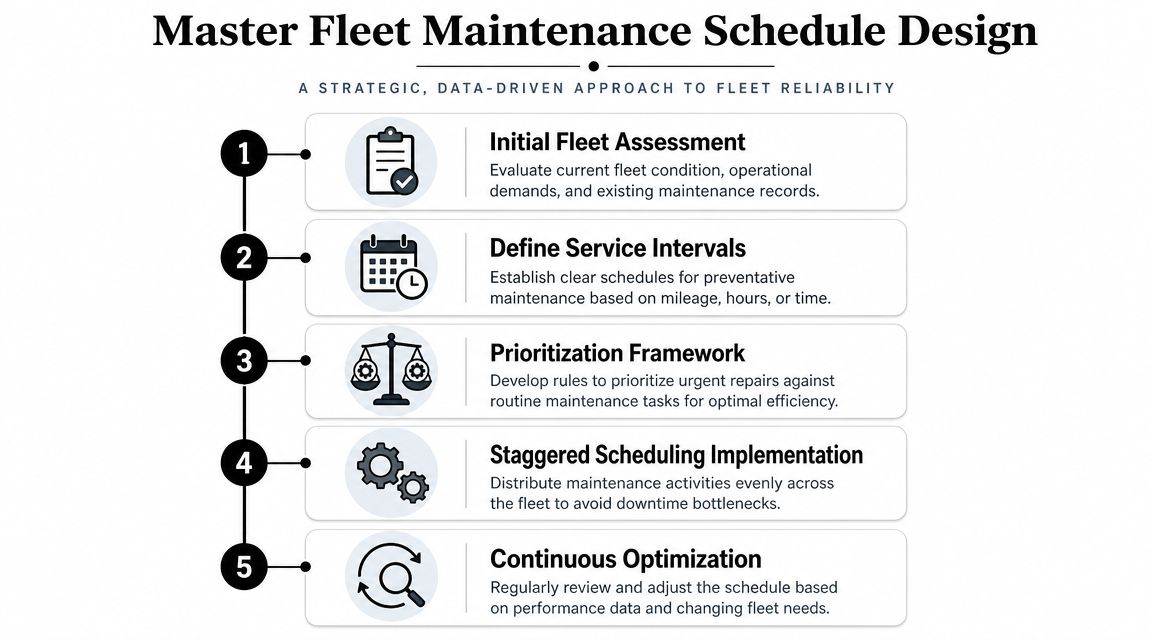
A workable fleet calendar protects revenue first. If too many vehicles are down at once, route density drops, overtime climbs, and customer windows get missed. Linxup's overview of fleet maintenance KPIs highlights downtime as one of the numbers that directly affects productivity and service performance. That is why a master schedule needs capacity limits and priority rules, not just due dates.
If you want a practical model for turning service intervals into a calendar your team can follow, this guide to vehicle maintenance schedules is a useful reference.
Stagger the work by vehicle, task type, and business impact
Small fleets often create downtime by sending units in as a group. It feels organized. It rarely works well in the field.
Spread work across the month instead. Separate heavier shop visits from lighter preventive tasks such as washes, cab cleanouts, and visual condition checks. That keeps more units earning, and it gives drivers more chances to catch small issues before they become repair tickets.
A simple staggered pattern might look like this:
- Van 1: Early-month mechanical PM
- Van 2: Mid-month wash, interior clean, and walkaround inspection
- Van 3: Late-month tire, brake, and suspension review
- Van 4: Next-month mechanical PM
- Van 5: Next-month exterior preservation and cab reset
That structure does two jobs at once. It spreads labor demand, and it keeps light-touch detailing inside the maintenance rhythm instead of treating it like optional cleanup after the fact.
Set your priority order before the calendar gets crowded
Every fleet hits the same pinch point. Two or three needs land in the same week, and someone has to decide what moves first.
Make that decision once, then apply it the same way every time.
1. Safety and compliance
Brake issues, tire damage, steering problems, lights, visibility concerns, and inspection-related repairs go first. If the vehicle should not be on the road, it does not stay in rotation.
2. Breakdown prevention
Fluid leaks, charging problems, weak batteries, overheating signs, vibration complaints, and repeat warning lights come next. These are the jobs that often cost less in the shop than they do on the side of the road.
3. Preservation and presentation
Scheduled washing, salt removal, interior cleaning, stain treatment, glass cleaning, decal checks, and paint protection stay on the calendar. They rank below immediate safety work, but delaying them too long creates avoidable wear, hides defects, and shortens the useful life of the vehicle's finish and interior.
That third category gets ignored in a lot of fleets. It should not. A clean van makes inspection faster, helps drivers notice new damage, and cuts the buildup that leads to corrosion, trim wear, and premature interior replacement.
Leave buffer time every month
A full calendar looks efficient right up until parts are late or an inspection finds extra work.
Hold open time each month for catch-up jobs, vendor delays, and repeat issues. In practice, that buffer is what keeps one surprise from disrupting the whole fleet. I would rather leave a slot unused than book every opening and scramble when a revenue-producing truck goes down unexpectedly.
Here is a practical monthly pattern for a five-van operation:
| Week | Vehicle | Scheduled work | Priority |
|---|---|---|---|
| Week 1 | Van 1 | Mechanical PM and inspection | Safety and compliance |
| Week 1 | Van 3 | Exterior wash and interior clean | Preservation and presentation |
| Week 2 | Van 2 | Tire review and fluid service | Breakdown prevention |
| Week 3 | Van 4 | Mechanical PM | Safety and compliance |
| Week 3 | Van 5 | Wash, glass, cab cleanout | Preservation and presentation |
| Week 4 | Open slots | Catch-up work, vendor delays, repeat issues | Mixed |
Match the schedule to real operating conditions
A fleet calendar should reflect how each vehicle works. A van that idles at job sites, carries heavy tools, and runs short city routes should not follow the same rhythm as a unit spending most of its week on the highway. The same goes for appearance-related care. Vehicles exposed to mud, salt, tree sap, or customer-facing parking lots need more frequent exterior and interior attention than units with lighter duty.
That is where the trade-off gets real. Pulling a van for a wash and interior reset does take time. But leaving road salt on lower panels, grime on glass, and dirt packed into the cab usually costs more later through corrosion, harder inspections, driver complaints, and a vehicle that looks older than it is.
The best master schedule is the one your team can run during a busy month without guessing. It keeps enough vehicles available to serve customers, pushes urgent work to the front, and makes room for light detailing because clean, inspected vehicles usually stay in service longer and cost less to put right later.
Integrating Mobile Detailing for Peak Fleet Health
This is the part most fleet plans miss.
Owners will carefully schedule oil service, tire work, and inspections, then leave washing and interior care to chance. A vehicle goes through muddy jobsites, winter slush, dust, pollen, fast-food spills, and daily wear, but no one assigns those issues a slot on the maintenance calendar. Then six months later, the paint looks tired, the cabin smells rough, corrosion starts showing up, and the vehicle no longer represents the business well.

Routine mobile detailing belongs inside fleet maintenance scheduling because it prevents avoidable damage. AUTOsist's planning guidance notes that integrating routine mobile detailing helps prevent long-term damage from dirt and UV exposure, and that poor exterior care can increase repaint and corrosion repair costs by 15 to 25 percent over a vehicle's life.
Treat cleaning as preventive maintenance
A dirty fleet doesn't just look neglected. Dirt holds moisture. Road film sticks to paint. Salt sits in seams and lower panels. Interiors wear faster when grit stays in carpets and seats. Drivers also tend to notice leaks, cracked trim, broken lights, and body damage sooner when the vehicle is cleaned regularly.
That's why I separate detailing tasks into two levels:
- Light-touch recurring care: exterior wash, glass, quick vacuum, dash and touchpoint wipe-down
- Periodic restorative care: deeper interior cleaning, stain removal, protective treatment, oxidation cleanup, and targeted correction for high-contact vehicles
For local operators, mobile service is often the practical move because it reduces dead travel and lets the vehicle stay near the route.
Use downtime harvesting
The smartest way to schedule detailing is something I think of as downtime harvesting. Instead of dropping vehicles off and losing half the day, you line up cleaning during periods when the unit is already parked and not earning.
That can include:
- Lunch windows: Good for quick exterior and cab-reset work
- Jobsite idle periods: Useful when crews are on site for extended service calls
- Evening yard time: Effective for recurring washes on route-based fleets
- Same-day pairing with inspections: A clean vehicle is easier to inspect accurately
One option for that kind of recurring support is small business fleet washing from GP Mobile Car Wash & Detail, which offers mobile fleet wash scheduling for business vehicles. The main operational advantage is simple. The cleaning comes to the vehicle instead of the vehicle leaving the workday to chase a wash.
A quick visual example helps here:
Sync detailing with mechanical work, but don't always batch it
A lot of managers assume every service task should happen on the same day. That sounds tidy, but it can create unnecessary downtime.
What usually works better is a hybrid model. Pair deeper cleaning with larger planned service events when the vehicle is already coming off the road. Then schedule lighter recurring washes and interior resets during harvested downtime windows between mechanical visits.
Clean vehicles are easier to inspect, easier to present to customers, and easier to sell or rotate out later. That makes detailing an operating decision, not a cosmetic indulgence.
When businesses start treating exterior and interior care as preventive maintenance, the fleet usually looks better, lasts better, and causes fewer surprises.
Assigning Roles and Tracking Key Performance Indicators
A fleet schedule breaks down fast when ownership is fuzzy. One person needs to keep the calendar honest, drivers need to report what they see, and your shop or vendors need to close jobs with clear notes. If any of those handoffs are weak, small issues turn into missed service, repeat downtime, and extra rental or overtime costs.
Small fleets do not need layers of management. They need clear accountability that everyone can repeat without checking a policy binder.
Keep roles simple and visible
For a local business fleet, three roles usually cover the work:
- Fleet owner or manager: sets service priorities, approves downtime, reviews overdue items, and checks that outside vendors and drivers are following the schedule
- Driver: handles daily walkarounds, reports new defects quickly, keeps the cab and cargo area in workable condition, and shows up for scheduled service windows
- Service vendor or technician: completes the assigned work, documents findings, notes what is coming due next, and flags anything that should take the vehicle out of service
Write those responsibilities down and keep them where people can see them.
That matters even more once you build light-touch detailing into the schedule. Someone has to confirm the wash or interior clean happened, note skipped visits, and catch patterns like one crew returning trucks with overloaded trash, mud-packed floor mats, or heavy salt buildup. Those are operating issues. They affect wear, resale condition, driver morale, and how much cleanup gets pushed into bigger service events later.
Track the three KPIs that actually help you run the fleet
A small fleet can drown in reports. Start with the numbers that change decisions.
PM compliance rate
This measures how often scheduled preventive maintenance gets done on time.
Formula:
(Completed PM tasks on time ÷ Total scheduled PM tasks) × 100
A healthy PM compliance rate usually means the schedule fits real operating hours, drivers are bringing units in as planned, and vendors are turning work around on time. A weak number usually points to one of four problems. Intervals are unrealistic, the calendar is overloaded, follow-up is inconsistent, or nobody is updating records after the work is done.
Planned vs. unplanned maintenance ratio
This shows how much of your repair activity is controlled versus reactive.
If planned work makes up most of your shop time, you are usually scheduling well and catching problems earlier. If unplanned work keeps growing, check your inspection habits, turnaround times, parts delays, and late defect reporting. Also review whether vehicles are coming in too dirty inside or underneath to support quick diagnosis over time. Dirt, clutter, and road grime do not cause every failure, but they do slow inspections, hide leaks, trap moisture, and add labor.
Vehicle uptime
This tells you how available the fleet is for work.
Formula:
(Total available hours – Downtime hours) / Total available hours × 100
Uptime is the number owners feel first. If it drops, revenue vehicles are sitting, routes get reshuffled, and your best people spend time covering gaps instead of doing profitable work.
Use the numbers to fix the process
Metrics only matter if they lead to action.
If PM compliance slips, tighten your scheduling rules or reduce how many units you pull at once. If planned work is too low, require faster driver defect reporting and cleaner closeout notes from the shop. If uptime keeps missing target, look at repeat repairs, parts ordering, vendor delays, and whether too much preventable cleanup is getting dumped into mechanical visits.
One more metric is worth watching in fleets that have added recurring wash and interior service. Track completion rate for those light-touch detailing visits and compare it against corrosion issues, cab-condition complaints, and prep time before bigger service events. Over time, that gives you a practical answer to a question a lot of owners get wrong. Basic cleaning is not just appearance work. It is part of asset care, and it often saves money by reducing avoidable labor and helping vehicles stay in serviceable condition longer.
A simple rule works well here. If a metric does not help you make a scheduling decision, a staffing decision, or a vendor decision, drop it until the basics are under control.
Common Questions About Fleet Scheduling
How do I schedule maintenance for a mixed fleet with vans, RVs, and boats
Don't force different asset types into one uniform rhythm. Mixed fleets need different triggers and different seasonal logic.
For assets like RVs and boats, a downtime harvesting approach works best. Schedule maintenance during their natural off-seasons rather than batching everything the same way you would for daily-use vans. According to Kooner Fleet Management Solutions, that approach can maintain 95 percent uptime, compared with 80 percent in fleets that use a one-size-fits-all batching schedule.
For day-to-day management, keep one master calendar but give each asset class its own checklist and service cadence. Daily revenue vehicles should be planned around route demand. Seasonal assets should be planned around storage, launch, winterization, and low-use periods.
Should I use a spreadsheet or buy fleet software
Start with the simplest tool your team will maintain.
A spreadsheet works if you have a small fleet, one location, and someone disciplined enough to update due dates, service history, and notes every week. A shared calendar can also work if the schedule is straightforward and the team communicates well.
Move to fleet software when one of these problems shows up:
- Missed service intervals because the spreadsheet wasn't updated
- Too many vehicles to monitor manually
- No clean history of what was done and when
- Multiple vendors or locations that need one source of truth
The wrong software is the one nobody uses. The right starting point is the one your operation can keep current.
How do I get drivers to follow the schedule
Keep the driver role narrow and practical.
Drivers usually cooperate when the expectations are clear and the process is quick. Give them a short daily check, an easy way to report issues, and a clear rule for what happens when a warning light, tire issue, or cleanliness problem shows up. Don't bury them in forms.
A few habits make compliance much better:
- Attach responsibility to the unit: each vehicle should have a named driver or primary team
- Close the loop visibly: when drivers report issues, show that the issue gets logged and handled
- Make clean vehicles part of the standard: drivers are more likely to notice new damage in a vehicle that's routinely maintained inside and out
Fleet maintenance scheduling works best when it feels like part of normal operations, not an extra admin exercise.
If your business needs a cleaner, more workable vehicle care routine, GP Mobile Car Wash & Detail provides mobile and shop-based detailing for fleets, vans, RVs, and boats in Lincoln and surrounding areas. For local operators trying to combine appearance, asset protection, and scheduling convenience, that kind of support fits well into a broader preventive maintenance program.