You wash the car on Saturday, stand back, and feel pretty good about it. By Monday, there's already a light film on the hood, a few water spots on the doors, and dust stuck to the back end like you never touched it.
That cycle gets old fast in Lincoln. Summer sun bakes everything onto the paint. Winter throws salt, slush, and grime at it for months. Even when you stay on top of cleaning, your car can still look tired sooner than it should.
That's why so many people ask the same question: is ceramic coating good for your car? The honest answer is yes, for the right owner and the right expectations. But it's not magic, and it's not a substitute for maintenance. It's a tool. A very useful one, especially in a four-season climate like Nebraska, if you understand what it does and what it doesn't.
Why Your Perfectly Clean Car Gets Dirty So Fast
A fresh wash only fixes part of the problem. It removes what's on the surface right now. It doesn't change how your paint behaves the next time dust blows through, sprinkler water lands on the panels, or road grime splashes up behind your tires.
That's why a car can look great leaving the driveway and already feel rough by the next day. Bare paint and worn clear coat give dirt, minerals, and contaminants more places to hang on. Water doesn't slide off cleanly. It sits, dries, and leaves marks behind.
What Lincoln drivers deal with year-round
In Lincoln, the seasons work against clean paint.
- Summer sun dries water fast, which makes spotting worse.
- Pollen and dust settle on horizontal panels almost immediately.
- Bird droppings and tree sap don't wait for your schedule.
- Winter salt and slush leave behind a stubborn film that sticks to lower doors and bumpers.
If you've ever washed your vehicle and thought, “Why does it already look dusty?” you're not being picky. You're noticing how quickly unprotected paint loses that just-cleaned look.
A lot of car owners don't want more shine as much as they want less hassle.
The real frustration isn't dirt
The bigger issue is maintenance fatigue. You spend time washing, drying, and trying not to leave streaks, only to repeat the same routine again a few days later.
That's where ceramic coating enters the conversation. Not as a miracle cure, and not as a gimmick, but as a different kind of surface protection. Instead of cleaning the paint, it changes how the paint handles water, dirt, and exposure.
Think of it like giving your car a clear, durable raincoat. The coat doesn't stop the weather. It just makes the weather less of a problem.
For many local drivers, that is the primary appeal. The car stays easier to clean, it sheds contamination better, and the finish holds up with less day-to-day effort.
Understanding Ceramic Coating Beyond the Hype
Ceramic coating is a liquid protective layer that bonds to your vehicle's clear coat. It isn't like old-school wax that sits on top for a while and slowly disappears. It becomes part of the surface in a much more lasting way.
A simple analogy helps. Wax is like putting lotion on your hands. It helps for a while, then it wears off. Ceramic coating is more like adding a fitted clear shell over the surface. You still have to wash it, but the surface underneath gets better protection.
What it's made to do
Professional coatings use a silica dioxide, or SiO₂, polymer matrix that chemically bonds to the vehicle's clear coat at the molecular level, unlike wax that stays on the surface. Professional-grade coatings with high SiO₂ concentrations can maintain protective efficacy for five years or more with proper maintenance, according to Denver Auto Shield's explanation of ceramic coating chemistry.
That chemical bond matters because it changes the durability conversation. You're not redoing protection every season. You're installing something designed to stay put and keep working.
Why people get confused
A lot of marketing makes ceramic coating sound like armor plating. That's where disappointment starts.
Ceramic coating is not the same as a thick physical barrier. It won't stop a rock chip on the highway. It won't make your paint invincible. It also won't fix scratches, swirls, or oxidation that are already there.
What it does well is create a slick, protective surface that resists contamination better than unprotected paint. That's why people notice easier drying, less grime sticking, and a finish that keeps its gloss longer.
Practical rule: Ceramic coating protects best when the paint underneath is already in good shape. It locks in the condition you apply it over.
Why the bond changes the experience
The reason ceramic coating feels different from wax comes down to how it wears. Wax fades away fairly quickly and often unevenly. A professional coating cures into a harder, cross-linked layer. That makes the surface more stable through weather, washing, and normal exposure.
For a Nebraska driver, that's a big deal. You're not just fighting sunlight. You're dealing with freeze-thaw cycles, grime, and long stretches where your vehicle doesn't get hand-washed as often as you'd like.
So, is ceramic coating good for your car in a practical sense? If you want a longer-lasting protective layer that makes upkeep easier, yes. If you're expecting a scratch-proof force field, no.
Weighing the Real-World Pros and Cons
The best way to judge ceramic coating is to ignore the hype and look at what changes in daily ownership. Some benefits show up right away. Others only matter after a year or two of living with the car through Nebraska weather.
The pros you'll actually notice
The first thing most owners notice is how much easier the car is to wash and dry. Professional-grade ceramic coating blocks 88 to 94% of harmful UV rays that cause paint fading, coated vehicles remain visibly cleaner between washes, and they require roughly 40% less washing time compared to standard paint, according to this 2026 ceramic coating performance guide.
Those are practical benefits, not just cosmetic ones.
- Less sun damage means your paint has better odds against fading and oxidation.
- Less washing time matters if you're cleaning in a driveway after work, not spending all day detailing.
- A slicker surface usually means dirt and light grime release more easily during normal washing.
There's also the visual side. A coated car often keeps that freshly detailed look longer because the surface reflects light more evenly and doesn't hold onto contamination as stubbornly.
Where the hype goes too far
Ceramic coating has limits, and it's better to be blunt about them.
It is not scratch-proof. It can help reduce some minor marring in normal use, but it won't stop key scratches, shopping cart hits, or highway debris. It also doesn't replace careful wash technique. If someone scrubs dirty paint with a rough mitt, the coating can't save that finish.
Ceramic coating makes maintenance more forgiving. It doesn't make bad habits harmless.
Another common misunderstanding is that coating means “maintenance-free.” It doesn't. Your car still needs washing. Bird droppings still need to be removed. Salt still needs to come off. The difference is that you're maintaining a more protected surface.
The hidden factor most people overlook
Preparation matters as much as the coating itself. If a vehicle has swirl marks, water spot etching, or light oxidation, those defects should be corrected before the coating goes on. Otherwise, the coating seals in those flaws and makes them more noticeable under certain light.
That's one reason people get wildly different results from one ceramic job to another. The bottle matters less than the prep.
Here's the balanced version:
| Consideration | What ceramic coating does well | What it does not do |
|---|---|---|
| Everyday protection | Helps against UV, grime, and light contamination | Doesn't prevent collision damage |
| Cleaning | Makes washing and drying easier | Doesn't eliminate washing |
| Appearance | Improves gloss and clarity | Doesn't fix neglected paint by itself |
| Durability | Lasts much longer than wax when applied well | Still degrades over time |
For owners who want less upkeep and better long-term paint preservation, the pros are strong. For owners expecting a one-time treatment that solves every paint problem forever, the cons show up fast.
How Ceramic Coating Compares to Wax and PPF
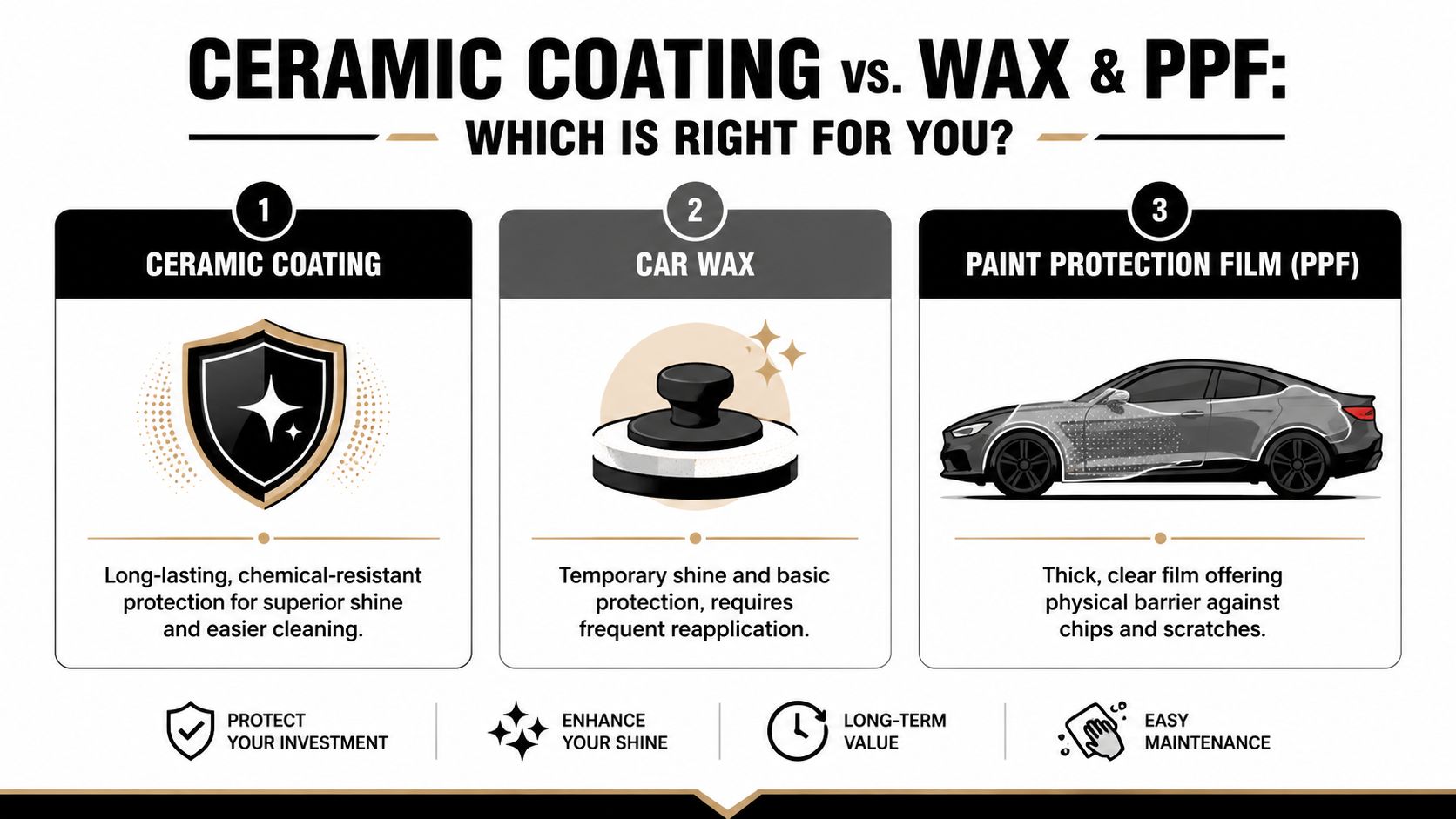
Ceramic coating makes more sense when you compare it directly with the two options many car owners already know: wax and paint protection film, usually called PPF.
They're not the same product, and they're not trying to solve the same problem.
Ceramic coating versus wax
Wax is the old standby. It adds gloss, gives some short-term protection, and can make a vehicle feel smoother for a while. The tradeoff is durability. Wax is temporary by nature.
Ceramic coating is built for a different owner. It forms a more durable protective layer, and its hydrophobic behavior is one of the biggest reasons people like it. Ceramic coatings create water contact angles exceeding 100 to 110 degrees, which helps prevent water from carrying contaminants into the paint's pores. Real-world data also indicates coated vehicles require 40 to 60% fewer wash cycles annually than unprotected vehicles, according to Final Touch Auto Spa's hydrophobic performance overview.
That doesn't mean wax is useless. It means wax is better for someone who enjoys frequent upkeep, while ceramic coating fits someone who wants longer-lasting help between washes.
Ceramic coating versus PPF
PPF is a different category entirely. It's a thicker clear film installed over paint to act as a physical barrier. If your main concern is rock chips on the front bumper, road rash on the hood, or physical abrasion, PPF is stronger protection than ceramic coating.
Ceramic coating's strengths are elsewhere. It's better known for slickness, chemical resistance, easier cleaning, and a strong glossy finish. Many owners compare the two as if they're interchangeable, but they're often complementary. If you want a deeper breakdown, this guide on paint protection film vs ceramic coating helps show where each one fits.
If you drive a lot of highway miles, PPF answers a different problem than ceramic coating.
Quick side-by-side table
| Attribute | Ceramic Coating | Traditional Wax/Sealant | Paint Protection Film (PPF) |
|---|---|---|---|
| Primary purpose | Long-lasting surface protection and easier cleaning | Short-term shine and basic surface protection | Physical barrier against chips and abrasion |
| Bond to paint | Chemical bond to clear coat | Sits on top of the surface | Film applied over painted panels |
| Durability | Multi-year with proper care | Short-term and needs frequent reapplication | Long-term physical protection |
| Best at | Hydrophobic behavior, gloss, wash ease | Budget-friendly shine for hands-on owners | Impact resistance on vulnerable areas |
| Won't do | Stop rock chips | Last through long weather exposure | Replace wash maintenance |
Which one makes sense
Choose wax if you enjoy doing regular upkeep yourself and want the lowest commitment.
Choose ceramic coating if you want easier maintenance, better resistance to daily contamination, and longer-term gloss without constant reapplication.
Choose PPF if physical damage is your top concern, especially on high-impact areas.
A lot of owners land on a mixed strategy. PPF on the front end. Ceramic coating on the rest. That combination isn't necessary for everyone, but it reflects a simple truth: each product solves a different problem.
What to Expect from a Professional Application
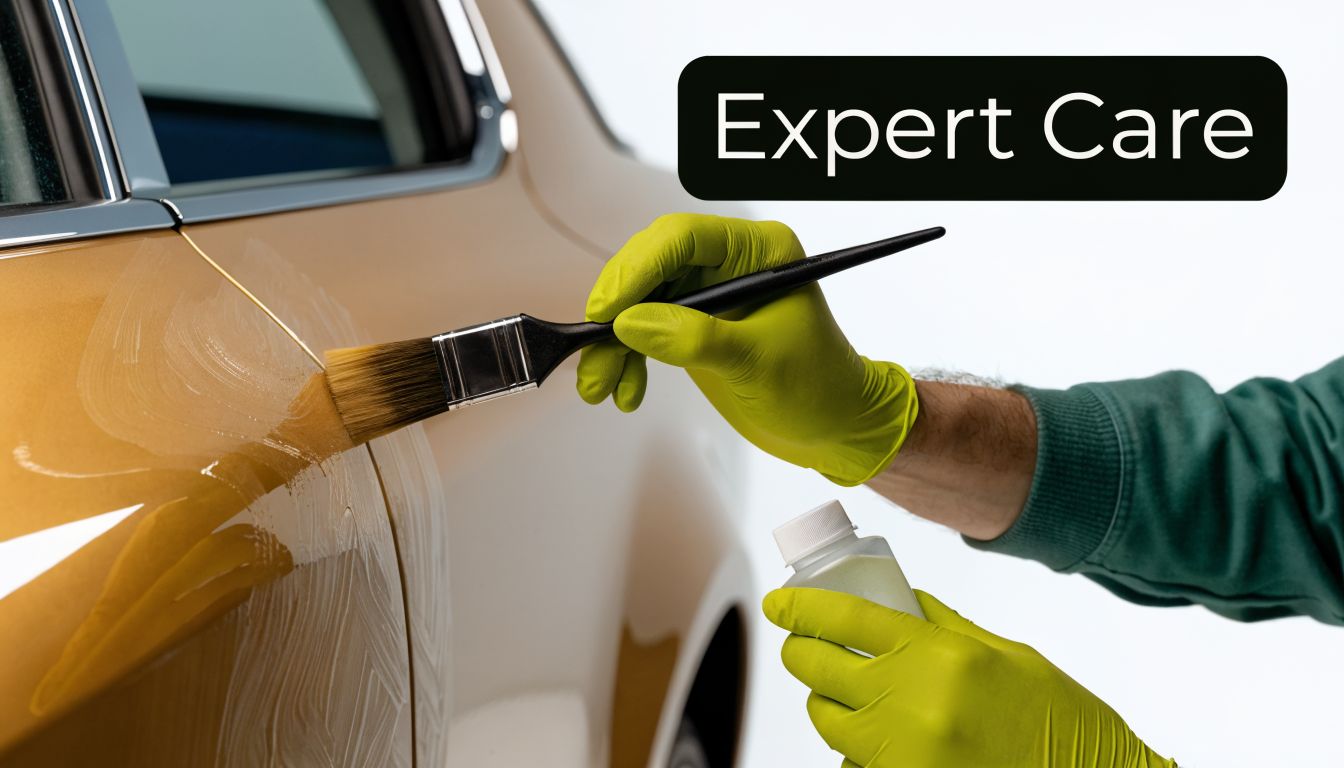
A professional ceramic coating job is mostly prep work. The coating itself matters, but the final result depends on how clean, corrected, and ready the paint is before the installer ever opens the bottle.
The surface has to be truly clean
A proper application usually starts with a thorough wash and decontamination. That means removing normal dirt first, then dealing with the stubborn stuff you can't always see right away, like bonded grime and embedded contamination.
Many pros also use clay treatment during prep. That step helps remove particles stuck in the paint so the surface feels smooth and ready for polishing.
Paint correction is where the result is won or lost
If your car has swirl marks, light scratches, haze, or old water spot damage, those flaws need attention before coating. Ceramic coating adds clarity and gloss, which means it can make defects stand out if nobody fixes them first.
That's why experienced detailers treat coating as a process, not a wipe-on shortcut. If you want to understand how that process works in more detail, this guide on how to apply ceramic coating to a car walks through the basics from prep to final curing.
The coating doesn't hide bad paint. It highlights whatever is underneath.
Application and curing
Once the paint is corrected and wiped down properly, the coating is applied in controlled sections. The installer watches for even coverage, levels the product, and removes residue before it cures incorrectly.
After that comes curing time. This is the part many owners underestimate. Fresh coating needs time away from moisture and contamination so it can harden and bond the way it's supposed to.
A simple walkthrough can make that easier to picture:
What you should expect afterward
A professional should give you clear aftercare instructions. Usually that means being careful during the initial cure period, then washing with methods that won't clog or damage the coated surface.
The big takeaway is this: a good ceramic coating appointment is not just product application. It's wash prep, decontamination, paint evaluation, correction, careful install, and smart aftercare. That's why two cars with “the same coating” can end up looking and performing very differently.
Uncovering the True Cost and Maintenance Needs
Ceramic coating can be a smart investment, but only if you think about the full cost. That includes the initial service and the effort required to keep the coating performing well in a place like Lincoln.
The easy mistake is to compare coating only to a cheap wash or a quick wax and stop there. The better question is what you're paying for over time. You're buying longer-lasting protection, less routine hassle, and slower paint wear, but you still need a maintenance plan.
Nebraska weather changes the math
Winter is where reality shows up. Salt, slush, and repeated freeze-thaw exposure are hard on any protective layer.
A 2025 IDA study of coated vehicles in northern U.S. states, including Nebraska, found that only 42% retained more than 80% hydrophobicity after 3 years because of salt-induced chemical degradation. The same source notes that pairing a coating with annual salt-neutralizing washes can extend its life by 30 to 50% for Lincoln owners, according to AO Detail's breakdown of ceramic coating pros and cons.
That's important because it cuts through the fantasy version of coating ownership. A coating may be durable, but harsh winter conditions can shorten peak performance if the owner ignores maintenance.
What maintenance actually looks like
You don't need to baby a coated vehicle, but you do need to care for it properly.
- Use gentle wash products that clean the surface without leaving heavy residue.
- Remove winter buildup promptly so salt doesn't sit on the paint for long stretches.
- Skip abrasive wash habits that can dull the finish or compromise the surface.
- Schedule periodic decontamination care when the coating stops feeling slick or water behavior changes.
If you want a practical care routine, this guide on how to maintain a ceramic coated car is a useful starting point.
Nebraska doesn't make ceramic coating a bad idea. It makes maintenance non-optional.
The right way to think about cost
The true cost isn't just what you pay on day one. It's whether you'll maintain the coating well enough to get the value out of it.
For some owners, that's a great trade. They'd rather invest once, wash more efficiently, and protect the finish through several seasons. For others, especially if they won't keep up with proper care, the investment can feel less rewarding than expected.
Ceramic coating works best when the owner's habits match the product.
Is Ceramic Coating the Right Investment for You
The answer depends less on your car and more on how you use it.
If you own a newer vehicle and want to keep the paint looking sharp for years, ceramic coating usually makes a lot of sense. You're protecting good paint while it's still in good condition. That's when the benefits are easiest to see and appreciate.
If you're a busy professional or a family juggling a full schedule, the time savings matter too. Easier washing and a cleaner-looking vehicle between washes can be worth more than the shine alone.
Who gets the most value
Some owners are especially good candidates:
- The new car owner who wants to preserve factory paint early.
- The daily driver owner who's tired of constant cleanup.
- The appearance-focused enthusiast who wants lasting gloss and easier upkeep.
- The fleet manager or business owner thinking about long-term asset value.
That last group has an additional reason to care. Ceramic-coated vehicles retain up to 15% higher resale value compared to unprotected vehicles, according to 24 Chemical Research's ceramic car coating market report.
Who might skip it
Ceramic coating isn't automatically the right move for everyone.
If your vehicle already has significant paint problems and you're not interested in correcting them, coating may not feel worth it. If you enjoy waxing by hand and don't mind repeating that routine, you may prefer the lower-commitment route. And if your main worry is rock chips, PPF may be the better first purchase.
So, is ceramic coating good for your car? For many Lincoln drivers, yes. Especially if you want easier maintenance, better long-term paint preservation, and realistic protection against the things our climate throws at a vehicle. It's a solid investment when your expectations are grounded and your maintenance habits are consistent.
If you want help deciding whether ceramic coating fits your vehicle, your budget, and Lincoln's four-season conditions, GP Mobile Car Wash & Detail can walk you through the options without the hype. Their team offers mobile service and shop appointments, so you can get professional advice and paint protection that matches how you use your car.