Paint protection film cost in 2026 typically ranges from about $900 for partial coverage to more than $7,000 for a full vehicle wrap, with full-front protection commonly landing well above entry-level pricing. If you're trying to decide whether that number is reasonable, the answer depends on what you drive, where you drive it, and how long you plan to keep it.
A lot of people start looking at PPF right after a new-car purchase. The first highway drive home feels different when you're watching every truck, every loose pebble, and every bug hit the front bumper. In Lincoln, that feeling doesn't last just one week. Between highway miles, winter grime, and the kind of road debris that shows up fast in Nebraska driving, paint damage adds up in the exact places owners care about most.
That's why paint protection film cost can't be judged like a simple accessory price. It's closer to body armor for your paint, fitted panel by panel. Some owners only need coverage on the impact zones. Others want the entire vehicle wrapped because they plan to keep it for years or want to preserve the finish as tightly as possible. If you're comparing options for a newer vehicle, this guide to the best paint protection for a new car is a useful starting point before you choose a package.
Your Guide to Understanding PPF Investment
You buy a new car, merge onto I-80, and within a few days you notice what owners in Lincoln usually notice fast. The front bumper, hood edge, and mirrors are the first places that start collecting tiny hits from road debris, bugs, and grit. That is the starting point for understanding PPF cost. You are not only paying for film. You are deciding how much future paint damage you want to prevent, and on which panels.
PPF pricing makes more sense when you look at it as an investment choice instead of a flat accessory charge. A smaller package protects the highest-impact areas for the lowest upfront spend. A full-front package covers the panels that usually take the most abuse. A full-body wrap costs far more, but it also changes the ownership equation for people who drive a lot, own a dark-colored vehicle, or plan to keep the car for years. If you are still comparing options, this guide to the best paint protection for a new car helps frame where PPF fits.
Why the price range is so wide
Two vehicles can ask for the same “front package” and get very different quotes.
The reason is simple. Cost comes from coverage and labor. More panels mean more material. More complex shapes mean more install time. A flat hood is easier than an aggressive bumper with vents, sensors, sharp curves, and wrapped edges. Large trucks, SUVs, and performance cars usually take longer to prep and fit cleanly, so the quote rises even before you change coverage levels.
Prep work also matters more than many buyers expect. If the paint has swirl marks, embedded contamination, or small defects, those flaws sit under the film unless the shop corrects them first. Good installers build that into the process because sealing in imperfect paint rarely feels like money well spent.
Practical rule: When two PPF quotes are far apart, compare the panel list, prep work, film brand, warranty, and whether edges are wrapped where possible. Price alone does not tell you what you are getting.
The better question to ask
A serious buyer usually is not trying to find the cheapest number. The better question is whether the paint protection film cost fits the car, the miles, and the ownership plan.
A daily driver that sees highway miles around Lincoln has a different risk profile than a garage-kept weekend car. A leased vehicle may only justify partial coverage. A new truck, performance car, or luxury SUV that you want to keep in strong condition often benefits from a larger package because the exposed front-end paint takes repeated abuse year after year.
That is the value equation. Match the coverage to the way the vehicle is used. Done right, PPF is less about buying the biggest package and more about buying the right protection in the right places.
What Exactly Is Paint Protection Film
Paint protection film is a transparent urethane film applied over painted surfaces to absorb abuse before the paint does. The simplest way to describe it is this: it's a high-tech screen protector for your car's body, except thicker, more durable, and designed to take impacts, stains, and light abrasion from real road use.
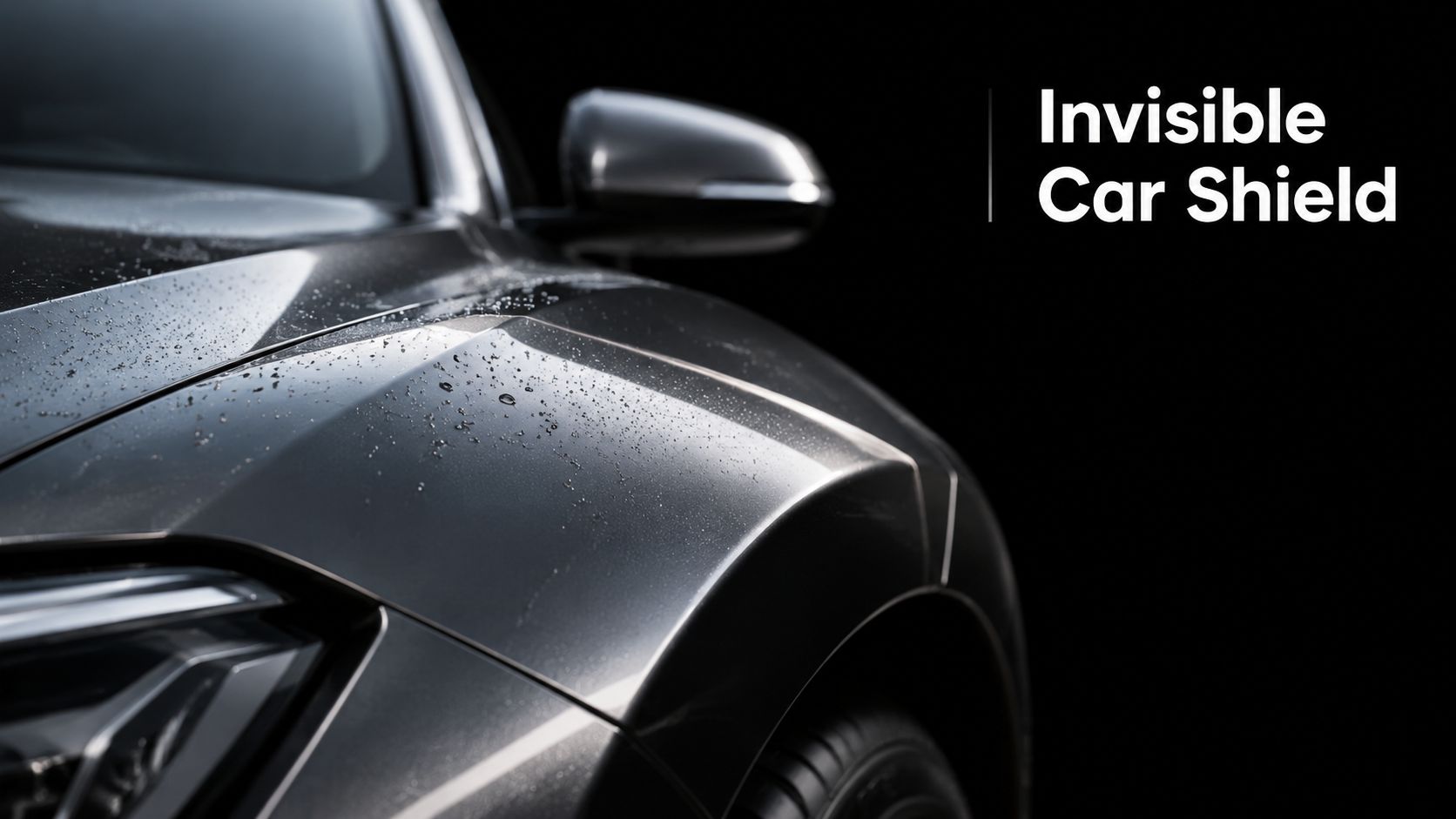
A quality film sits between your paint and the stuff that usually leaves a mark: rock chips, bug residue, bird droppings, light scratches, and road grime. Some premium films also have self-healing top layers, which means very fine surface marring can relax out with heat.
What it does well
PPF is strongest where physical contact happens. Front bumpers, hoods, mirror caps, fenders, rocker panels, and rear luggage areas are common targets because those panels take repeated hits.
It's not magic. A deep impact can still damage a surface. But film acts as the sacrificial layer, and that's the point. You replace film if needed. You don't repaint original panels unless you have to.
Why DIY looks cheaper than it really is
Many online comparisons go off track when evaluating costs. Film material by itself can look affordable. One 2025 guide lists material-only DIY pricing at $100 to $300 for a partial front, while a professional install starts around $500 to $900 for similar coverage, showing how much of the final bill comes from labor and skill according to this breakdown of DIY versus pro PPF pricing.
That gap exists for good reasons:
- Surface prep matters: Tiny contaminants under film stay there.
- Stretch control matters: Too much tension can distort fit and reduce long-term performance.
- Edges matter: Visible seams, fingers, and lifted corners are usually installation problems.
- Panel shape matters: Bumpers are where easy-looking jobs become frustrating fast.
A cheap film install usually doesn't fail all at once. It starts with silvering, lifted edges, trapped debris, or cut lines that you notice every time the car is clean.
Why professional installation changes the value
Professional PPF isn't just “someone applying clear film.” It's a finish service. The installer has to clean, decontaminate, fit, position, stretch, trim, and lock down the film without leaving marks that ruin the look of the vehicle.
That's also why owners comparing coating to film need to understand the difference before buying. Film protects against impact. Coating doesn't replace that role.
Key Factors That Determine Your PPF Cost
The final quote comes from a handful of variables working together, not one master price list. If you understand those variables, paint protection film cost starts to make sense quickly.
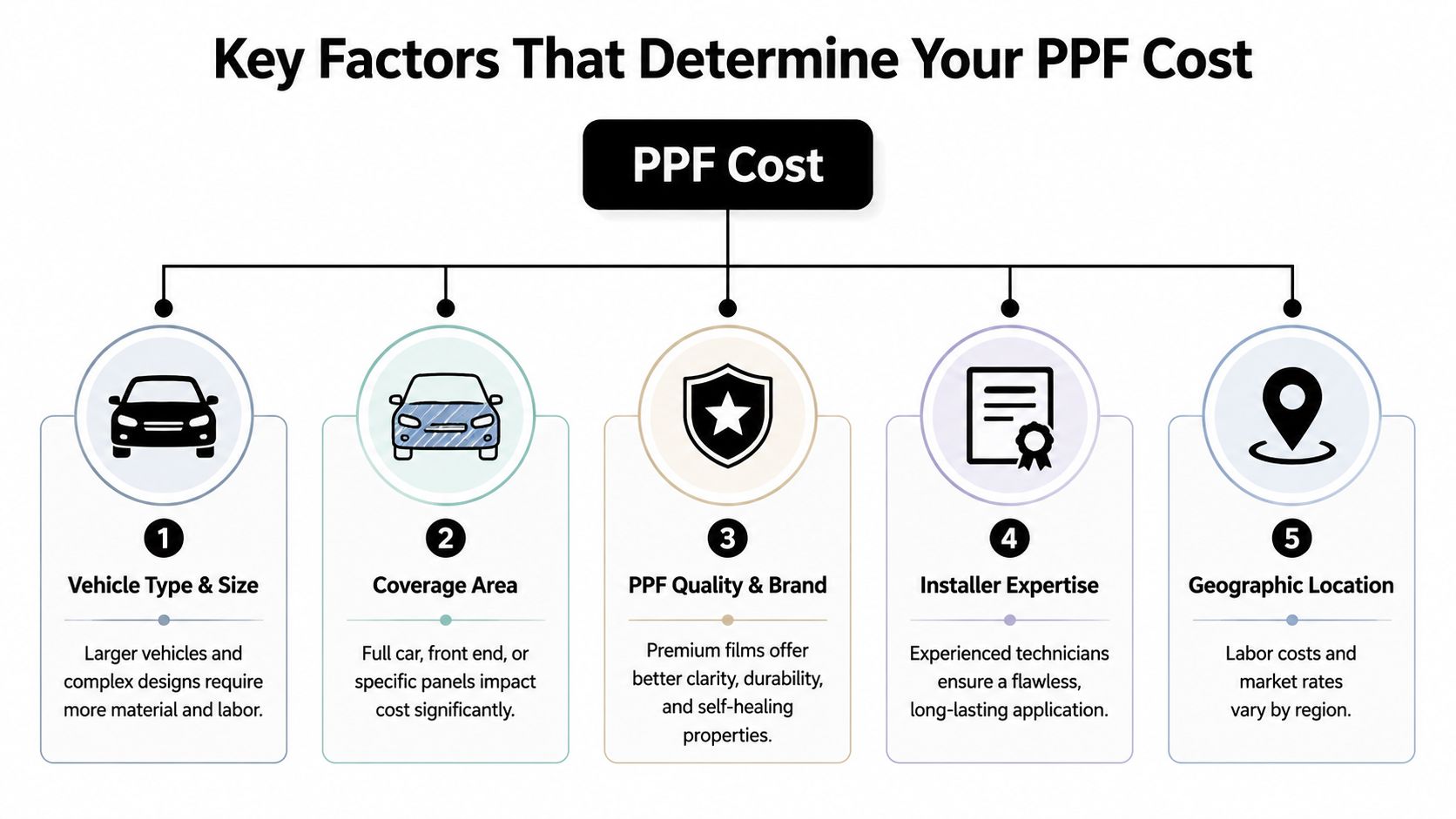
Coverage level changes everything
Coverage is the biggest pricing lever.
A partial-front package usually targets the areas that get hit first. A full-front package expands that protection to the entire leading edge of the vehicle. A full-body wrap pushes the material and labor demands into a different category entirely.
Here's the practical trade-off:
- Partial front: Lower buy-in, protects the highest-impact zones.
- Full front: Better visual consistency, fewer exposed edges between protected and unprotected paint.
- Full body: Best overall preservation, highest labor bill.
If you're trying to control cost without missing the important panels, this is the appropriate starting point for the conversation.
Vehicle shape and complexity raise labor time
A boxier vehicle can be simpler than a smaller sports car. Size matters, but shape often matters more.
Exotic and performance vehicles can exceed $10,000 because complex aerodynamics, carbon-fiber trim, and ADAS-related disassembly or recalibration add labor and risk, and common pre-installation paint correction can add $300 to $1,000 when defects need to be removed before film goes on, according to this explanation of how vehicle complexity affects PPF pricing.
If your paint already has wash marring, oxidation, or swirls, applying film over it won't fix the issue. It locks the condition in. That's why some vehicles need paint correction before protection.
A short visual helps make the hierarchy clear:
Film type affects both price and purpose
Not all film is the same. Standard gloss film and premium self-healing film don't behave the same in use or during installation. Matte, satin, and colored films also raise complexity because the finish itself becomes part of the look, not just the protection.
The more the film changes appearance or adds specialty performance, the more carefully it has to be selected and installed.
Prep work is often the hidden line item
Customers usually focus on the film. Installers focus on the surface first. That's the right order.
Before installation, the vehicle may need:
- Thorough wash and decontamination so grit isn't trapped under the film
- Panel inspection under proper lighting to find scratches or haze
- Paint correction when needed so defects aren't sealed in place
- Edge cleaning and detail work where adhesive performance matters most
Installer experience changes the end result
PPF is one of those trades where the finished product tells the truth. You'll see the difference in alignment, tucked edges, relief cuts, cleanliness under the film, and how the install ages after months of washing and weather exposure.
That's why the cheapest quote often becomes the expensive one later.
PPF Cost Scenarios and Price Ranges for 2026
A Lincoln driver buys a new SUV, spends a winter on Highway 2 and I-80, and by spring the front bumper already shows a few sharp chips. That is the true pricing question with PPF. It is not only, "What does film cost?" It is, "How much exposure does this car have, and which panels are expensive to repaint later?"
The best way to budget paint protection film is to match coverage to how the vehicle is used. Commute miles, gravel roads, highway speed, winter sand, and how long you plan to keep the car all matter as much as the package name.
2026 Estimated Paint Protection Film Cost by Coverage Level
| Coverage Package | Typical Price Range | Areas Covered |
|---|---|---|
| Partial Front | $900 to $1,300 | Typically the front bumper plus partial hood and partial fenders |
| Full Front | $1,400 to $1,900 | Commonly the full hood, full fenders, front bumper, and mirrors |
| Track Pack | $2,000 to $3,000 | Extra impact areas beyond the front, often for performance-focused driving |
| Full Vehicle Wrap | $4,500 to $7,000+ | Full-body protection across painted exterior panels |
Those ranges are best treated as working estimates, not fixed menu prices. The final number changes with vehicle size, panel shape, film brand, edge coverage, and how much prep the paint needs before installation.
How to choose the right scenario
A partial front fits the owner who wants to cap the budget and protect the highest-risk area first. It usually works best on daily drivers where small seam lines on the hood or fenders are an acceptable trade-off for lower cost.
A full front is the package I recommend most often. It covers the panels that collect the majority of chip damage, and it avoids the cut lines that can stand out more on dark paint or clean, flat hoods. For many drivers in Lincoln, cost and long-term value line up best here.
A track pack is not only for track cars. It also makes sense for pickups, performance cars, and vehicles that see a lot of highway miles, gravel shoulders, or wide-tire throw along the rocker panels. If the car regularly gets hit behind the front wheels or along the lower doors, this package can save those areas from repeated cosmetic damage.
A full wrap is the highest upfront spend, but it changes the value equation for the right owner. If you drive a high-end vehicle, bought a rare color, lease a luxury model with strict turn-in standards, or plan to keep the car for years, full coverage can be easier to justify than repeated paintwork on multiple panels.
Here is the practical test. Ask which panels are most likely to get hit during the time you will own the vehicle, then compare that risk with the cost of repainting those same areas well. On some cars, a front package is the smart answer. On others, especially vehicles that see heavy highway use, a broader package protects more resale value and more original paint.
If you are still deciding between film and a lower-cost surface treatment, this guide on paint protection film vs ceramic coating costs and protection differences helps clarify where each option fits.
Full-body PPF feels expensive because it is. The better question is whether your car, your roads, and your ownership timeline make that upfront cost cheaper than living with chip damage, repaint work, or diminished resale later.
PPF vs Ceramic Coating Cost and Protection
People often compare PPF and ceramic coating like they're competing products. They're not. They solve different problems.
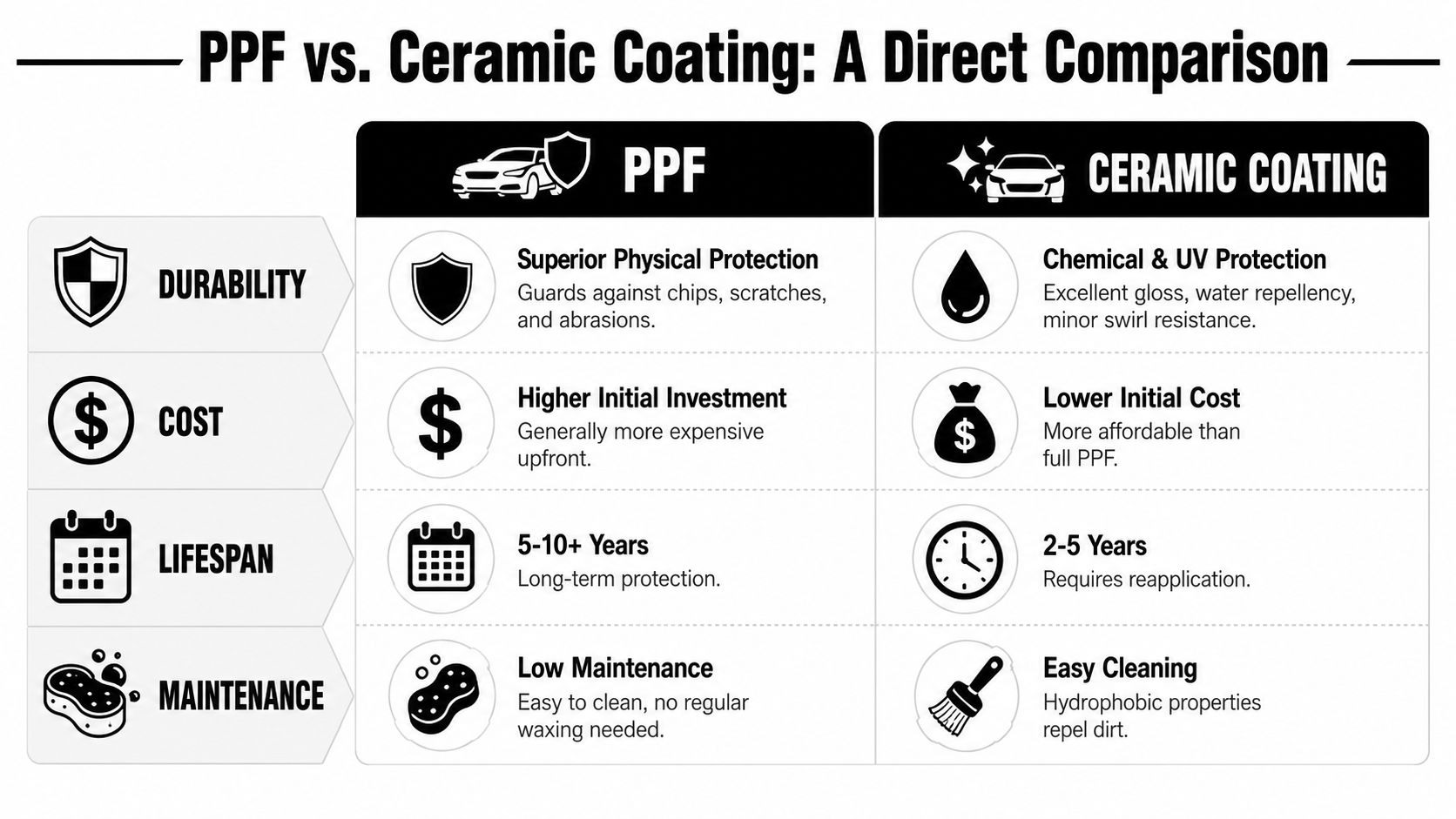
PPF is impact protection. It's the armor.
Ceramic coating is surface behavior protection. It's the slick outer shell that helps with water, contamination, gloss, and wash ease.
If you want a deeper side-by-side breakdown, this guide on paint protection film vs ceramic coating lays out where each one fits.
What PPF does that coating can't
Ceramic coating doesn't stop rock chips. It won't absorb the same kind of physical hit a film can. It helps with cleaning, chemical resistance, and appearance, but it isn't a sacrificial barrier in the same way.
PPF is better when your concern is:
- Highway chip damage
- Scuffs near door edges or luggage areas
- Road debris on front-facing panels
- Keeping original paint intact under physical stress
What ceramic coating does better
Ceramic coating shines when owners want the car easier to wash and easier to keep looking sharp. It adds slickness, helps grime release more easily, and supports gloss.
That makes coating a strong fit for drivers who care most about:
- Ease of maintenance
- Water behavior
- Gloss retention
- Lower upfront spend than broad PPF coverage
The cost conversation people usually miss
A lot of buyers compare the cheapest version of one product to the most complete version of the other. That creates confusion fast.
A better comparison looks like this:
| Protection Option | Best At | Cost Pattern |
|---|---|---|
| PPF | Physical defense against chips and abrasion | Higher upfront cost because it's material-heavy and labor-intensive |
| Ceramic Coating | Easier cleaning, gloss, and chemical resistance | Lower upfront cost than broad PPF coverage in most cases |
| Both Together | Impact protection plus easier maintenance | Highest upfront investment, broadest protection strategy |
Which choice makes sense
Choose PPF when preserving paint from impact is the priority.
Choose ceramic coating when your main goal is easier upkeep and a cleaner-looking finish.
Choose both when you want the front of the vehicle physically protected and the exterior easier to maintain overall.
Most disappointment happens when someone buys coating expecting chip protection, or buys limited PPF expecting every panel on the car to stay untouched.
Calculating the Real ROI of Paint Protection Film
The smartest way to judge paint protection film cost isn't by asking whether it's cheap. It's by asking whether it's cheaper than the damage, repainting risk, and resale penalty you're likely to face without it.
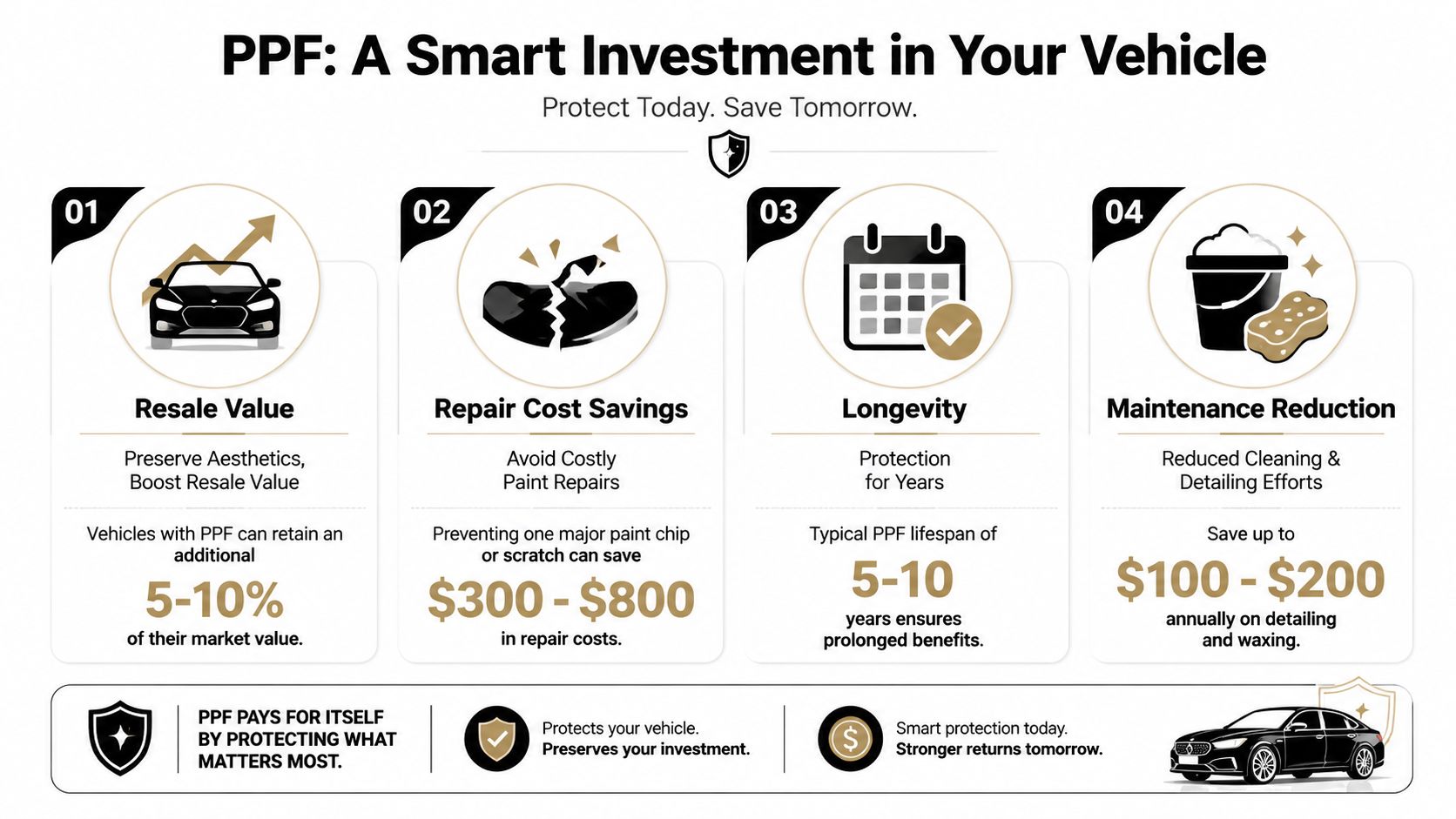
One of the biggest gaps in existing advice is that most guides stop at the install price. They don't really help owners decide when PPF is financially logical for a mid-priced vehicle. A source focused on that issue notes that a key question in places like Lincoln, NE is at what annual mileage and expected trade-in value PPF pays for itself, especially when the likely investment lands around $2,000 to $5,000 for many practical protection decisions, as explained in this article on whether paint protection film cost is worth it.
A simple way to think about ROI
Don't turn this into a spreadsheet first. Start with four ownership questions:
How long will you keep the vehicle?
The longer you keep it, the more chances there are for front-end damage to show up.Where do you drive most?
Interstate commuting, gravel exposure, winter road treatment, and rural highway driving all increase the odds of front-end wear.How much do appearance and resale matter to you?
If you trade often and want the front clip to present cleanly, PPF has a stronger value case.What would bother you more, the install bill now or repeated cosmetic damage later?
This is more honest than people think. Some owners can live with chips. Others know they'll fix them or hate seeing them.
Why Lincoln drivers should weigh it carefully
Lincoln owners deal with a mix that's hard on paint. Winter conditions, road debris, and routine highway use create exactly the kind of wear pattern PPF is designed to address. That doesn't mean every car needs a full wrap. It does mean the front end of a daily driver sees real stress.
For many vehicles, the strongest ROI case is not “wrap everything.” It's “protect the panels that take the abuse.”
A practical ROI decision usually lands in the middle. Enough film to protect high-impact zones, not so much coverage that the package outpaces the value of the car.
When PPF usually makes the most sense
- Newer vehicles with clean factory paint
- Owners keeping the car for years
- Highway commuters
- Luxury, enthusiast, or hard-to-replace paint finishes
- Drivers who know cosmetic damage will bother them every time they wash the car
Maintaining Your PPF and Getting a Quote
Once film is installed, maintenance is straightforward. Wash it gently, keep it clean, and avoid treating it like indestructible plastic. Good film is durable, but it still looks best when the owner uses proper wash media and stays away from harsh abrasion.
Smart care habits
- Wash regularly: Bug residue, bird droppings, and road film are easier to remove when they don't sit.
- Use clean wash tools: Dirty mitts and brushes drag contamination across both film and exposed paint.
- Dry carefully: Blotting or using safe drying methods helps reduce surface marring.
- Avoid aggressive scraping: If contamination is stuck, soften and clean it instead of forcing it off.
Questions people ask after installation
Can PPF be removed?
Yes. Removal is a normal part of the product lifecycle when done correctly.
Will modern PPF yellow?
Film quality has improved a lot, but product quality and care still matter. Better film and better installation generally lead to better long-term appearance.
Should every car get full-body PPF?
No. Many owners get the best value from protecting only the areas most likely to take damage.
What should be included in a quote?
Ask for the exact coverage area, film type, prep requirements, and whether paint correction is recommended before install.
If you're in Lincoln and want a quote that matches your car, your driving habits, and your budget, GP Mobile Car Wash & Detail can help you sort through the real options without guesswork. Their team serves Lincoln and surrounding areas with mobile service and shop-based detailing, so you can get clear guidance on protection packages, prep needs, and what makes sense for your vehicle instead of paying for coverage you don't need.