Paint sealant is a synthetic protective layer that bonds to your car's clear coat and, for many products, lasts about 4 to 6 months in real-world conditions. It's the modern step up from old-school wax because it gives you months of slickness, gloss, and easier cleanup instead of fading after a short stretch.
If you've ever washed your car on a Saturday, stood back proud of the shine, and then watched dust, bugs, hard-water spots, or Nebraska road grime start taking over by midweek, you already understand why people ask what is paint sealant. Most drivers aren't chasing a show-car routine. They just want their vehicle to stay cleaner longer and be easier to wash next time.
That's where the confusion starts. You hear about wax, sealant, ceramic sprays, ceramic coatings, dealer packages, and “protection” add-ons that all sound similar. For a lot of daily drivers in Lincoln, paint sealant ends up being the practical middle ground. It gives you more staying power than wax without jumping straight to the higher cost and longer commitment of a ceramic coating.
Keeping Your Car's Shine Beyond the Car Wash
A customer will bring me a black SUV after a fresh wash and say something like, “It looked amazing for two days. Then it went right back to normal.” That's a common problem, especially when the car lives outside, gets driven every day, or sees winter salt, summer sun, and everything in between.
A plain wash removes loose dirt. It doesn't give the paint much defense after you drive away. Bare paint starts collecting contamination again almost immediately. Water sits on it, grime clings to it, and bug splatter or bird droppings become harder to remove if they sit too long.
A wash makes a car clean. Protection helps it stay clean.
That difference is often underestimated. If your car has no protection on it, every wash is a reset with no lasting shield. If the paint has a good sealant on it, the surface stays slicker, water beads up better, and routine mess is less stubborn.
Why this matters for daily drivers
Many of the individuals I talk to don't need the most extreme protection option on the market. They need something that fits real life.
- Commute vehicles: You want the car to look respectable without spending every weekend detailing it.
- Family vehicles: You need easier cleanup because the SUV or minivan is always in use.
- Work trucks and fleet units: You want practical protection that helps with upkeep, not a fussy maintenance routine.
Paint sealant became popular for exactly that reason. It sits in the sweet spot between a short-lived wax and a more expensive ceramic route.
What Exactly Is a Paint Sealant
Paint sealant is not a traditional wax. It's a fully synthetic polymer film that chemically bonds to the clear coat, creating a cross-linked barrier, and that bonding is why many sealants deliver about 4 to 6 months of real-world durability under normal conditions, according to Carwash.com's explanation of wax and paint sealants.
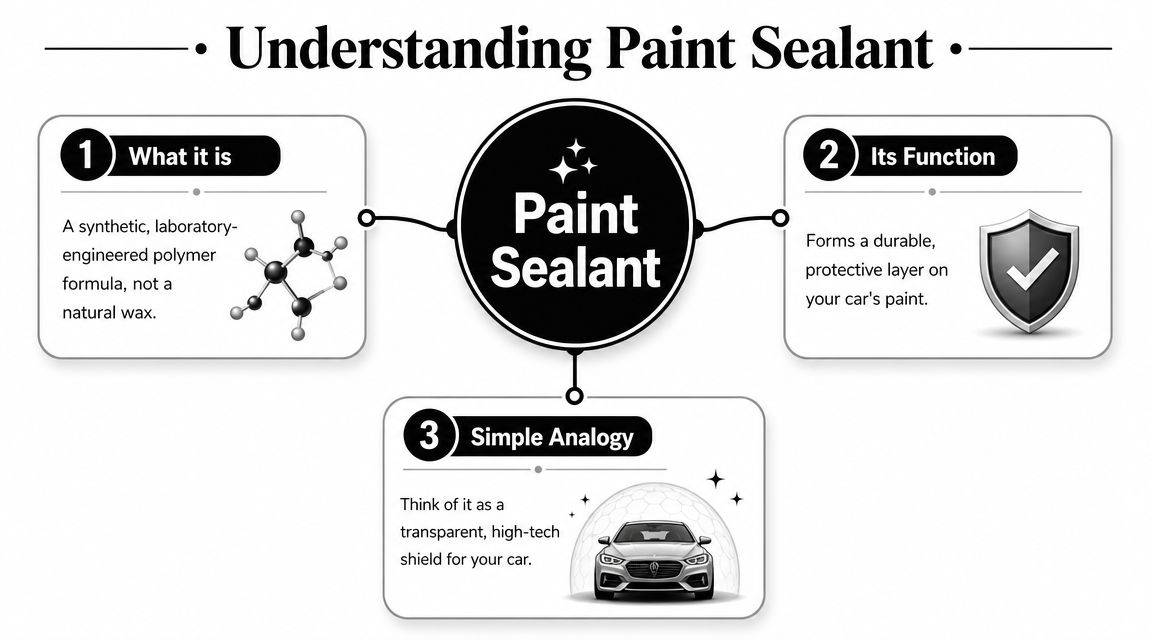
Paint sealant acts as a clear, high-tech jacket for your car. You're not changing the paint itself. You're adding a thin synthetic layer over the clear coat that helps the paint deal with weather, road film, UV exposure, and everyday contamination.
What it does on the surface
A good sealant creates a slick, non-porous feel. In plain language, that means dirt and grime have a harder time hanging on. Water tends to bead and run off more easily. The paint often looks sharper and glossier, too.
That doesn't mean the car becomes magic. It will still get dirty. It won't stop rock chips. It won't make scratches impossible. What it does do is make regular upkeep easier and help the paint resist the kind of slow wear that comes from exposure.
Why people confuse sealant with wax
They both protect paint, and they can both add shine. That's where the similarity ends.
Wax is the older style of protection. Sealant is a lab-made product built for longer service life. If wax is like a nice leather conditioner for a pair of boots, sealant is more like a modern weatherproof coating on a work jacket. Same goal. Different chemistry. Different staying power.
Simple way to think about it: wax is the classic look, sealant is the practical upgrade.
That's why sealants became so common for regular-use vehicles. They were designed to give owners a durable barrier without the full leap into coating-level services.
Paint Sealant vs Wax and Ceramic Coatings
A lot of car owners end up stuck between two familiar options. Wax feels affordable but short-lived. Ceramic coating sounds impressive, but the price and upkeep can be more than a daily driver really needs. Paint sealant sits in the middle, and for many Lincoln drivers, that middle ground is the smart buy.
It helps to compare these three the same way you would compare winter gear. Wax works like a light hoodie. It looks good and adds a little protection, but you will reach for it again soon. Ceramic coating works more like heavy-duty technical outerwear built for long service and harsher conditions. Paint sealant fits between them, like a good all-season jacket that gives you solid coverage without the premium price.
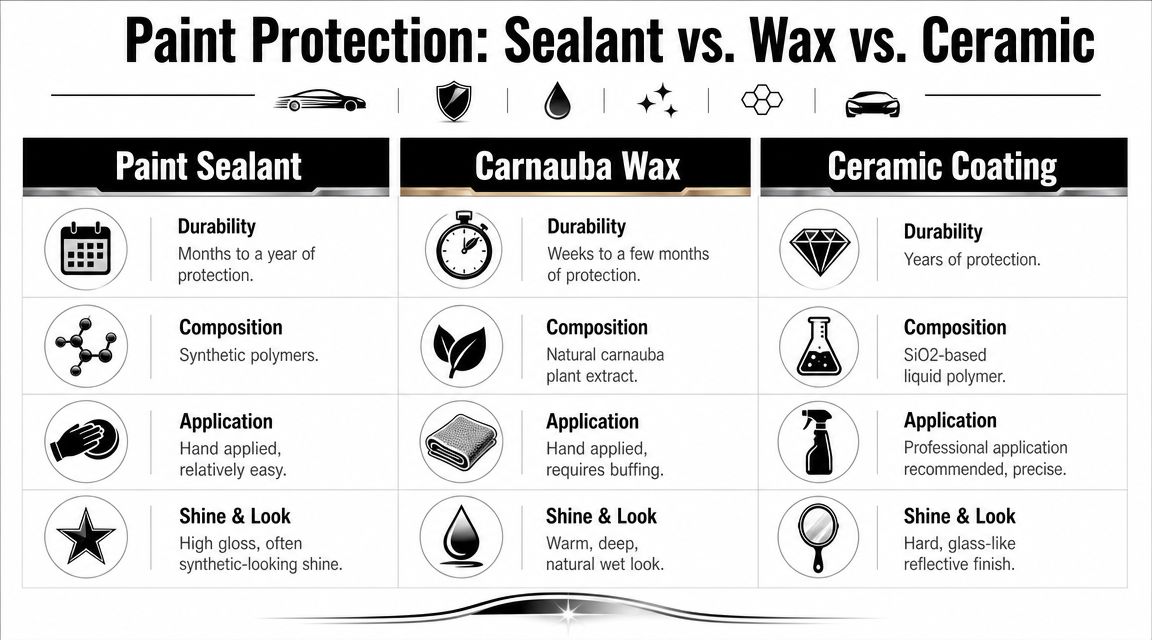
Paint Protection Comparison: Sealant vs. Wax vs. Ceramic Coating
| Attribute | Carnauba Wax | Paint Sealant | Ceramic Coating |
|---|---|---|---|
| What it is | Natural wax product | Synthetic polymer protection | Advanced coating chemistry, often SiO2-based |
| How it works | Sits on the surface | Bonds to the clear coat | Forms a longer-term bonded protective layer |
| Typical lifespan | Short-term protection | Multi-month protection for many products | Longer-term protection, often discussed in years |
| Look | Warm, rich glow | Crisp, glossy, reflective shine | Hard, glassy appearance |
| Application | Usually simple by hand | Usually manageable by hand with good prep | More exacting, often better suited to professional install |
| Best for | Enthusiasts who enjoy frequent waxing | Owners who want value, durability, and easier upkeep | Owners chasing longer-term protection and willing to spend more |
Here is the practical difference.
Wax usually appeals to someone who enjoys reapplying protection often and likes that softer, warmer look. Ceramic coating makes sense for someone ready to spend more up front for longer service life and a more involved prep process. Sealant is the sweet spot for the owner who wants real protection and easier washing, but does not want to jump straight to coating-level cost.
That value question matters more than people expect. A commuter car, family SUV, or pickup that lives outside in Nebraska weather often does not need the most expensive option to stay in good shape. It needs protection that lasts through regular use, road grime, sun, and seasonal mess without turning into a major project.
For a broader look at how protection options stack up on a newer vehicle, this guide on paint protection for a new car helps frame when each tier makes sense.
When sealant is the sweet spot
Sealant is often the right call when you want a clear step up from wax, but ceramic feels like more than your car or budget calls for.
- You want protection that lasts longer than wax without redoing it constantly.
- You want easier upkeep on a daily driver that sees sun, rain, dust, and road film.
- You want strong value for the money instead of paying for the longest-term option available.
- You want a product that is easier to apply than ceramic while still giving a noticeable improvement in gloss and slickness.
For a lot of vehicles around Lincoln, that is the practical answer. Sealant gives you more staying power than wax and less cost and commitment than ceramic coating. That middle role is exactly why it still makes sense for so many drivers.
Key Benefits and Limitations of Paint Sealants
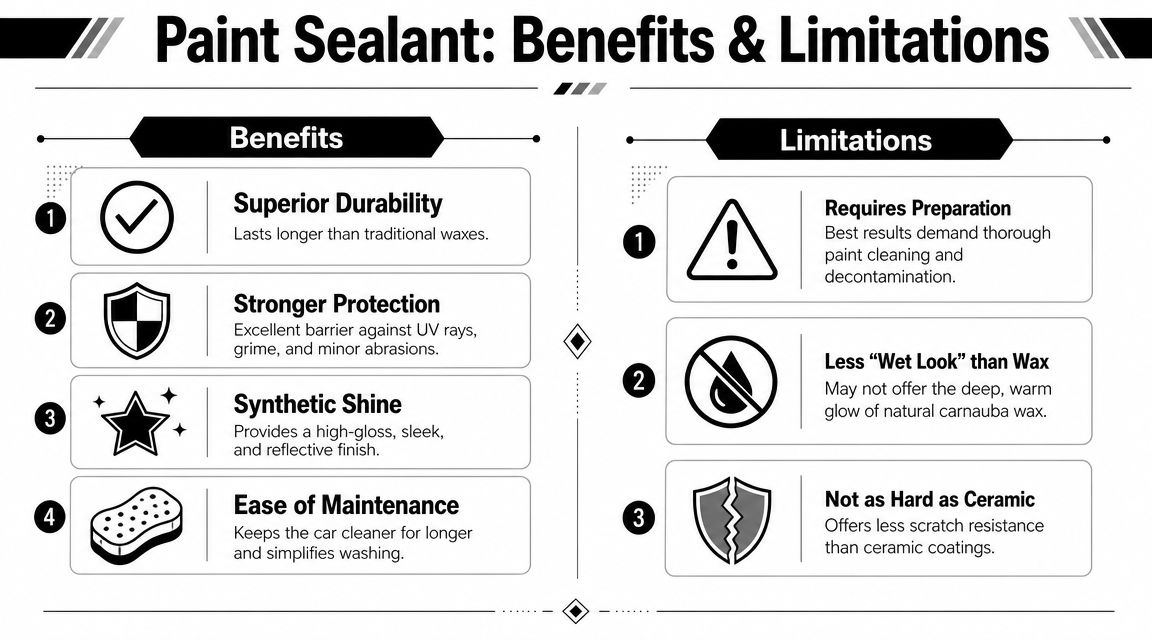
Paint sealant earns its place because it delivers the benefits most drivers notice. The surface feels slicker. Washing gets easier. The finish holds onto that just-cleaned look longer than bare paint usually does.
One performance snapshot is especially useful here. The Mobile Buff's paint sealant overview describes testing where a sealant reduced the force needed to remove contaminants by about 48% to 49.5%. That's a practical clue, not just lab talk. It helps explain why sealed paint often feels easier to clean than unprotected paint.
Where sealant shines
- Easier washing: Dirt, road film, and seasonal grime don't bond as aggressively to a slick protected surface.
- Useful weather protection: Sealants are built to help with UV exposure, moisture, and contamination.
- Good value for regular vehicles: You get a meaningful upgrade over bare paint without moving into a full coating package.
- Cleaner appearance between washes: Water behavior and reduced sticking often help the car stay presentable longer.
Where it falls short
Sealant still has limits, and that's important to say plainly.
- It's not permanent: It wears down over time and needs to be reapplied.
- It's not ceramic coating: You shouldn't expect coating-level longevity from a sealant service.
- Prep still matters: If the paint is contaminated or poorly cleaned first, the result won't last the way it should.
- The look is different from wax: Some owners prefer the softer, warmer glow of carnauba wax.
If you want the best balance of protection, appearance, and upkeep for a daily driver, sealant often makes more sense than either bare paint or constant rewaxing.
The realistic takeaway
I usually tell customers this: sealant is for people who want their car to look cared for without building their whole month around detailing it. It gives you practical protection, not a fantasy shield. That honesty is why it's such a dependable option.
How Long Paint Sealant Lasts and How to Maintain It
You wash the car, it looks great, and a few weeks later the paint starts feeling grabby again instead of slick. That is usually the moment owners ask how long sealant is really supposed to last.
The honest answer is simple. Paint sealant lasts a while, but not forever. On a daily driver, a quality sealant often holds up for several months. Some products advertise longer life, but real-world conditions in places like Lincoln usually decide the outcome more than the label does. Sun, rain, winter road salt, and frequent washing all chip away at that protective layer over time.
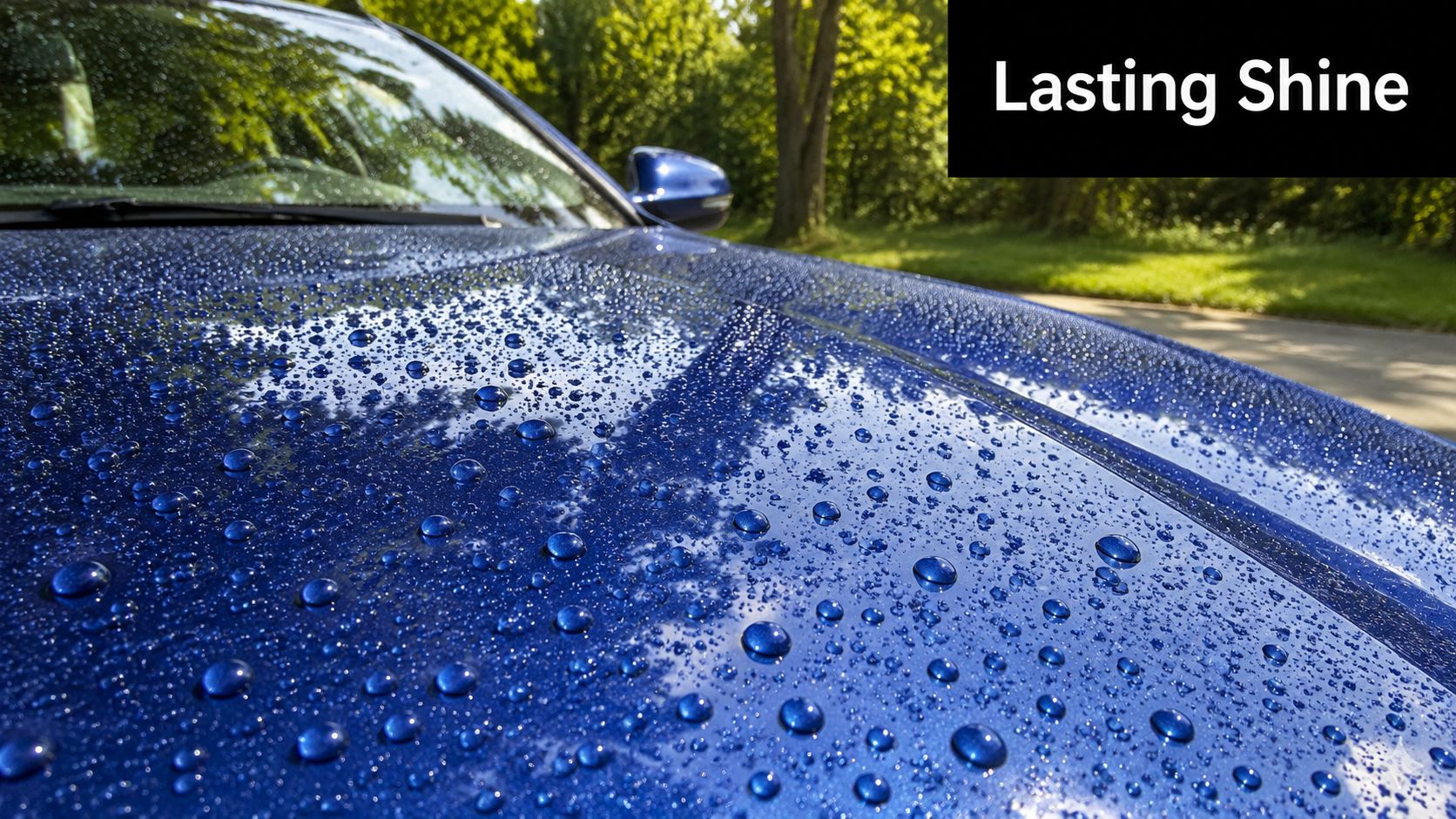
That is part of why sealant sits in the sweet spot between wax and ceramic coating. It lasts longer than a traditional wax for many vehicles, but it still asks for occasional upkeep. If you want solid protection without paying for a long-term coating package, that tradeoff makes sense for a lot of owners.
What shortens its life
Gold Eagle's paint sealant discussion points out something many drivers miss. Sealant can last for months, but repeated washing and exposure gradually reduce its performance.
A few common habits and conditions wear it down faster:
- Harsh washes: Brush tunnels and strong cleaners can strip away protection sooner.
- Outdoor parking: Constant UV exposure, storms, and airborne contamination add stress.
- Winter driving: Salt, slush, and road film are rough on any paint protection layer.
- Letting messes sit: Bird droppings, bug splatter, and tree sap can break down the surface if they stay too long.
A good way to picture it is a high-tech jacket for your car. It helps in bad weather, but if you scrub it hard, leave grime sitting on it, and never clean it properly, it will stop performing the way it should.
How to get the most from it
Sealant maintenance does not need to turn into a hobby. Consistency matters more than complexity.
- Wash with a gentle car soap: Mild soap cleans the paint without beating up the protection.
- Clean off contaminants early: Bug residue, bird droppings, and sap are easier to remove before they bake in.
- Dry with soft microfiber towels: Better wash habits help preserve gloss and reduce wash-induced swirls.
- Use protection-friendly maintenance habits: If you already have a protected finish, this guide on how to maintain coated paint covers smart wash routines that also help sealant last longer.
One practical tip I give customers is to reapply before the surface feels completely unprotected. If water stops beading well, the paint feels less slick, or washing stops getting easier, the sealant is usually fading. Staying ahead of that drop-off gives you better value than waiting until you are back to bare paint.
Sealant lasts best when you treat it like maintenance, not a one-time fix. Wash it gently, clean off the nasty stuff early, and refresh it before the protection fully wears away.
DIY vs Professional Sealant Application
Some owners enjoy applying sealant themselves. Others would rather hand the keys over and get the car back properly done. Both routes can work. The difference is usually in the prep.
What DIY looks like
Applying sealant itself usually isn't the hard part. Spreading a thin coat and buffing it off is a straightforward task. The hard part is getting the paint ready so the product can bond effectively.
That often means more than a quick wash. It may include decontamination, clay treatment, and paint correction if the finish is rough, swirled, or loaded with embedded grime. If the paint isn't properly cleaned first, you can end up sealing in contamination instead of protecting a clean surface.
Why pros focus so heavily on prep
Chemical Guys' paint sealant guide is clear on this point: proper surface preparation is critical for a durable bond, and poor prep is a primary cause of failure, streaking, and reduced longevity. That lines up with what detailers see every day.
Here's where a professional service helps:
- Surface evaluation: A detailer can spot oxidation, rough contamination, and finish issues before product goes on.
- Compatibility decisions: Modern vehicles can have different paint conditions, matte finishes, wraps, or repaint work that change the approach.
- Cleaner application: Even coverage matters. Streaks and patchy bonding usually trace back to prep or technique.
If you want to understand the at-home process better before deciding, this walkthrough on how to detail a car at home for professional results is a useful starting point.
For owners who'd rather skip the labor, GP Mobile Car Wash & Detail offers mobile service and shop service in the Lincoln area, which is one practical option for wash, prep, and paint protection work when time is short.
Is Paint Sealant Right for Your Car in Lincoln NE
For a lot of Nebraska vehicles, the answer is yes. If your car deals with summer sun, winter road salt, dust, rain, and everyday commuting, sealant gives you a sensible layer of protection without jumping straight into a longer-term coating decision.
It's especially well suited to drivers who want a car that's easier to wash and easier to keep looking sharp through the season. That includes commuters, family SUVs, work vehicles, and owners who want a cleaner-looking finish with less effort between details.
A simple way to decide
Sealant is probably a strong fit if this sounds like you:
- You want more than wax gives you
- You're not ready for a ceramic coating
- You care about easier maintenance
- Your vehicle lives outside or sees rough seasonal conditions
If you're after the best value tier in paint protection, sealant is often the answer. It's the middle ground that often makes the most overall sense.
If you want help choosing the right protection for your vehicle, GP Mobile Car Wash & Detail provides mobile and shop-based detailing for Lincoln-area drivers, including exterior protection options for daily drivers, family vehicles, fleets, RVs, and more.