You wash the car on Saturday, wax it on Sunday, and by the next stretch of Nebraska weather it already looks tired again. Dust sticks. Water spots show up fast. The hood that looked deep and glossy in the driveway starts looking flat after a few commutes, a little wind, and one bad parking lot sprinkler.
That frustration is what pushes a lot of owners to look into ceramic coating paint protection. Not because they expect a miracle shield, but because they want a finish that stays cleaner longer, washes easier, and doesn't ask for constant rework. If you drive through Lincoln year-round, that matters. Sun, rain, road grime, bug splatter, hard water, and winter mess all put pressure on your paint and on your patience.
Ceramic coating can absolutely help. It just helps in a more specific way than the ads usually admit. Its actual value isn't invincibility. It's reducing friction in ownership. Less fighting with contamination. Less dependence on frequent waxing. More consistent gloss with a better washing experience, provided the coating is applied correctly and cared for properly.
The End of Endless Waxing
A lot of owners reach this point after one Nebraska season. They spend a weekend washing, claying, and waxing, the paint looks great for a short stretch, and then the cycle starts again. Sun, hard water, bug residue, road film, and winter grime wear down that fresh-waxed feel faster than generally anticipated.
That is the primary appeal of ceramic coating. It cuts down on how often you have to reset the finish.
Why wax starts to feel like a chore
Wax still works. I would never call it useless. On a garage-kept car or a hobby vehicle that gets frequent attention, it can be a perfectly reasonable choice.
But daily drivers are a different story. In Lincoln, the weather and road conditions do not give wax much room for error. A car can go from freshly protected to tired-looking in a pretty short window, especially if it sits outside, sees highway miles, or gets hit with sprinkler water and bug splatter during the week.
The problem is not just durability. It is the workload that comes with it.
- Protection fades quickly: You can feel and see the slickness taper off long before you are ready to wax again.
- Upkeep becomes repetitive: Wash, reapply, buff, repeat, then start over after the next round of exposure.
- Daily use wins: Commuting, parking outside, and seasonal swings put more stress on the paint than wax is built to handle for long.
That is why many owners stop looking for a better wax and start looking for a longer-lasting surface treatment.
What owners are paying for
Most customers are not chasing a science project. They want less friction in day-to-day ownership.
They want a vehicle that rinses cleaner after a storm, releases bug mess with less scrubbing, and keeps a more consistent gloss between washes. They also want to spend less time wondering whether the protection they applied a few months ago is already gone.
Ceramic coating fits that need better than wax because it changes the maintenance schedule. Instead of planning around constant reapplication, the focus shifts to proper washing and preserving a surface that was built to stay in place longer. For a Nebraska daily driver, that difference is easy to appreciate.
How Ceramic Coating Protects Your Paint
A Nebraska driver washes the car on Saturday, then gets caught in a spring storm, drives through road spray, and parks outside under full sun for three more days. By midweek, the paint is dirty again. Ceramic coating does not stop that cycle. What it does is change how the paint deals with it.
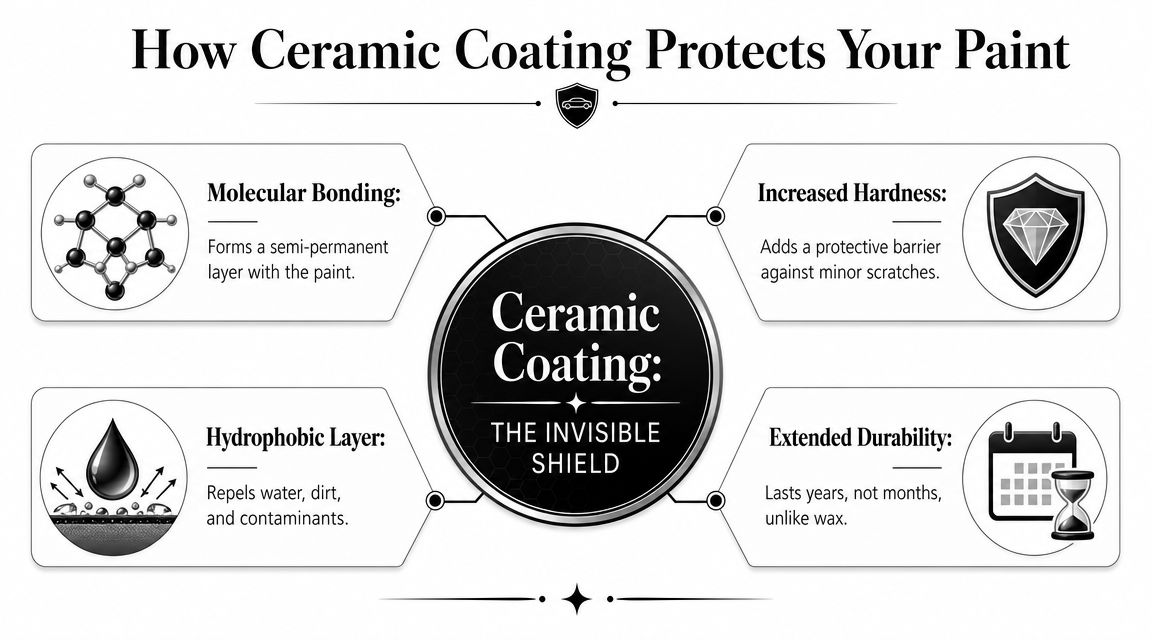
A ceramic coating is a very thin liquid polymer layer that bonds to the clear coat and cures into a harder, more chemically resistant surface than wax leaves behind. The paint still carries the color, depth, and underlying protection system. The coating becomes the outer layer that takes the abuse from water, grime, UV exposure, bug residue, and routine washing.
The practical effect is simple. Dirt still lands on the vehicle, but it does not cling as aggressively. Water tends to bead or sheet off faster. Bug splatter, bird droppings, and road film usually come off with less scrubbing if they are washed in a reasonable time.
Dennis Auto Detail's explanation of coating versus film lays out the basic distinction well. A coating bonds to the paint and creates a hydrophobic, UV-resistant surface, but it remains a very thin layer. That thinness matters.
Here is what the coating is helping with in day-to-day ownership:
- It reduces direct contact between contamination and your clear coat.
- It lowers how strongly water, grime, and organic mess stick to the surface.
- It cuts down the amount of agitation needed during a proper wash.
- It helps the finish hold a cleaner, glossier look between washes.
That is where ceramic coating earns its keep for a daily driver in Nebraska. After rain, sprinkler mist, dusty wind, or highway bug season, the vehicle is usually easier to wash back to clean condition. Over time, that matters because less aggressive cleaning means fewer chances to put fresh wash marks into the paint.
There are limits, and owners should know them before spending the money.
Ceramic coating does not stop rock chips, prevent door dings, or make the paint scratch-proof. If gravel hits the front bumper at highway speed, the coating cannot absorb that impact the way paint protection film can. It also does not give you a free pass on maintenance. Let bird droppings bake on the hood in July, or let hard water sit too long, and you can still end up with etching or spots.
Actual protection is more practical than dramatic. Ceramic coating helps the paint resist chemical exposure, sun-driven wear, oxidation, and the constant buildup that makes a vehicle look older than it is. For owners who want easier upkeep and a finish that stays sharper through Nebraska weather, that is the value.
The Real Benefits and Honest Limitations
The strongest case for ceramic coating paint protection is also the most grounded one. It makes a vehicle easier to live with. It improves gloss, helps with washing, and adds resistance to the everyday contamination that slowly beats up a finish.
What owners usually notice first
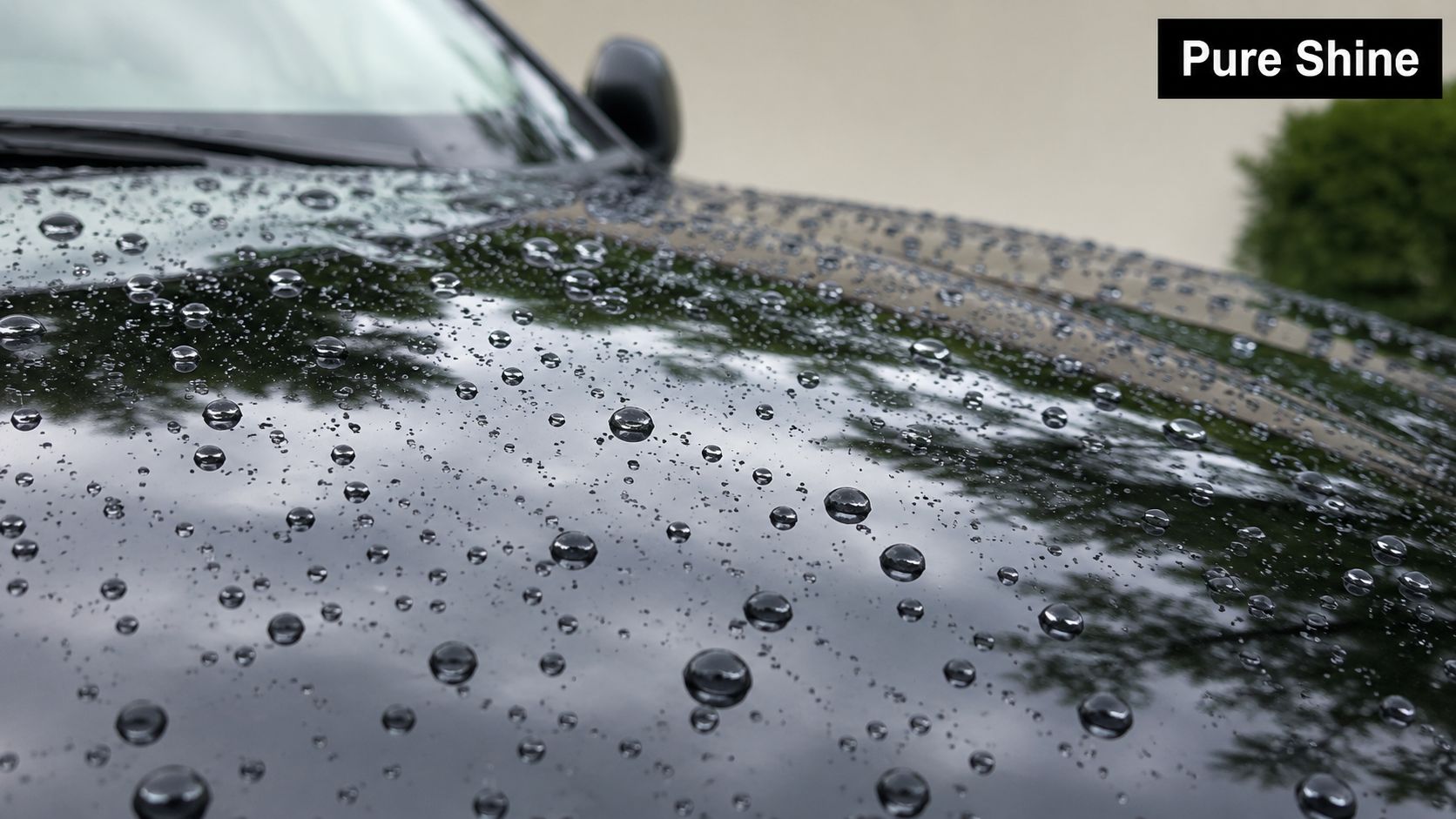
Gloss is the obvious one. A properly corrected and coated vehicle tends to hold a cleaner, tighter look because the surface reflects light more crisply and doesn't grab grime as aggressively as untreated paint.
Then there's water behavior. You'll often see tighter beads and quicker runoff, which makes rinse water easier to manage and makes drying less of a fight. That's especially useful when you're dealing with hard-water spotting risk, bug residue, or road splash.
A few practical wins matter more than the showroom shine:
- Bug cleanup gets easier: Less scrubbing means less chance of wash-induced marring.
- Bird droppings and grime are less stubborn: You still need to remove them promptly, but they usually release faster.
- Routine washing feels lighter: Less drag on the wash media usually means a smoother process.
- Trim, wheels, and other surfaces may also benefit: Some coatings are designed for more than painted panels.
The part many shops soften too much
Ceramic coatings don't stop major paint damage. According to Clean Getaway's summary of coating limitations and upkeep, industry sources consistently state that ceramic coatings do not prevent rock chips, deep scratches, or major abrasions. The same source also notes that coatings may last 2–5 years under proper care and still require washing every 2–3 weeks with pH-neutral shampoo to avoid issues like water spots.
That's a healthy expectation for Nebraska ownership. Dust, rain minerals, winter residue, and summer bugs don't care that your car is coated.
Water beading isn't the whole story
A lot of owners judge a coating by bead photos. That's understandable, but it can be misleading. Dr. Beasley's discussion of contact angle versus sliding angle points out that a surface can bead water well and still not shed it efficiently. In practice, that means a flashy bead pattern doesn't automatically equal better self-cleaning or easier drying.
That's why the best coatings are the ones that make maintenance more predictable, not just the ones that look dramatic after a rinse.
Here's a helpful visual if you want to see common expectations around coatings and paint behavior:
The right expectation is simple. Your car will stay easier to clean. It will not stay perfect by itself.
Ceramic Coating vs Wax and Paint Protection Film
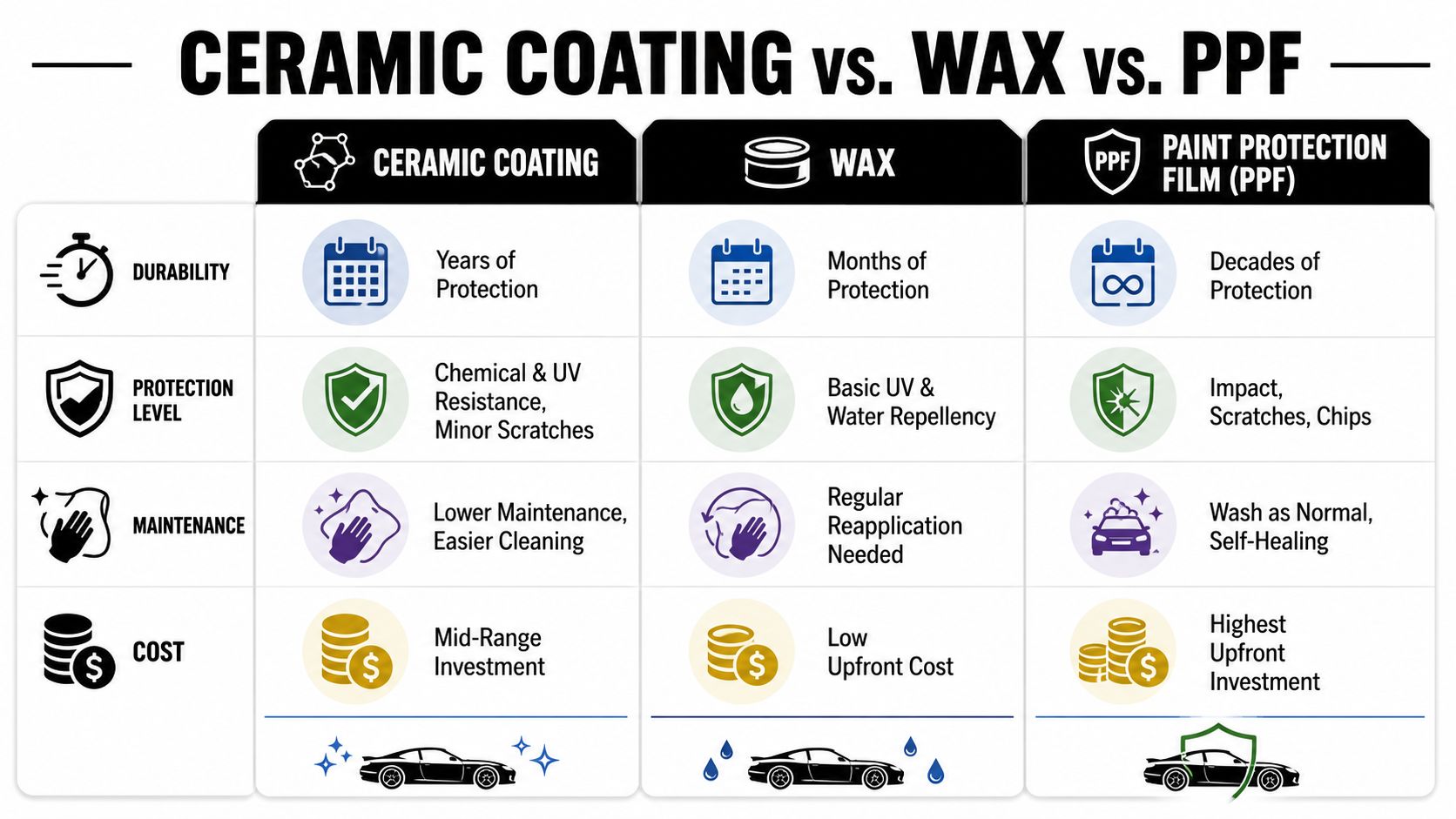
A Lincoln driver can wash a vehicle on Saturday, park it outside through a windy week, then hit I-80 behind a salt truck or gravel hauler. By the next rinse, the main question shows up fast. Is the goal easier cleaning, better gloss retention, or protection from actual impact damage? Wax, ceramic coating, and paint protection film answer different problems, and the right choice depends on what your vehicle faces in daily use.
Where wax still makes sense
Wax still has a place. It is inexpensive, easy to apply at home, and it gives paint a warm, freshly detailed look.
The downside is upkeep. In a Nebraska climate with summer sun, winter grime, and frequent washing, wax is a short-term routine product. Owners who like spending time in the garage may be fine with that. Owners who want the car to stay easier to wash for much longer usually get tired of starting over every few months.
Where ceramic coating fits
Ceramic coating works best for owners who want less day-to-day struggle with the finish. It adds a more durable sacrificial layer than wax, helps contaminants release during washing, and holds its appearance better through weather swings.
That makes it a practical middle option. You get easier maintenance and stronger resistance to things like bug residue, road film, and mineral spotting than a basic wax offers, but you do not get impact protection. If you want a clearer side-by-side breakdown, this ceramic coating vs wax comparison explains the ownership trade-offs well.
When PPF is the better answer
PPF is for physical abuse. If your vehicle sees a lot of highway driving, gravel roads, construction zones, or a long commute where the front bumper and hood take repeated hits, film addresses the risk ceramic coating does not.
That distinction matters. I regularly talk with owners who expected a coating to stop chips on the nose of the car, especially after one Nebraska winter or harvest season. It will not. PPF is the better fit for high-impact areas because it is built to absorb and resist that kind of contact.
Paint protection comparison
| Attribute | Car Wax | Ceramic Coating | Paint Protection Film (PPF) |
|---|---|---|---|
| Main purpose | Short-term shine and surface enhancement | Longer-lasting surface protection and easier maintenance | Physical defense against chips and abrasion |
| Durability | Short-lived and requires frequent reapplication | Long-lasting with proper care | Built for long-term physical protection |
| Best against | Mild environmental exposure | UV exposure, chemical contamination, wash-induced buildup | Gravel, road debris, scratches, chips |
| Weak point | Fades quickly | Won't stop impact damage | Higher upfront investment |
| Maintenance style | Repeat often | Wash correctly and preserve the coating | Wash normally and monitor film condition |
| Best owner fit | Owner who enjoys frequent waxing | Daily driver owner wanting less upkeep | Driver prioritizing front-end or high-impact protection |
Some vehicles benefit from combining products. A common real-world setup is PPF on the front clip and ceramic coating on the rest of the painted surfaces. That costs more upfront, but for the right driver it lines up the product with the actual threat.
Buy for the problem your vehicle actually has. Use wax for short-term gloss, ceramic coating for easier ownership, and PPF for chip-prone areas.
DIY Kits vs Professional Application
A Nebraska owner buys a ceramic kit on Friday, spends Saturday in the garage, and by Sunday notices streaks on the hood once the sun hits it. That outcome is common because the coating step looks simple on the box, while the actual work happens before the bottle is ever opened.
The lower entry price of a DIY kit is real. So is the trade-off. Ceramic coating rewards prep, clean working conditions, and good judgment about what the paint needs first. If the surface still has water spot etching, embedded fallout, leftover wax, or light swirls, the coating will sit on top of those problems instead of fixing them.
Prep decides the outcome
The best professional results usually come from the steps owners do not see in marketing photos.
A proper install often includes:
- Decontamination: Removing bonded contamination so it does not get sealed under the coating.
- Paint correction if the finish needs it: Polishing out haze, light defects, or dealer-installed wash marks before protection goes on.
- Close inspection under strong lighting: Catching residue, smearing, and missed spots that are easy to miss in a home garage.
- Stable application conditions: Reducing problems caused by dust, heat, humidity, or direct sun.
As noted in 3M's ceramic coating technical data sheet, long-term performance depends on prep, cure conditions, and maintenance. That lines up with what detailers see in the shop every week.
DIY can work for the right owner
Consumer coatings are not a scam. A careful owner can get a decent result, especially on a newer vehicle with paint in good shape and a garage setup that stays clean and shaded. The trouble starts when the owner is also trying to learn polishing, panel wipe technique, flash timing, and towel control on the same job.
That margin for error gets smaller in a place like Nebraska, where summer heat can speed up leveling and winter garage conditions can work against proper curing. One missed high spot may not show up under overhead lights, then becomes obvious the next morning outside. Fixing it usually means polishing that section back down and reapplying.
If you want to see what the process involves before deciding, this guide to applying ceramic coating to a car walks through the workflow.
Why professional application usually looks better and lasts more predictably
Professional application is really process control. The product matters, but the consistency matters more.
A trained detailer checks the paint, chooses the prep needed, applies the coating evenly, levels it correctly, and manages the early cure period so the finish comes out uniform across the whole vehicle. That is especially important on black paint, dark colors, and larger horizontal panels that show every inconsistency. It also gives the owner clear aftercare guidance based on how the car is used, whether it lives outside in Lincoln, sees winter road treatment, or picks up bug residue on highway miles.
GP Mobile Car Wash & Detail offers ceramic coating service through mobile appointments or drop-off at its Fremont Street detail shop. That kind of setup gives owners a professional option when they want the coating to look right from the start and hold up well under real local conditions.
How to Care for Your Ceramic Coated Vehicle
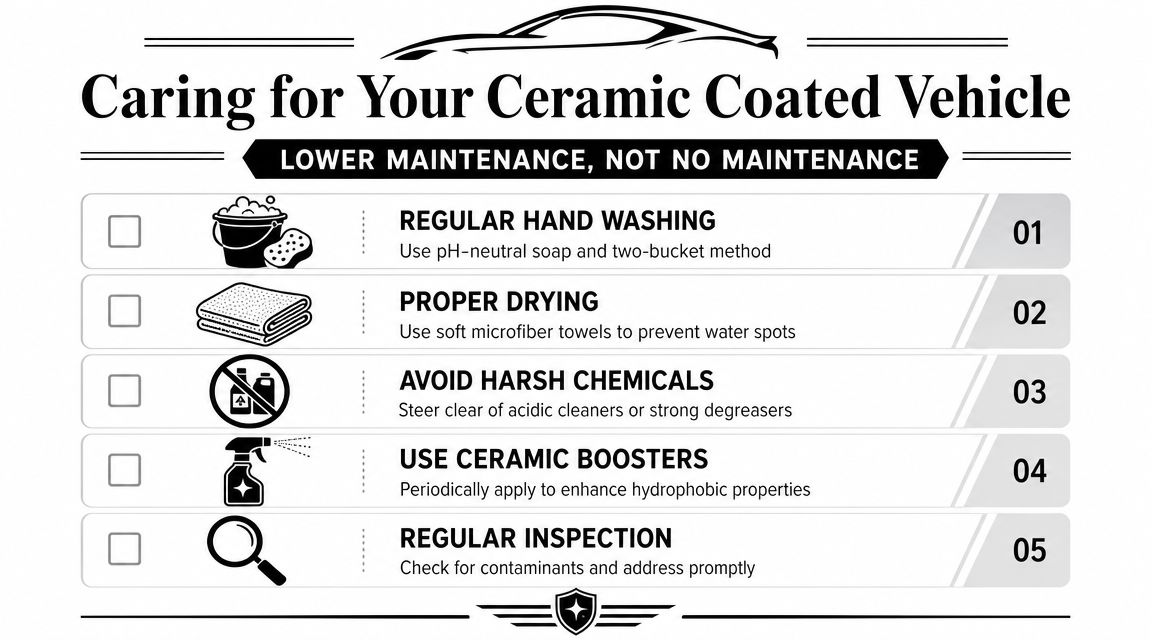
A coated vehicle is lower maintenance, not no maintenance. That's the mindset that protects the investment.
Once a coating cures, the owner's job is to avoid grinding contamination into the surface and avoid using chemicals or wash methods that shorten the life of the layer. Good maintenance doesn't need to be complicated. It needs to be consistent.
The habits that keep a coating performing
The easiest way to preserve a coating is to wash before contamination builds up too far. That matters in a place like Lincoln, where bug residue, windblown dirt, rain minerals, and winter road mess can stack on the paint quickly.
A sound routine usually includes:
- Regular hand washing: Use a pH-neutral car shampoo and clean wash media.
- Careful drying: A soft microfiber drying towel helps reduce spotting and friction.
- Avoiding harsh wash tunnels: Dirty brushes and aggressive contact can mar the surface.
- Prompt removal of trouble spots: Bird droppings, bug remains, and mineral deposits get harder to remove when ignored.
What a coating still won't stop
A coating makes contamination easier to remove, but it doesn't make the paint immune to defects. In a video discussion on real-world coating maintenance, experts note that coatings do not prevent swirl marks or water spots entirely over time. They also point out that polishing those defects can remove the coating, which is why wash technique matters so much.
That's the maintenance reality many owners miss. Every bad wash has a cost. Every careless towel choice has a cost.
Owner note: The coating lasts longest when the wash process is gentle long before the paint looks obviously dirty.
A practical Nebraska routine
If the vehicle lives outside, gets driven daily, or sees seasonal grime, a simple routine works better than occasional heroic cleanup.
- Wash on a regular schedule instead of waiting for heavy buildup.
- Use pH-neutral soap rather than strong household cleaners.
- Dry thoroughly, especially after hard-water exposure.
- Inspect horizontal panels for spotting or stuck contamination.
- Use support products only if they fit the coating system and wash routine.
For a more detailed owner-focused checklist, this ceramic coated car maintenance guide is a practical starting point.
Finding Your Trusted Local Expert in Lincoln
Choosing a ceramic coating installer shouldn't come down to the flashiest social post. It should come down to process, honesty, and whether the shop explains the limits as clearly as the benefits.
A detailer is worth your time when they do a few things well:
- They explain prep clearly: Not just the coating brand, but how they wash, decontaminate, inspect, and correct paint if needed.
- They set realistic expectations: They tell you a coating won't stop rock chips and still needs maintenance.
- They show consistency: Reviews, photos, and communication should all point to repeatable workmanship.
- They operate professionally: Licensed, insured service matters when someone is handling a high-value vehicle.
For owners around Lincoln, it also helps to find a company that fits real life. Busy schedules, family vehicles, work trucks, and weekend cars all need different logistics. Mobile service can be a major convenience, while a dedicated shop environment can be useful for more controlled detailing work.
GP Mobile Car Wash & Detail serves Lincoln and surrounding areas with both mobile service and drop-off service at its Fremont Street shop. The company also offers ceramic coating, standard detailing, interior cleaning, and specialty service for larger vehicle types, using non-toxic and fragrance-free cleaning solutions with water-conscious methods. For cautious owners, that combination of convenience and surface-safe process is worth asking about before booking any protection package.
If you're weighing ceramic coating for your vehicle in Lincoln, the next step is simple. Contact GP Mobile Car Wash & Detail to discuss your paint condition, driving habits, and whether ceramic coating paint protection fits the way you use your car. You can request a quote online or book by phone for mobile service or shop service, depending on what works best for your schedule.