A lot of Lincoln drivers decide to look into paint protection film right after the same moment. You're cruising on the bypass or heading out on I-80, you hear that sharp tick against the front end, and you already know what happened. Later, you walk around the car, find the fresh chip on the bumper or hood, and wonder how a vehicle can look worn that fast.
That's where paint protection film benefits become real. PPF isn't about making a car look fancy for a week. It's about stopping daily driving from slowly roughing up the surfaces you paid to keep clean, glossy, and original. Around Lincoln, that matters more than many people expect because highway debris, rural gravel, winter sand, and road salt all work against your paint.
Why Every Driver Hates the Sound of a Rock Chip
That sound gets to people because it feels expensive.
A new vehicle can look excellent at delivery, then pick up its first chip within days of normal use. The front bumper takes abuse first. Then the leading edge of the hood, mirror caps, and lower rocker areas start collecting tiny marks that don't wash off because they aren't dirt. They're damage.
In Lincoln, I see this most often on cars that spend time on highways, commute across town every day, or head outside the city on county roads. The owner usually notices the same pattern. The front end starts clean and sharp. A season later, it looks slightly peppered. A few years later, the paint can take on that lightly sandblasted look.
Why people are taking PPF seriously
PPF used to be treated like something only exotic cars got. That's changed. The U.S. paint protection film market was estimated at USD 105.04 million in 2023 and is projected to reach USD 158.21 million by 2030, a projected 6.2% CAGR from 2024 to 2030, according to Grand View Research's U.S. paint protection film market report.
That matters because it shows more drivers now view PPF as a practical protection product, not a niche upgrade.
Practical rule: If the part of your car that faces the road matters to you, you should at least consider protecting it before the damage starts.
Most owners don't regret getting PPF too early. They regret waiting until after the first round of chips.
The real problem PPF solves
Paint damage usually happens in small hits, not one dramatic event. A pebble from a truck. Sand kicked up in winter. Bug residue sitting on a hot bumper. Shoes brushing a door sill. Loading bags across the rear bumper edge.
PPF is built for that kind of use. It gives the paint a sacrificial surface so the vehicle itself doesn't have to absorb every bit of abuse directly.
What Is Paint Protection Film and How Does It Work
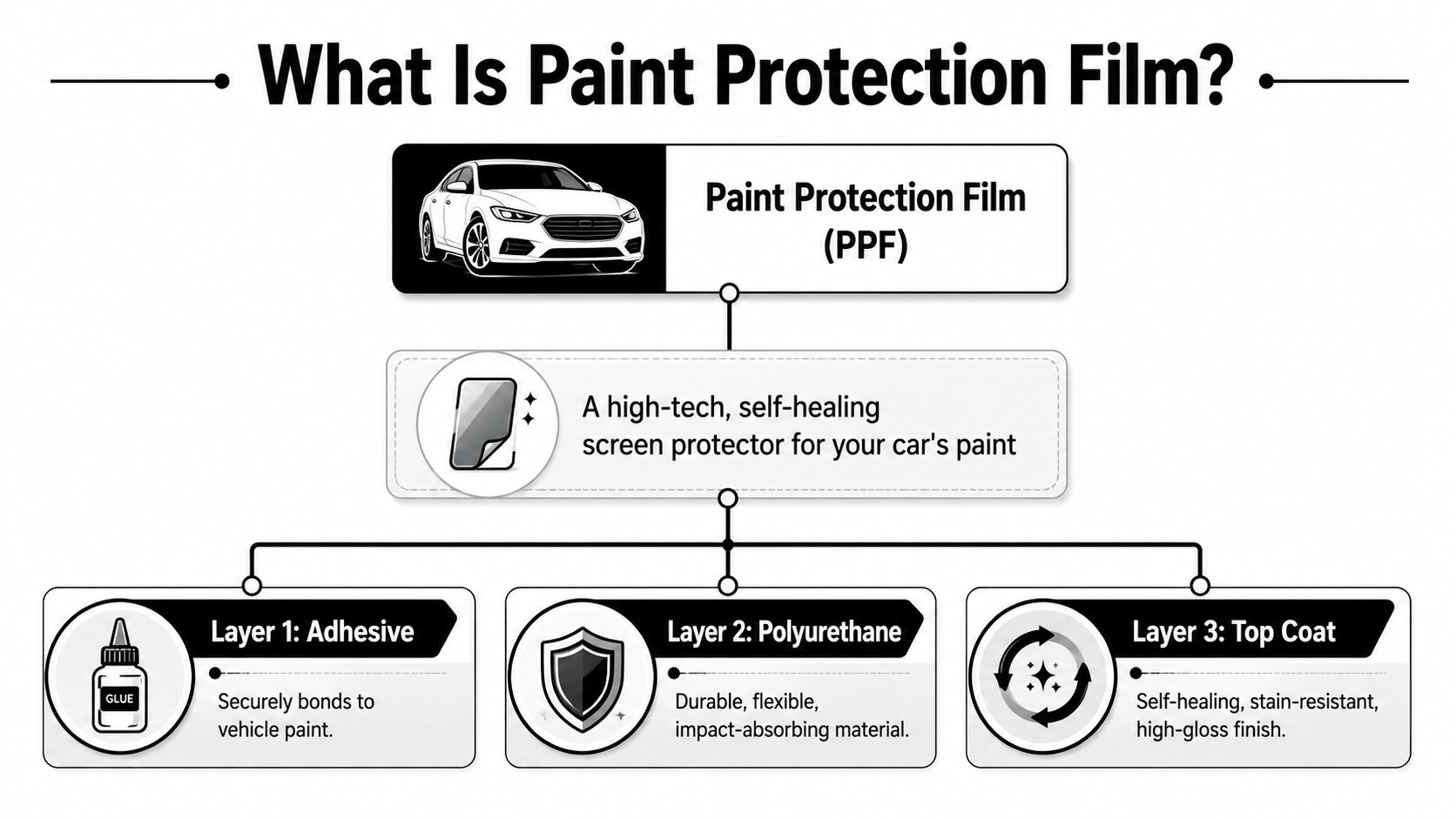
The simplest way to explain PPF is this. It's a high-tech screen protector for your car's paint.
That comparison helps, but PPF is much tougher than a phone protector. It's a clear thermoplastic urethane film designed to sit over painted panels and take the hit first. Good film is made to stay optically clear, flex with body panels, and resist the kind of wear that would otherwise mark the factory finish.
What the layers actually do
One source describes modern PPF as a layered system that often includes a 6.0 mil polyurethane body, a 1.6 mil adhesive layer, and a 0.5 mil self-healing clearcoat, which is what allows the film to absorb impact energy while staying clear, as explained in Ceramic Pro's breakdown of PPF construction.
Those layers each have a job:
- Adhesive layer keeps the film bonded to the paint without turning the install into a permanent mess.
- Polyurethane body is the working muscle of the film. That's the layer that absorbs strikes and minor abrasion.
- Top coat helps with gloss, stain resistance, and the self-healing effect many drivers like.
When people call PPF “just a sticker,” that's usually a sign they haven't seen quality film up close or haven't watched a proper install.
A short visual helps make that clearer:
Why self-healing matters
Self-healing doesn't mean the film fixes gouges or major impact damage. It means light surface marring can relax out when heat is introduced, such as warm sunlight, engine heat, or warm water. That helps the film stay cleaner-looking over time than many people expect.
PPF works best when you think of it as a sacrificial layer, not an indestructible one.
That distinction matters. The goal isn't to make the front of the car invincible. The goal is to let the film take the wear so the original paint doesn't have to.
What PPF is not
PPF isn't a substitute for washing. It isn't a cure for bad prep work. And it won't hide major paint defects underneath.
The best results come when the paint is properly corrected first, then the film is installed cleanly with good edge work and good panel selection. Material quality matters, but installation quality matters just as much.
The Core Benefit Comprehensive Paint and Surface Protection
The main reason to buy PPF is simple. It protects painted surfaces from the kind of damage that happens during normal driving.
That protection starts with impact energy management. Instead of a pebble, bit of gravel, or abrasive grit hitting your clear coat directly, the film spreads and absorbs part of that force first. That's the mechanical advantage PPF has over products that mainly improve slickness or shine.
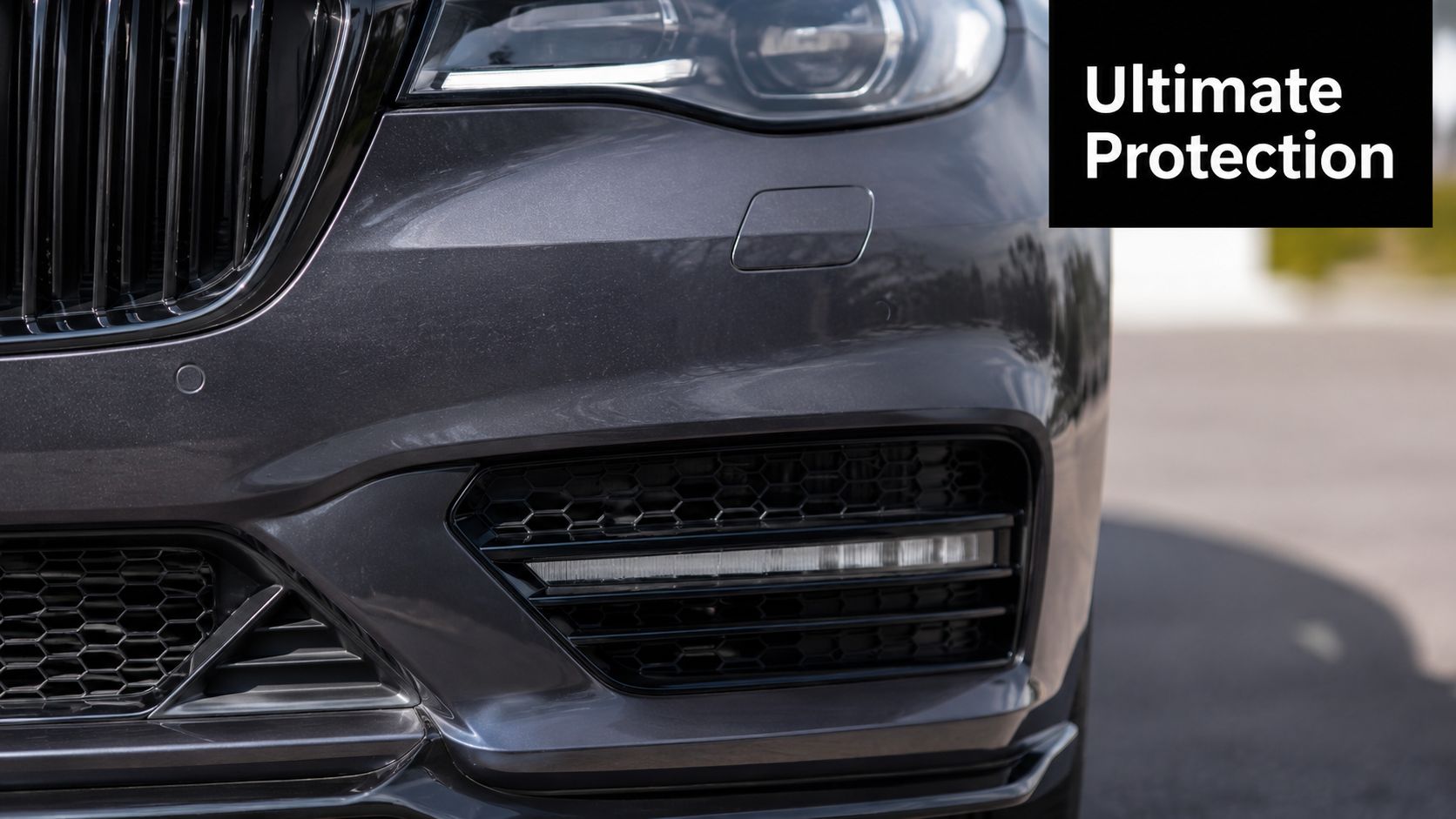
A widely cited industry claim says 95% of vehicles with PPF showed no paint damage upon removal, and the same source explains that the film's primary advantage is dispersing force from gravel and abrasions before it reaches the factory finish, as referenced in Menard Premium Detailing's discussion of PPF myths and benefits.
What it protects against in daily driving
For most owners, the important question isn't the chemistry. It's what kind of damage they can realistically avoid.
Here's where PPF earns its keep:
- Rock chips on the front end happen on highways, construction zones, and behind trucks.
- Road rash on lower panels shows up on rocker panels and behind wheel openings.
- Bug splatter and bird droppings are easier to remove before they etch or stain vulnerable paint.
- Light scuffs and abrasion can happen near door cups, trunk openings, and loading areas.
- Tar, grime, and seasonal contamination don't attack the painted surface directly when film is between them and the vehicle.
Where the return is strongest
Not every panel on a car takes the same beating. The highest-value zones are usually:
| Area | Why it matters |
|---|---|
| Front bumper | First contact point for debris |
| Hood leading edge | Collects chips fast on highway driving |
| Fenders and mirrors | Catch angled debris and road spray |
| Rocker panels | Take abrasion from kicked-up grit |
| Rear bumper top edge | Gets scratched during loading and unloading |
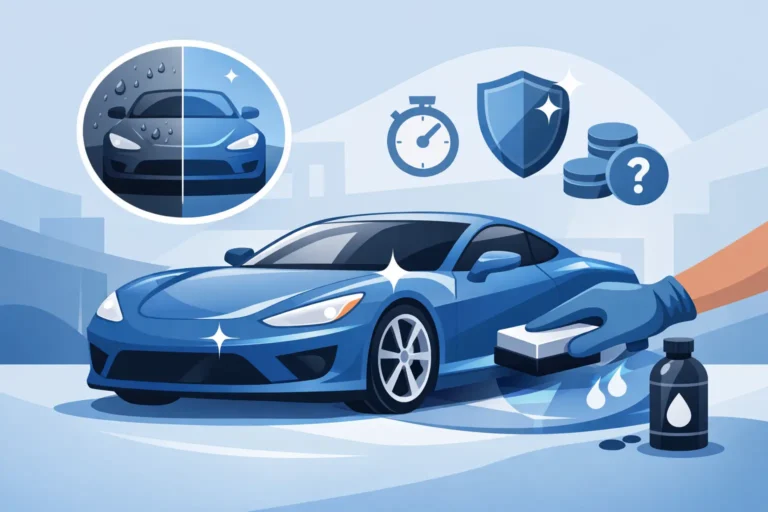
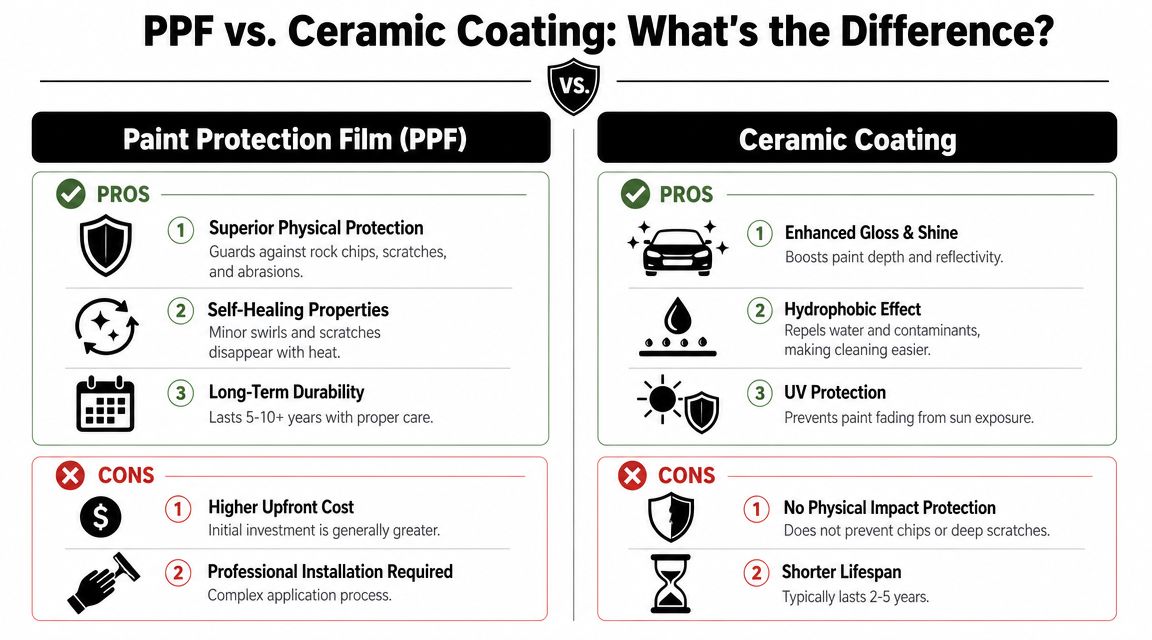
If you're weighing film against another protection option, this comparison of paint protection film vs ceramic coating is useful because it frames the trade-off. PPF is for physical defense. Ceramic coating is mostly about easier maintenance, water behavior, and appearance support.
What PPF does well, and what it doesn't
PPF is excellent at preventing a lot of small, visible cosmetic damage from ever reaching the original paint. That's a huge win for owners who care about keeping the front end from aging early.
It does have limits:
- It won't stop every severe impact
- It can still be damaged
- Poor installation can leave visible edges or trapped contamination
- Cheap film can age badly
That's why material choice and installer skill matter so much. Good film on the wrong car areas won't deliver the same value as a smart coverage plan installed correctly.
Beyond Protection Aesthetic and Resale Value Advantages
Protection is the first reason people ask about PPF. Appearance is often the reason they end up glad they did it.
A quality film should be difficult to notice unless you know where to look. On a well-prepped car, it keeps the original finish looking more like itself for longer. The paint doesn't lose that crispness on the front-facing panels as quickly, because the wear is happening to the film instead of directly to the clear coat.
The visual difference after real use
Take two similar vehicles that see the same roads. One has unprotected paint on the front clip. The other has film on the high-impact areas.
After enough highway miles, the unprotected car usually starts showing it first in the details:
- tiny chips across the bumper face
- little specks on the hood edge
- duller-looking impact zones that don't polish back to perfect because material is missing
The protected car doesn't stay flawless forever, but it usually keeps a more uniform finish because the damage has been redirected to a removable layer.
A used car buyer might not know what film brand was installed, but they do notice whether the paint looks original and well kept.
Why that matters at trade-in or resale
Original paint condition matters because buyers and appraisers pay attention to consistency. They look for chips, touch-up spots, repainted sections, and signs that the vehicle spent years taking direct hits on the road.
When the factory finish stays cleaner, the vehicle presents better. That doesn't guarantee a specific resale bump, and I won't pretend it pays back the same way on every car. But on newer vehicles, enthusiast-owned vehicles, luxury models, and cars owners plan to keep clean from day one, preserved paint often supports a stronger overall impression.
The honest financial view
PPF isn't a universal money-maker. On some cars, the return is mostly emotional. You enjoy walking up to a vehicle that still looks cared for.
On others, the return is practical:
- you avoid repeated paint correction around chip-prone areas
- you reduce the chances of front-end repaint work
- you keep original paint on panels that buyers inspect closely
That's why the resale conversation should be tied to the car itself, how long you'll keep it, and how much cosmetic condition matters to you.
Choosing Your Coverage Key Areas and Options
A full vehicle wrap isn't always required. The priority is protecting the panels that endure the most wear from driving.
Coverage choice should be based on exposure, not just budget. If you drive around Lincoln with occasional highway use, your needs are different from someone who spends every week on I-80 or regularly drives rural routes with loose gravel.
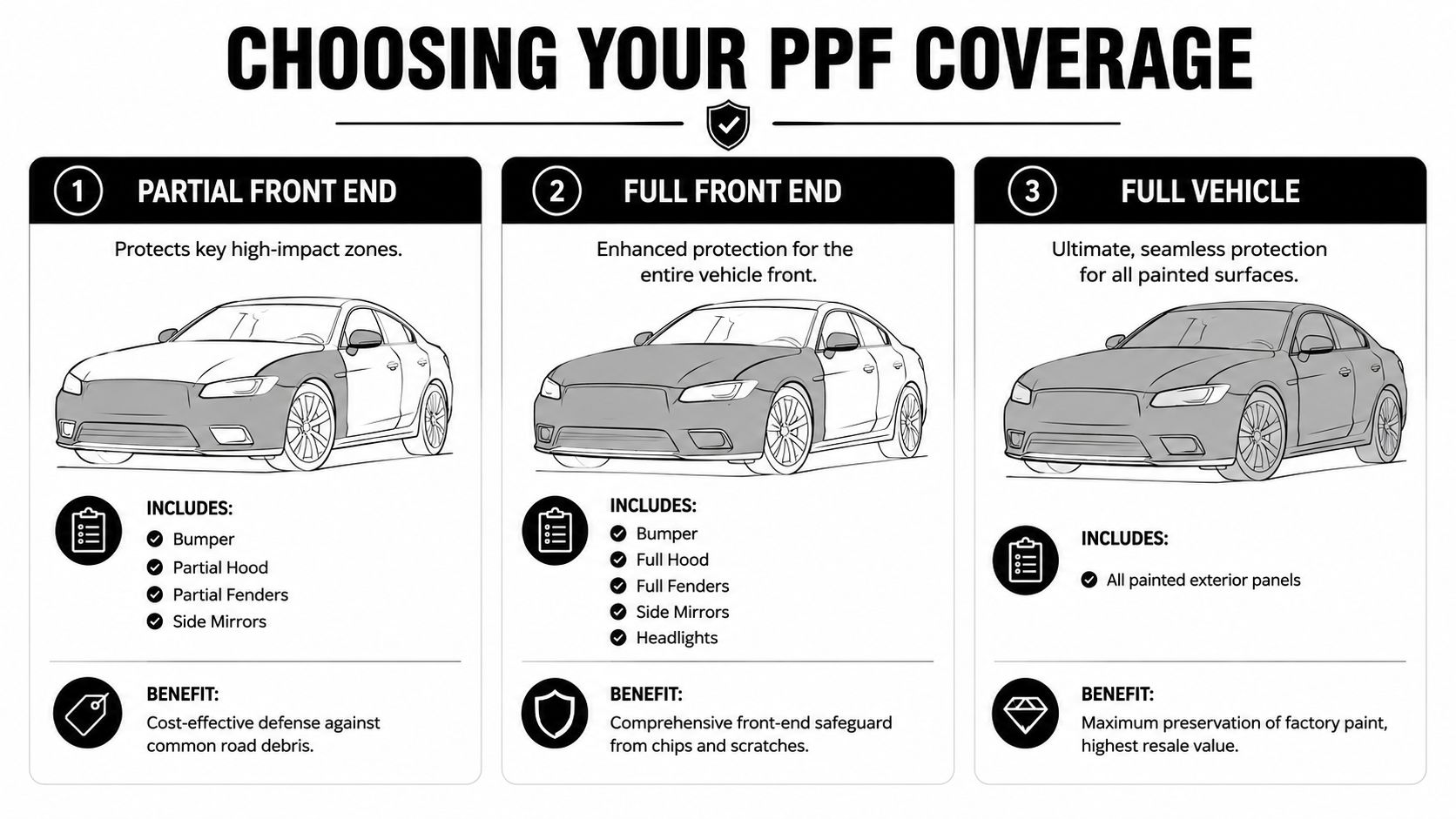
The three common package types
| Coverage option | Typical protected areas | Best fit |
|---|---|---|
| Partial front end | Bumper, part of hood, part of fenders, mirrors | Drivers who want entry-level chip defense |
| Full front end | Full bumper, full hood, full fenders, mirrors, front-facing trim | Highway commuters and newer vehicle owners |
| Full vehicle | All painted exterior panels | High-value vehicles, enthusiasts, long-term keepers |
How to decide without overbuying
A partial front end can make sense if your goal is basic protection and you mainly want to shield the hardest-hit leading surfaces. The trade-off is visible film lines on some installs, depending on pattern and panel layout.
A full front end is where many daily drivers find the sweet spot. It protects the entire hood and fenders, which gives a cleaner finished look and avoids that obvious transition line across the hood.
A full vehicle wrap is for owners who want uniform coverage on every painted panel. That makes the most sense when the vehicle is high-value, dark-colored and easy to mark, or kept as a long-term pride-of-ownership car.
A practical Lincoln decision guide
Choose more coverage if your driving includes:
- Frequent interstate use with lots of time behind trucks and traffic
- Rural or gravel-road driving where kicked-up debris is normal
- Year-round exposure with winter grit and seasonal contamination
- A new or expensive vehicle where keeping original paint matters more
Choose less coverage if:
- The car is older and already chipped
- You drive mostly short urban routes
- You care more about washability than impact protection
If budget is the deciding factor, this guide to paint protection film cost is a helpful starting point for understanding why coverage level, film choice, and panel complexity change pricing.
Living with PPF Maintenance and Local Lincoln Considerations
Once film is installed, ownership is pretty straightforward. You wash it like the rest of the vehicle, keep contamination from sitting too long, and avoid treating it like a neglect-proof surface.
That simplicity is one reason PPF works well for busy owners. You don't need a special routine. You need a consistent one.
How to care for it without shortening its life
Good habits matter more than fancy habits.
- Wash regularly so bug residue, road film, and winter grime don't sit on the film longer than needed.
- Use safe wash methods because dirty brushes and harsh abrasion can still mar the surface.
- Remove contaminants promptly after road trips, especially on the bumper and mirror caps.
- Inspect edges occasionally so you catch lifting or contamination early if it develops.
A professional detailer can also help maintain the finish after installation. GP Mobile Car Wash & Detail offers mobile and shop-based detailing in Lincoln, including exterior care that fits into a normal maintenance schedule for protected vehicles.
Why Lincoln conditions make PPF easier to justify
Lincoln drivers deal with a mix of hazards that make front-end protection more than a cosmetic luxury.
Winter road treatment is a big one. Sand and de-icing materials create an abrasive slurry that gets thrown against bumpers, rocker panels, and lower doors. Even careful drivers can't avoid that when roads are messy.
Rural Nebraska driving adds another layer. Gravel roads and loose shoulder debris can chip paint fast, especially on trucks, SUVs, and daily drivers that spend time outside city streets. Interstate travel does the same thing in a different way. More speed means more force when debris hits.
If you live where roads are dry, loose, dirty, icy, and sanded at different points of the year, the front of your car lives a harder life than it would in a mild climate.
What local owners should prioritize
For Lincoln-area vehicles, the smartest panel priorities are usually:
- Front bumper and full hood for highway exposure
- Mirror caps and fenders for angled debris
- Rocker panels for gravel and winter grit
- Rear loading edge protection if the vehicle carries sports gear, tools, or strollers often
If sun exposure is also part of your concern, this article on how to protect car paint from sun damage pairs well with a PPF plan because UV care and impact protection solve different problems.
Common Questions About Paint Protection Film
Most of the hesitation around PPF comes down to four questions. Is it better than ceramic coating, is it worth the money, how long does it last, and can it be removed safely?
The short answer is that PPF makes the most sense when your car faces regular physical abuse from the road and you care about preserving original paint.
Is PPF better than ceramic coating
They do different jobs.
According to Solar Gard's explanation of paint protection film benefits, PPF's main advantage is physical impact protection, while ceramic coatings primarily add gloss and easier cleaning. The same source notes that PPF tends to be most valuable for highway commuters, owners of new or high-value cars, and people trying to prevent rock chips and scratches, while ceramic coating benefits almost any owner who wants easier maintenance.
If you want chip resistance, ceramic coating isn't the answer by itself. If you want easier washing and stronger water behavior, ceramic coating is helpful. Some owners use both because they want each product to do what it does best.
Is PPF worth the cost
That depends on three things more than anything else:
Vehicle value
The nicer the paint and the more you care about keeping it original, the easier the math becomes.Driving exposure
If the car sees highway miles, gravel, or rough seasonal conditions, PPF has more opportunities to pay off.Ownership timeline
The longer you plan to keep the vehicle, the more time there is for avoided damage to matter.
For a garage-kept weekend car with limited road exposure, full coverage may not make sense. For a new truck, SUV, or sedan that sees Nebraska roads year-round, it often does.
How long does it last
One source focused on high-impact zones says properly installed and maintained PPF commonly delivers 8 to 10+ years of service life, and it also cites up to 50% less fading and degradation over five years in relevant use cases, as described by LeJeune Ceramic Coating's discussion of PPF durability on high-impact areas.
Those outcomes depend heavily on film quality, prep quality, installation, storage conditions, and maintenance. Cheap film and poor upkeep shorten the experience fast.
Can it be removed without damaging the paint
Yes, when it's quality film on factory paint and it's removed properly. That's one of the reasons PPF is useful as a sacrificial barrier. It takes the wear, then can be replaced later if needed.
The key phrase is removed properly. Bad removal technique can create problems even with a good product. That's why installation and future removal should both be handled with care.
If you're weighing paint protection film against your actual driving habits, not just marketing claims, GP Mobile Car Wash & Detail is a practical place to start. They serve Lincoln and surrounding areas, offer mobile service or shop drop-off, and can help you decide whether PPF makes sense for your vehicle, which panels deserve priority, and whether ceramic coating, detailing, or a combination approach fits better.