A lot of Lincoln drivers end up in the same cycle. You wash the car, it looks great for a day or two, then the shine gets muted by dust, bug residue, pollen, road film, or the streaks that show up after a quick rain. If you've ever spent part of a Saturday waxing a vehicle only to feel like the finish already looks tired by the next week, you're exactly the kind of owner who starts looking into ceramic auto detailing.
That interest isn't just hype. Many people want a finish that stays glossier, cleans up easier, and doesn't ask for constant rework. Busy families want less upkeep. Professionals want a vehicle that stays presentable in a parking lot or driveway. Enthusiasts want the paint to look deep and sharp without babying it every weekend.
Ceramic coating fits that need best when you understand what it is, what it isn't, and what's required before it ever touches the paint. That's where most confusion starts. Some shops oversell the results. Some DIY kits make the process sound easier than it is. And a lot of online advice skips the details that matter once the car is back on the road in Nebraska.
Your Guide to a Lasting Shine in Lincoln
A common local scenario goes like this. Your car looks solid in the garage or right after a wash, but once it's outside for a few days, the finish starts collecting the stuff that daily driving leaves behind. Dark vehicles show it first, but light colors aren't immune. The vehicle still runs fine. It just never looks as clean as you want it to for long.
That frustration is usually what pushes people from ordinary wash-and-wax maintenance toward ceramic auto detailing. They're not chasing a gimmick. They want a more durable answer than short-lived surface dressings and quick waxes.
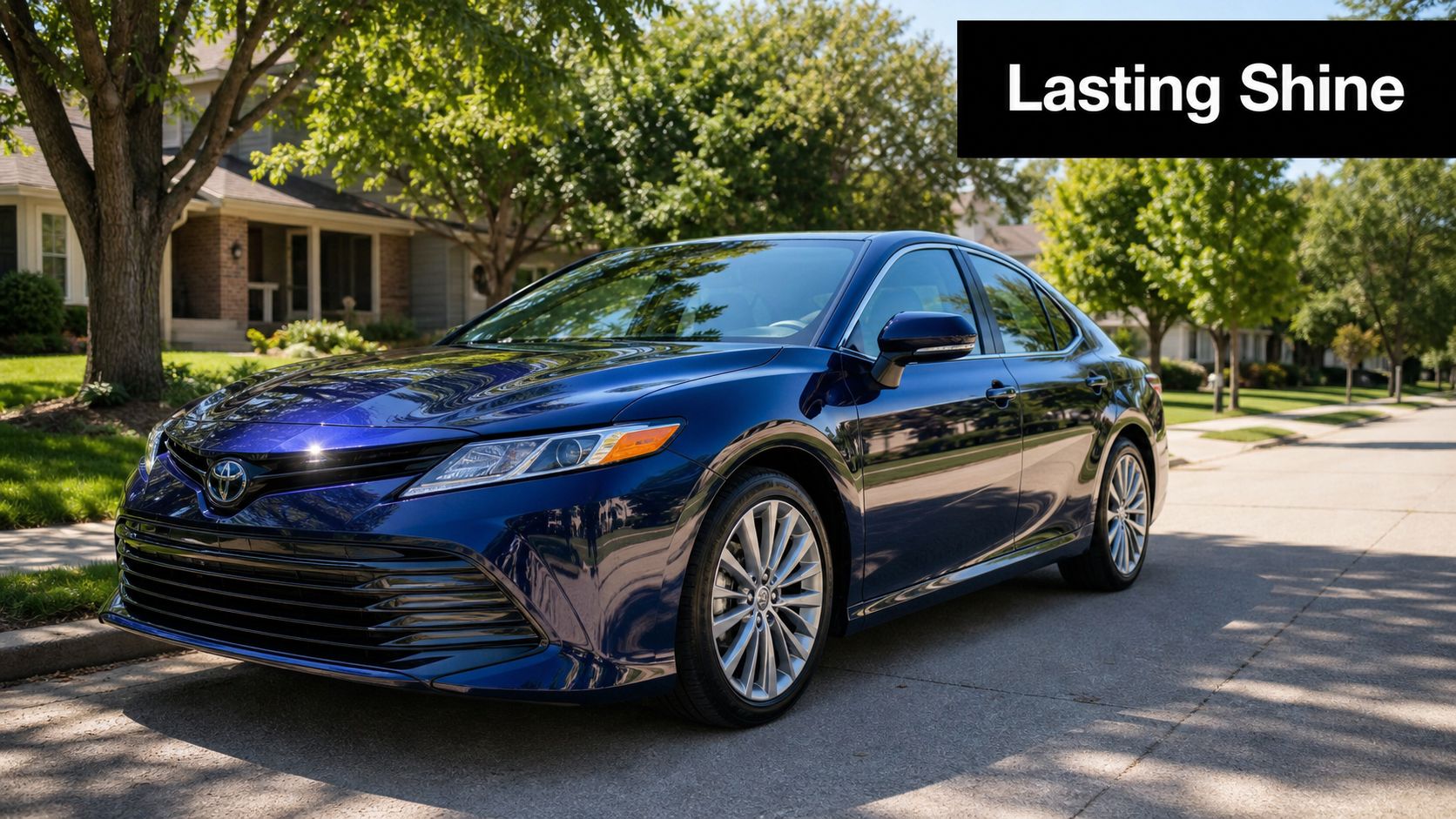
What makes ceramic detailing appealing is simple. It shifts the goal from temporary shine to longer-term paint protection and easier maintenance. Instead of repeatedly laying down a product that sits on top of the paint and fades quickly, the process centers on preparing the surface properly and installing a coating that becomes part of the paint-care system.
Why Lincoln drivers look into it
Lincoln owners usually fall into a few camps:
- Daily drivers who are tired of washing the same vehicle over and over
- Truck and SUV owners who want easier cleanup after regular road use
- Parents and commuters who don't have time for frequent hand waxing
- Car enthusiasts who notice every swirl mark, water spot, and dull patch
A coating makes the car easier to live with, but only if the prep work is honest and the maintenance stays sensible.
That's the part worth focusing on. Ceramic coating can be an excellent value, but it isn't magic. It won't rescue neglected paint without prep. It won't stop every defect. And it won't remove the need to wash your car. What it can do is give you a cleaner-looking, better-protected vehicle that's much easier to maintain when the process is done right.
What a Ceramic Coating Is and How It Protects Your Car
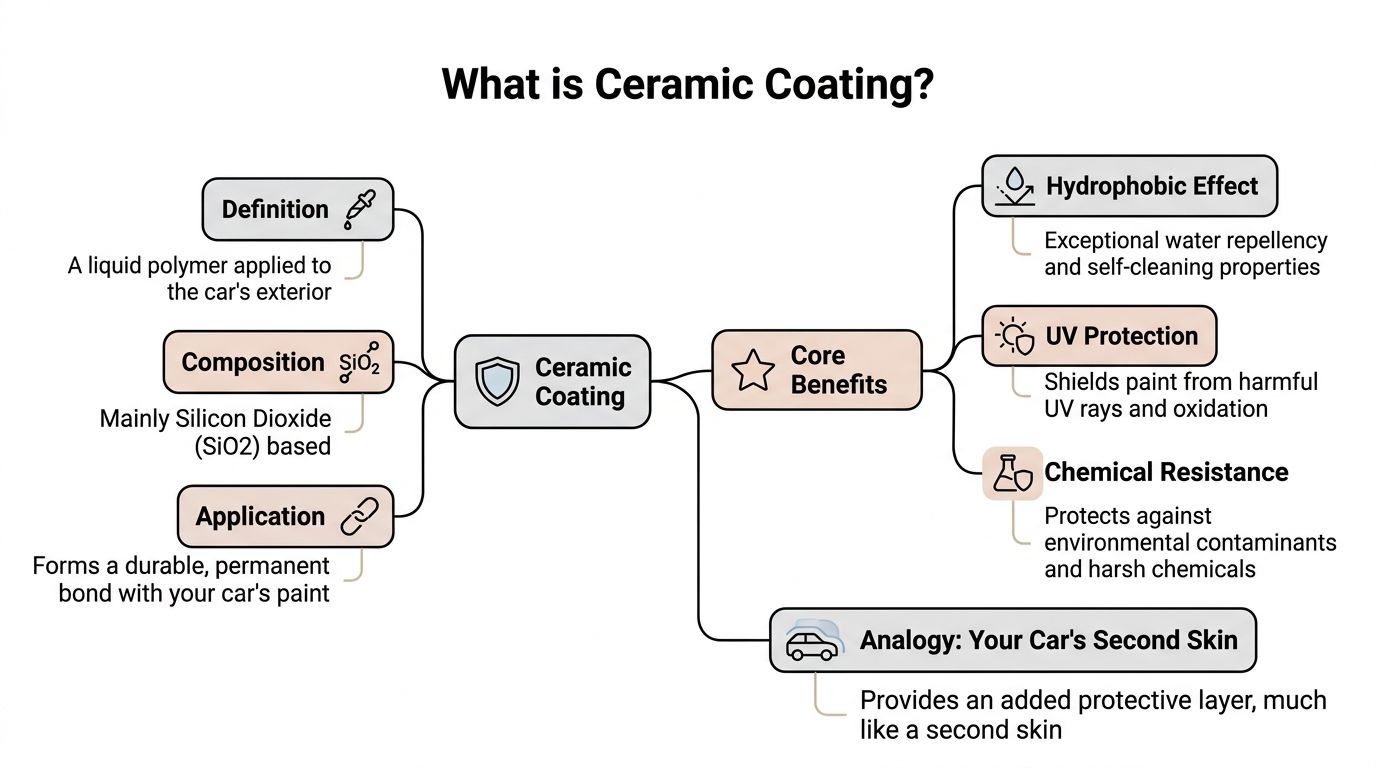
A ceramic coating is best understood as a thin protective layer that chemically bonds to the vehicle's clear coat. It isn't a thick shell you can see sitting on top of the paint. It's more like a clear, glass-like skin fused to the surface.
The chemistry matters here. Ceramic coatings use silicon dioxide, or SiO₂, to bond with the paint and form a semi-permanent shield. According to this ceramic coating explanation from Mobigleam, that shield is typically 1 to 3 microns thick, which is thin enough to preserve paint clarity while still providing protection against UV rays, chemical stains, and environmental contaminants.
What that bond actually does
If wax is like putting a temporary layer on the paint, ceramic coating is closer to installing a sacrificial barrier that works with the clear coat rather than just resting on it. That difference changes how the surface behaves day to day.
The coating helps with:
- UV exposure that can fade and age paint over time
- Chemical contamination such as bird droppings, bug residue, and tree sap
- Surface cleanup because dirt and grime release more easily from a slicker finish
- Water behavior because the coating creates a hydrophobic surface that beads water
That hydrophobic effect is one of the first things owners notice. Water doesn't cling the same way. It beads and rolls off more readily, taking loose grime with it. The same Mobigleam source notes that this self-cleaning effect reduced washing frequency by up to 30% in benchmark tests when compared with untreated surfaces.
What it does not do
It's important to set realistic expectations. Ceramic coating is not paint protection film. It doesn't stop rock chips. It doesn't make paint indestructible. It also doesn't erase scratches that are already there.
Practical rule: Ceramic coating preserves and protects the finish you have after correction and polishing. It does not hide poor paint underneath.
That's why detailers care so much about prep. If the paint is glossy, refined, and properly cleaned before coating, the final result looks sharp. If the paint still has haze, embedded contamination, or visible swirls, the coating can lock that appearance in.
For Lincoln owners, the biggest practical benefit isn't just shine. It's the combination of cleaner wash behavior, stronger resistance to common contamination, and a finish that keeps its look longer than traditional protection methods.
Ceramic Coating vs Traditional Wax and Sealants
A Lincoln daily driver sees a different life than a weekend toy. It deals with sun, road film, bug residue, hard water, and long stretches between proper washes. That is why the right protection choice comes down to how you use the vehicle, not which product has the flashiest label.
Protection showdown
| Attribute | Traditional Wax | Paint Sealant | Ceramic Coating |
|---|---|---|---|
| How it bonds | Sits on top of paint | Sits on top of paint with more durability than wax | Chemically bonds to the clear coat |
| Durability | Short-term protection | Longer than wax, but still temporary | Can last years depending on product and application |
| Water behavior | Good at first, then fades | More consistent than wax | Strong hydrophobic behavior and easier wash maintenance |
| Gloss | Warm, attractive shine | Bright, clean shine | Deep gloss with strong clarity when prep is done well |
| Resistance to contaminants | Limited | Better than wax | Stronger resistance to UV rays, chemical stains, and environmental fallout |
| Application | Fast and simple | Moderate effort | Prep-heavy and methodical |
| Best fit | Someone who enjoys frequent upkeep | Budget-minded owner wanting better-than-wax protection | Owner who wants long-term value and easier maintenance |
Wax still has a place. On a garage-kept vehicle that gets regular hand care, a good wax can look great and keep costs down. Some owners enjoy applying it every month or two, and there is nothing wrong with that.
Sealants are the middle option. They generally last longer than wax and hold up better through weather and routine washing, but they still wear off on a much shorter timeline than a true ceramic coating.
Ceramic coating earns its price in day-to-day use. The finish stays easier to wash, contamination does not stick as aggressively, and protection does not disappear after a few weeks of Nebraska weather. For busy owners, that difference matters more than showroom language about shine.
There are a few myths worth clearing up. A coating does not mean water spots can never happen. In Lincoln, sprinkler water and mineral-heavy rinse water can still leave deposits if the vehicle dries in the sun. A coating helps with cleanup, but it does not replace proper washing and drying.
Another myth is that every vehicle needs heavy paint correction before coating. That is not always true. Some cars need a serious polishing package because the paint is swirled or oxidized. Others only need light polishing or a prep service, depending on condition and owner expectations. At GP Mobile Car Wash & Detail, that choice should be based on what the paint looks like, not a one-size-fits-all package.
Wax is cheaper upfront. Ceramic usually costs less in time, reapplication, and upkeep over the long run for the right owner.
The trade-off is simple. If you like frequent upkeep and want the lowest entry cost, wax or sealant can be a smart fit. If you want longer-lasting protection and easier maintenance, ceramic coating is in a different class, as long as you are also willing to wash it correctly and keep realistic expectations.
The Professional Ceramic Coating Process From Start to Finish
A lot of Lincoln drivers first ask about ceramic coating after a rough winter, a season of hard water spots, or one too many tunnel washes. They want the shine, but the part that decides whether the coating is worth the money happens before the bottle ever comes out.
A professional coating job is prep-heavy. Application matters, but the wash, decontamination, polishing, and cure steps are what separate a coating that performs well from one that just sounds good on the invoice.
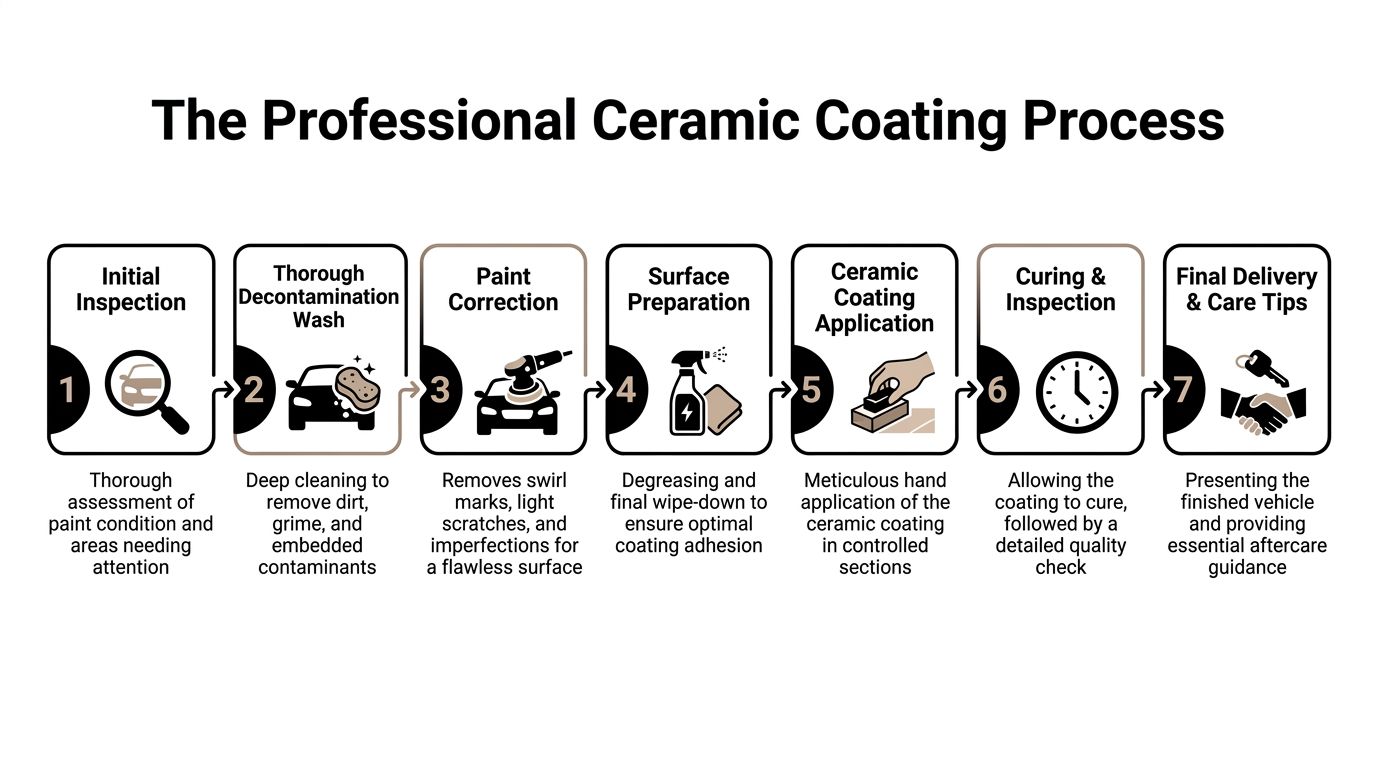
Inspection and decontamination
The first step is a proper inspection under direct lighting. That shows swirl marks, oxidation, deeper scratches, old wax residue, and bonded contamination that a quick wash will not remove. On Nebraska daily drivers, I also expect to see bug residue, road film, iron fallout, and mineral buildup from sprinklers or hard water.
Then the surface gets cleaned in stages:
- A thorough wash to remove loose dirt and traffic film
- Wheel and tire cleaning to keep brake dust and grime from getting back onto the paint
- Chemical decontamination for iron fallout, tar, sap, and other bonded residue
- Mechanical decontamination, usually with clay if the paint still feels rough after chemical treatment
Skipping this part creates problems fast. If contamination stays in the paint, the coating locks it in place, the finish feels rough, and the final result does not look as clean as the owner expected.
A short walkthrough helps if you want to see how detailers think through the prep and application stages in practice.
Polishing and paint correction
This is the stage where honest recommendations matter.
Some vehicles need real correction. Some only need a light polish to improve gloss and remove minor haze. The right answer depends on paint condition, color, mileage, and what the owner expects to see afterward. A black truck with years of wash marring is different from a newer silver SUV that already presents well from five feet away.
A practical breakdown looks like this:
- Newer vehicle with minor haze often needs a refinement polish
- Daily driver with moderate swirls may need a one-step correction
- Neglected or darker paint may justify a more involved correction
Every vehicle should be prepped before coating. Not every vehicle needs aggressive correction.
That trade-off should be explained clearly, because correction affects price, labor time, and how much defect removal is realistic. At GP Mobile Car Wash & Detail, the goal is to match the prep work to the paint instead of forcing every vehicle into the same package.
Panel wipe, coating, and curing
After polishing, the paint is wiped down to remove polishing oils and residue so the coating can bond to the actual clear coat. If that step is rushed, the installer is applying over leftover residue instead of clean paint.
The coating is then applied one section at a time. Product is spread evenly, watched closely as it flashes, leveled to prevent high spots, and checked under lighting before moving on. This part takes patience. A rushed install can leave uneven behavior, streaking, or visible high spots that only show up later in the sun.
Curing is where customer expectations need to be clear. The vehicle usually should stay dry for an initial period, and the coating continues hardening after the application day. That is one reason we go over aftercare before handing keys back. Owners who want the best result should follow a proper ceramic-coated car maintenance routine right from the first wash.
Done right, the process is straightforward but not quick. Most of the work is cleaning, correcting, inspecting, and waiting at the right times. That is what gives the coating a fair chance to look good and hold up in real Lincoln driving conditions.
Real-World Durability and Proper Maintenance for Your Coating
The biggest mistake owners make after getting a coating is assuming the hard part is over. It isn't. The installation creates the protection. Your wash routine preserves it.
Ceramic coatings last longer than waxes and sealants, but real-world durability depends on how the vehicle is driven, where it sits, and how it's washed. A coated daily driver parked outside full time will age differently from a weekend car kept indoors. The coating still helps, but maintenance decides whether that help lasts.
What coatings handle well
A good coating deals well with routine exposure. It stands up better than wax against sun, light chemical contamination, road film, and regular wash cycles. It also keeps the surface slicker, which makes bug residue and dirt easier to remove when they're addressed promptly.
That doesn't mean the finish is invincible.
- Automatic brush washes can still mar the surface
- Harsh cleaners can weaken hydrophobic behavior
- Neglect lets contaminants sit longer than they should
- Abrasive wash methods can compromise the coating layer
The coating is protective, but it's still sacrificial.
The water spot myth
One of the most persistent myths is that ceramic coating prevents water spots. It doesn't. According to this explanation of ceramic coating water spots, coatings reduce spot severity rather than eliminate formation. Water spots come from mineral deposits left behind after water evaporates. Because the coating beads water tightly, those deposits can become more noticeable if the droplets are left to dry.
That catches some owners off guard. They see beading and assume they can ignore the water. The better approach is simple. Don't leave standing water on the vehicle any longer than necessary, especially after sprinkler exposure, hard-water rinsing, or humid weather.
Ceramic coating helps water leave the surface. It does not make minerals disappear.
A maintenance routine that works
For most owners, a good upkeep plan looks like this:
- Use pH-neutral shampoo so the coating isn't stripped by aggressive chemicals
- Wash with quality mitts and drying towels to reduce unnecessary marring
- Skip tunnel washes with brushes because they can scratch coated and uncoated paint alike
- Dry the car promptly when water sits in beads on warm panels
- Use coating-safe maintenance products when the finish starts feeling less slick
If you want a practical checklist, this guide on how to maintain a ceramic coated car covers the day-to-day basics in plain language.
The coated car that looks best a year later usually isn't the one with the fanciest product. It's the one the owner washes correctly.
Decoding Ceramic Coating Costs and Service Options in Lincoln
When people ask why ceramic coating costs more than a basic detail or wax, the short answer is labor. The longer answer is labor, paint condition, vehicle size, coating choice, and the time needed to let the job cure properly.
Pricing isn't just for a bottle of product. It reflects the inspection, wash, decontamination, polishing, panel prep, careful application, and aftercare guidance. That's why two vehicles can require very different levels of work even if they look similar from ten feet away.
What changes the price
A few variables drive most coating quotes:
Vehicle size
A compact sedan takes less time than a full-size truck, large SUV, van, or RV.Paint condition
If the finish has swirls, oxidation, stains, or prior wash damage, prep time goes up.Correction level
Some cars only need a light polishing stage. Others need heavier defect removal before coating.Coating type and longevity
Entry-level coatings, longer-term systems, and premium professional products don't carry the same material and labor demands.
Why people still choose it
The premium side of the detailing world keeps growing because many owners don't see coating as a vanity purchase. They see it as a protection decision. According to GM Insights on the premium car detailing market, the premium segment that includes nano-ceramic protection was valued at USD 16.2 Billion in 2025. That demand is tied to owners who prioritize visible results and long-term vehicle preservation.
That lines up with what detailers see in the field. People are less interested in repeating short-term protection and more interested in getting the paint into good condition, then keeping it there.
Mobile service or shop visit
Convenience also matters in Lincoln. Some owners want detailing done at home or at work so they don't lose time driving across town and waiting around. Others prefer dropping the vehicle off for a more controlled shop setting.
Both approaches can make sense. Mobile service fits busy schedules and family logistics. A shop visit can be ideal when the vehicle needs longer staging time or more controlled conditions for correction and coating. If you want a practical breakdown of local pricing variables, this page on ceramic coating price for a car helps frame what to expect.
A good quote should explain the work. If the price sounds low but the prep process sounds vague, that's usually the trade-off.
Your Ceramic Coating Questions Answered
A few questions come up on almost every coating consultation. The quick answers below clear up most of the confusion.
Why has ceramic coating become so popular
Because more owners want long-term paint protection, not repeated short-term shine. That trend is large enough to show up at the market level. The global automotive ceramic coating market is projected to reach USD 3.5 Billion by 2033, with a projected 15.7% CAGR from 2026 to 2033, according to this market outlook on automotive ceramic coatings. The driver behind that growth is straightforward: people want durable protection and lasting appearance.
Is ceramic coating worth it on an older car
Often, yes. The key question isn't age alone. It's paint condition. An older vehicle with solid clear coat can respond very well to polishing and coating. If the paint is failing, peeling, or severely compromised, a coating won't fix that. It preserves what's there.
Can I apply a DIY coating myself
You can, but the risk isn't the bottle. It's the prep and leveling. DIY coatings are far less forgiving when the surface still has contamination, polishing oils, or inconsistent correction. High spots, streaking, and disappointing durability usually come from prep mistakes, not from a lack of enthusiasm.
What's the difference between shorter and longer coating options
In practice, longer-term options usually involve stronger chemistry, stricter prep standards, and more exact application. They tend to make the most sense for owners who plan to keep the vehicle a while and want to commit to proper maintenance.
Will ceramic coating stop scratches
No. It helps resist some minor wash-induced wear, but it is not scratch-proof. If that concern is top of mind, this article on whether ceramic coating prevents scratches is worth reading before you book anything.
The best coating job is the one matched to the vehicle, the owner's habits, and realistic expectations.
Ceramic auto detailing is worth it when you want easier upkeep, stronger protection than wax, and a finish that stays sharp with the right care. It's not for everyone. But for many Lincoln owners, it's the first paint-care service that feels built for real life.
If you want honest advice on whether ceramic coating makes sense for your vehicle, GP Mobile Car Wash & Detail serves Lincoln with both mobile service and shop appointments. Reach out for a quote based on your vehicle's size, paint condition, and the level of protection you need.