You're standing in a wash bay with a line of dirty vehicles, a tired crew, and a brush cart that all looks the same at a glance. That's usually when the wrong commercial vehicle wash brush gets pulled first, and that small choice shows up later as swirl marks on a delivery truck, scuffed gel coat on an RV, or a brush that mats up and quits early.
In fleet work, brush selection isn't a supply-room detail. It affects finish quality, rewash time, customer complaints, and how fast your team can move the next unit through the bay. The right brush cleans evenly and holds up to chemical use, while the wrong one can cost you in paint correction, downtime, and premature replacement.
Why the Wrong Brush Costs Fleets More Than You Think
A body shop manager once told me the easiest damage to miss is the damage that only shows under bright sun. That's exactly what happens when someone grabs a stiff brush for a dusty box truck, skips the pre-rinse, and starts scrubbing like they're trying to strip a driveway. The truck rolls out looking clean enough in the shade, then the swirl marks show up when the sun hits the side panel.
That mistake doesn't stay cosmetic for long. A fleet unit that needs rewash time is a unit that misses schedule, and a vehicle with visible haze or scratch patterns can trigger complaints from dispatch, account managers, or the customer receiving the delivery. If you manage resale or lease return prep, those same marks can also hurt presentation and reduce confidence in the vehicle's care history.
The bigger issue is that a commercial vehicle wash brush is not a one-size-fits-all tool. A brush that's fine for dirty lower panels might be too aggressive for clear coat, vinyl graphics, or gel coat. One that's too soft may leave road film behind, which tempts the crew to lean harder and create the exact surface damage you were trying to avoid.
Practical rule: if the crew has to force the brush to do the work, the brush choice or the wash process is wrong.
The hidden cost shows up in throughput too. A brush that loads up with grit, deforms quickly, or sheds bristles slows every pass and raises the odds of cross-contamination between vehicles. In fleet settings, the cheapest-looking brush often becomes the most expensive tool on the bay rack.
Understanding Commercial Vehicle Wash Brush Anatomy
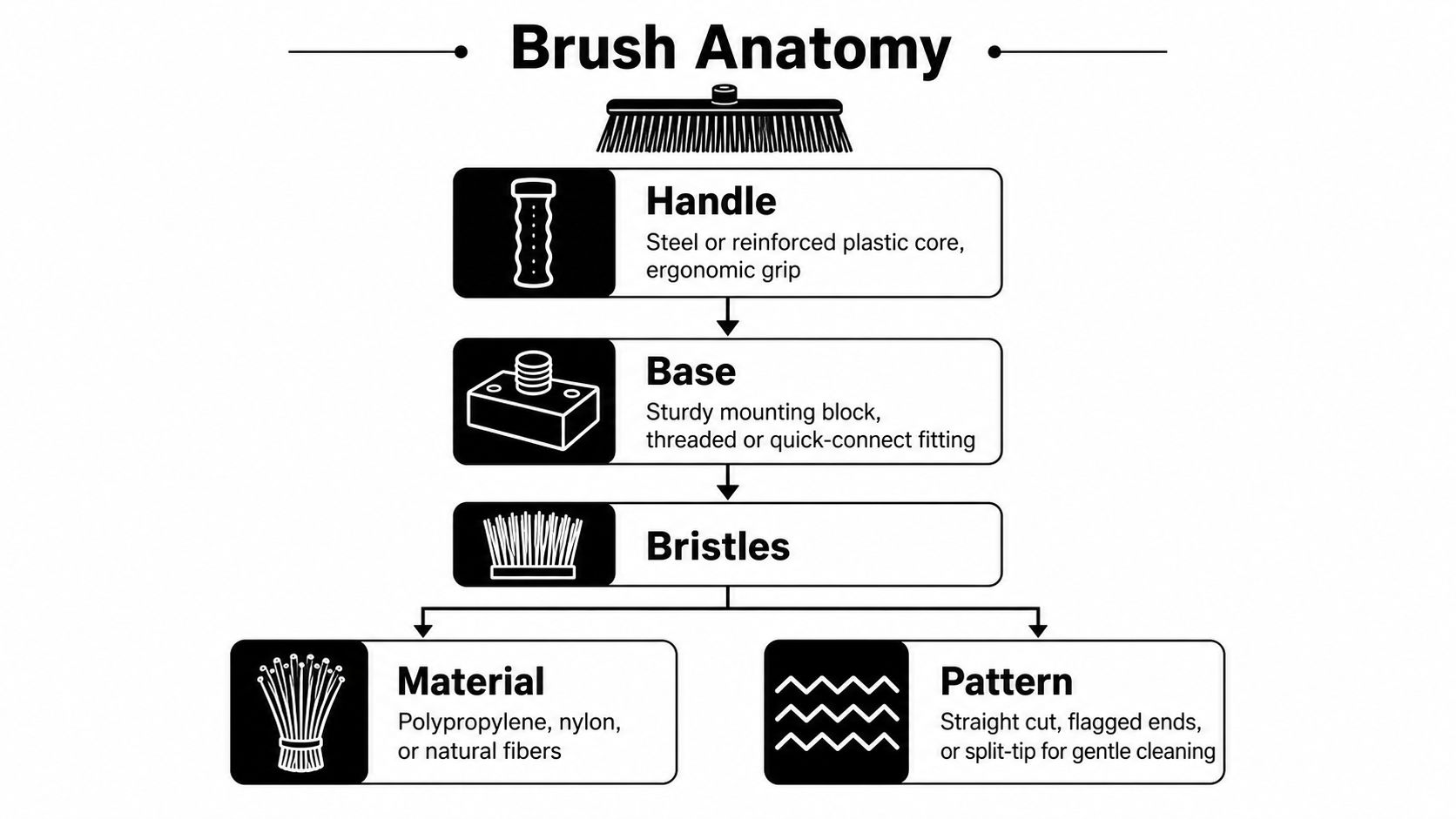
A commercial brush only works well when every part is doing its job. The handle or core gives the brush its structure, the mounting base keeps it seated securely in the holder, and the bristles do the cleaning. If any one of those parts is mismatched to the vehicle surface, the brush either leaves film behind or starts beating up the finish.
Core rigidity matters more than people expect
A steel or reinforced plastic core keeps the brush face from flexing too much under load. That matters on large, contoured surfaces like trailer sides, bus panels, and RV bodies because pressure needs to stay even across the contact patch. If the core is too flimsy, the brush hops across the panel instead of tracking smoothly over it.
Bristle material drives cleaning behavior
Most commercial brushes use polyethylene or polypropylene bristles. Those polymers stay flexible, resist water absorption, and handle repeated chemical exposure better than natural fibers, which helps prevent stiffening and uneven contact on curved vehicle surfaces. That is why they show up so often in automated wash systems and fleet wash equipment, as noted in the EPA's vehicle wash guidance, and in the material overview provided in the brief's reference video.
Flagging and density change how the brush feels on paint
Flagged or split-tip bristles increase surface contact without turning the brush into a scraper. Dense bristle packing gives more consistent coverage, while a looser pattern can feel gentler but may leave road film behind. The bristle arrangement works like tire tread, controlling how the brush channels water, releases soil, and keeps the cleaning face moving evenly across the surface.
A well-built brush should feel controlled, not aggressive. If it chatters, skips, or collapses under light pressure, it is the wrong design for fleet work.
That is why product spec sheets matter. You are not just buying “soft” or “stiff,” you are buying how the brush spreads pressure, how it handles chemistry, and whether it keeps the same contact behavior after repeated use.
Matching Brush Types to Different Vehicle Surfaces
Different vehicle surfaces punish bad brush choices in different ways. On a painted trailer, too much stiffness can haze the clear coat. On an RV sidewall, a rough brush can mar gel coat. On a bus, a brush that's too soft may just smear road film and force the operator to scrub harder.
Surface matching starts with the finish, not the vehicle type
Soft-touch foam brushes fit delicate finishes and lighter soil loads because they reduce the chance of scratching when the panel is already clean enough to accept contact. They're useful on RVs, boats, and higher-end service vehicles where gel coat or cosmetic presentation matters more than aggressive cut.
Polyethylene bristle brushes make sense when you need a balance of flexibility and resilience. They're a strong fit for mixed commercial fleets because they hold up well under water and chemical exposure while staying gentle enough for repeated contact on painted panels and contour-heavy bodywork.
Polypropylene bristle brushes lean stiffer. That can be a real advantage for buses, work trucks, and heavily soiled units where road film needs more mechanical action. The trade-off is simple, more cleaning strength usually means a narrower margin for error on softer finishes.
Hybrid designs try to split the difference. They're practical when you have mixed equipment in the same yard, but they still need to be matched to the worst surface in the rotation, not the easiest one.
Brush Type to Vehicle Surface Match Guide
| Brush Type | Best For | Surface Material | Cleaning Strength |
|---|---|---|---|
| Soft-touch foam brush | RV exteriors, boats, polished show units | Gel coat, delicate clear coat | Gentle |
| Polyethylene bristle brush | Mixed fleet vehicles, delivery vans, trailers | Painted metal, coated panels | Moderate |
| Polypropylene bristle brush | Transit buses, heavy road-film removal | Durable paint, powder-coated surfaces | Strong |
| Hybrid design | Multi-use wash bays with mixed vehicle sizes | Mixed surfaces | Moderate to strong |
For boat owners and RV operators, the key is restraint. Gel coat can look tough until a stiff brush starts leaving visible marks that never quite buff out. For truck trailers and buses, a firmer brush can save time, but only if the wash crew controls angle and pressure.
Choosing the Right Brush for Fleet Operations and Mobile Detailing
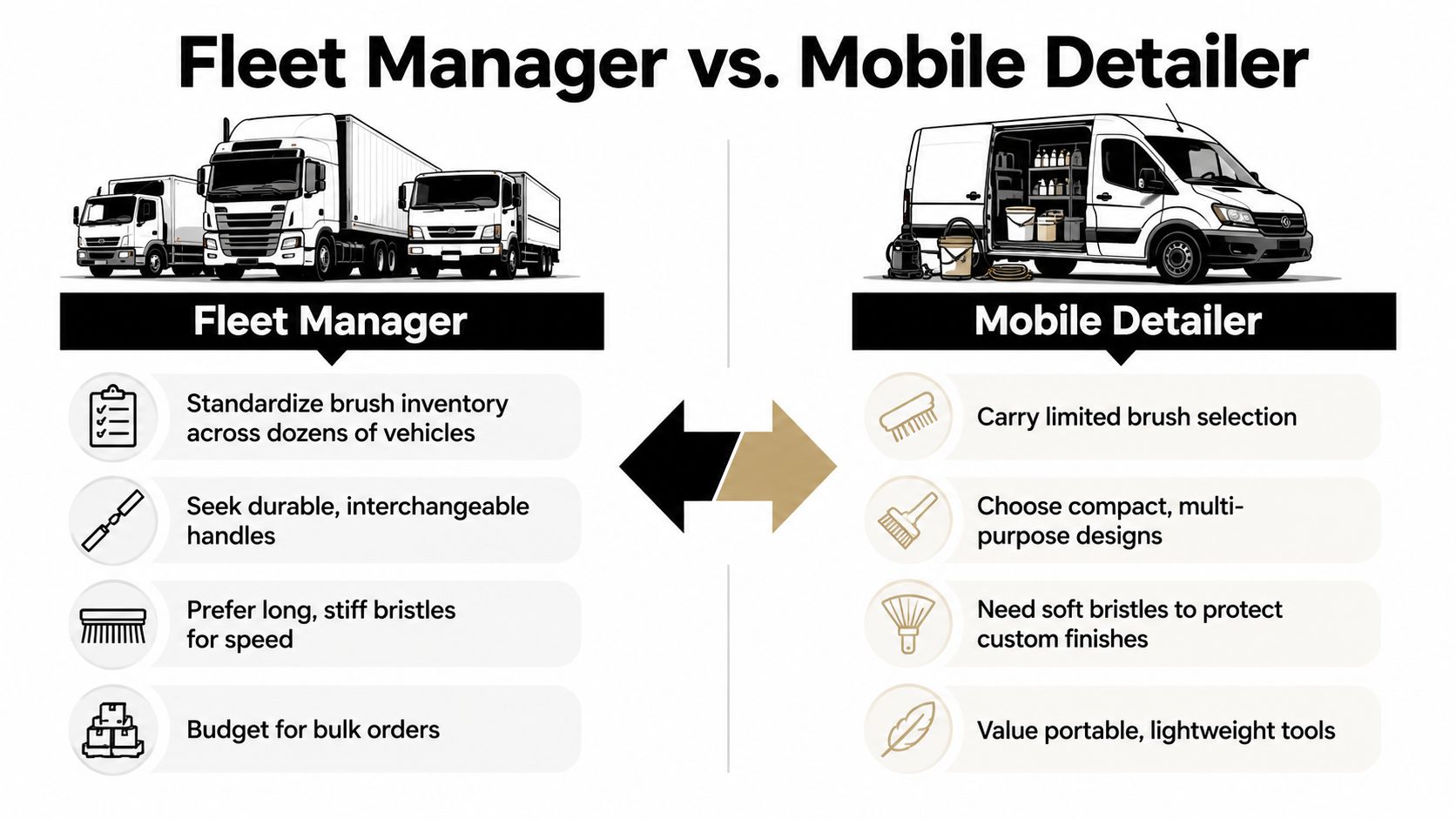
Fleet managers and mobile detailers buy for different realities. A fleet yard wants repeatability, interchangeable parts, and a brush lineup that keeps operators from improvising. A mobile detailer wants a compact kit that protects customer finishes, fits in the van, and still handles daily grime without needing five different handles.
Throughput depends on consistency
The brush that cleans evenly the first time is the one that helps the bay move. A brush that needs extra passes slows wash cycles, increases operator fatigue, and forces more rinsing between panels. That matters in a large fleet, where consistency beats a “special” tool for each truck.
Chemical compatibility also matters. Bristle polymers such as polyethylene and polypropylene handle repeated exposure better than natural fibers, which is why they're the safer default in commercial settings. If your wash program uses alkaline pre-soaks or acidic treatments, the brush has to survive the chemistry without stiffening, swelling, or losing shape.
Cost of ownership is more than purchase price
The cheapest brush on the invoice can still be the most expensive one in use. If it wears faster, deforms in storage, or loses cleaning contact early, you'll replace it sooner and spend more time managing complaints about finish quality. A stronger brush that stays in service longer usually wins on labor and replacement cycles, even before you account for touch-up work.
For mobile teams, portability matters just as much. GP Mobile Car Wash & Detail's mobile wash supplies fit the same logic, a small, well-chosen kit beats a van full of redundant gear. The crew that can switch from delivery vans to specialty vehicles without changing the whole setup usually works faster and makes fewer mistakes.
Operational check: if a brush slows the crew down or creates rework, it's not saving money, it's hiding cost in labor.
The best buy for a fleet isn't always the toughest brush on the shelf. It's the one that matches your wash chemistry, your vehicle surfaces, and the pace your team can sustain.
Safe Washing Techniques That Protect Vehicle Finishes
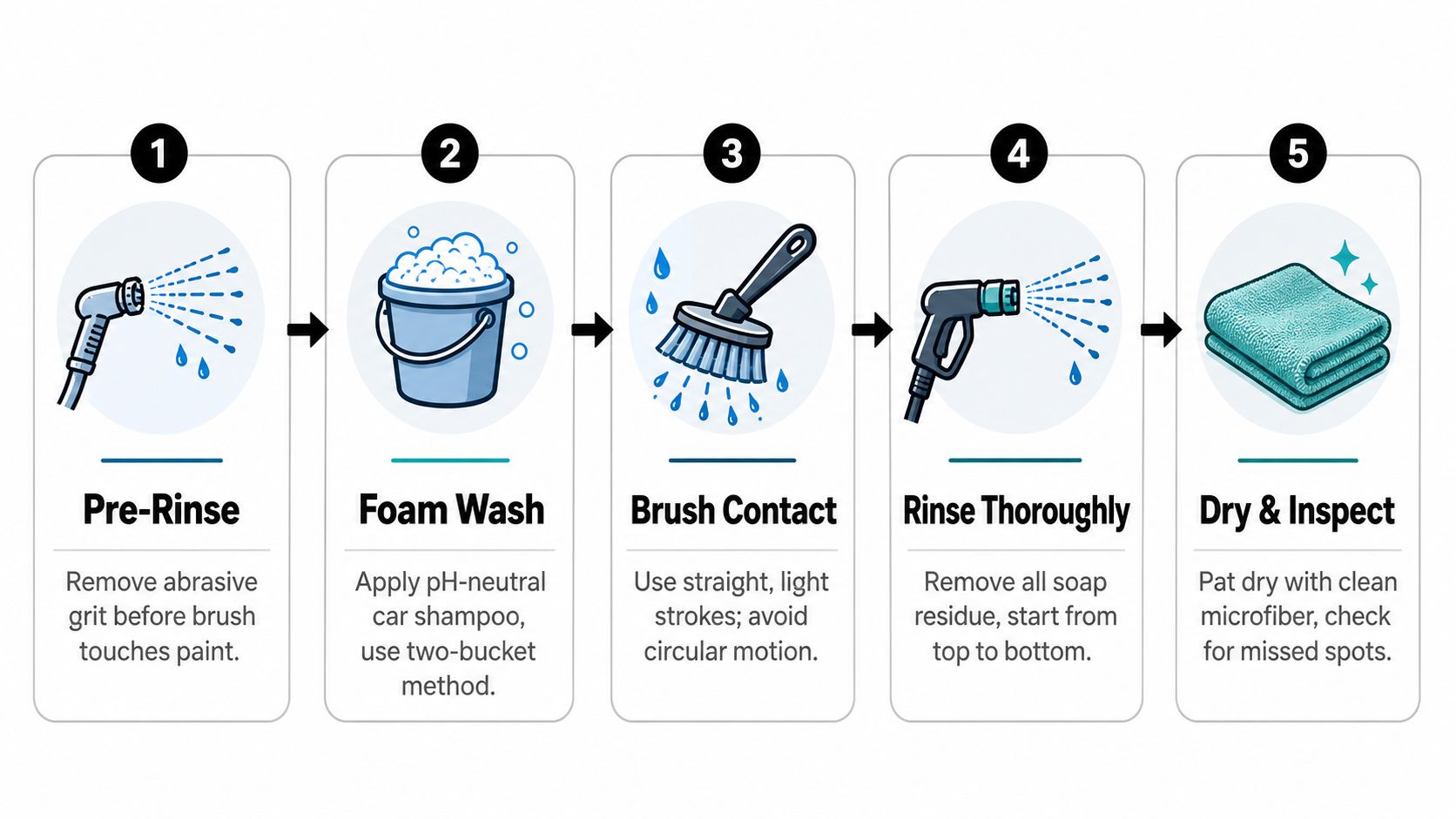
A good brush can still damage a finish if the technique is sloppy. Washing painted surfaces without a pre-rinse is like sanding wood before clearing off the dust, you're grinding grit back into the surface instead of lifting it away. The brush should touch a surface that's already been stripped of loose debris.
Pressure and angle do the real work
Use light, straight strokes on flat panels and reduce pressure on curved sections, trim edges, and graphics. A steep angle concentrates force and increases the chance of dragging grit across the finish, while a flatter angle spreads that contact more evenly. The brush should glide, not grind.
Work from the top down so dirt doesn't get pulled onto areas you already cleaned. Keep the brush fully lubricated with soap solution so the bristles float the film instead of dry-scrubbing it. If the brush starts to drag, it's telling you the lubrication has failed or the surface needs another rinse.
Build a sequence your crew can repeat
- Pre-rinse first. Remove loose grit before contact.
- Apply wash solution. Keep the surface wet.
- Brush with straight passes. Avoid tight circles on visible paint.
- Rinse thoroughly. Clear soap and loosened soil.
- Dry and inspect. Catch missed spots before the vehicle leaves.
That sequence protects paint, clear coat, and gel coat better than a rushed, all-purpose scrub. It also reduces the temptation to overwork one section, which is how most visible haze starts on commercial units.
The embedded video can help reinforce those handling basics for new crews.
For crews using pressure equipment alongside brushes, these pressure washer safety tips are worth keeping in the training binder. The safer the pre-rinse and rinse stages are, the less likely someone is to compensate with too much brush pressure later.
Brush Maintenance and Sanitization Routines
A brush that stays clean lasts longer and contaminates less. After every wash, rinse the bristles until the runoff is clear, then shake out trapped grit from the base and inspect the tips for splaying or embedded debris. If the brush goes back into storage loaded with soap residue and road film, it becomes a dirt carrier instead of a cleaning tool.
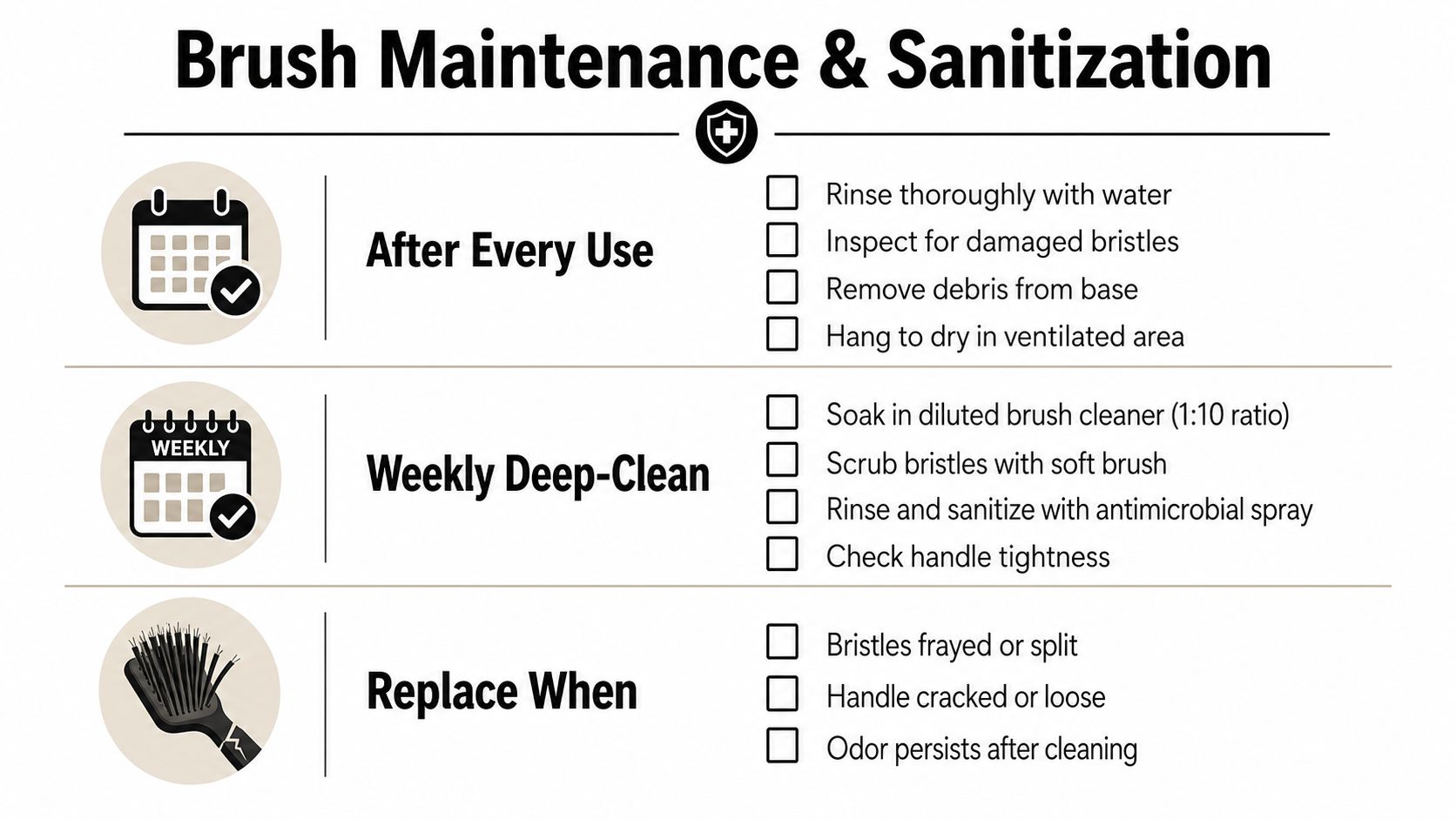
Daily care keeps the brush usable
Hang the brush in a ventilated area so the bristles dry in their natural shape. Storing it bristle-down on concrete can deform the fibers and trap moisture, which shortens service life and encourages mildew. If the brush smells bad after drying, it wasn't rinsed well enough.
Weekly deep-cleaning removes the stuff water misses
Soak the brush in a diluted cleaner, then work the bristles by hand or with a softer scrub brush to release embedded chemicals and tar. Rinse it well, sanitize it if it's shared across vehicles, and check the handle or core for looseness. A brush that flexes at the base is already telling you it's on the way out.
Know the replacement signs
- Frayed or split bristles: the contact face is no longer consistent.
- Cracked or loose handle parts: the brush can fail mid-job.
- Persistent odor: contamination has soaked in too far.
- Splayed shape: the brush no longer distributes pressure evenly.
Detailers who move between fleet work and personal vehicles need stricter sanitization because the brush can carry residue from one finish to another. That's especially important when a vehicle with heavier soil loads follows a more delicate finish in the same route.
A good maintenance routine doesn't just extend brush life. It keeps every wash more predictable, and predictability is what crews need when the day gets busy.
Common Mistakes That Damage Vehicles and Destroy Brushes
Most brush damage starts with convenience. The operator wants speed, so the pre-rinse gets shortened, the wheel brush gets used on body panels, and the same brush gets shoved back onto the rack while it's still wet. That pattern ruins both the finish and the tool.
One common mistake is using a single brush for wheels and painted surfaces. Wheels carry the worst grit and brake dust, so that brush should never touch a clear coat panel unless you enjoy cross-contamination. Another is storing brushes bristle-down on concrete, which bends fibers and leaves them holding dirt and moisture.
Chemical mistakes are just as costly. Overmixing cleaners can degrade bristle polymers, and skipping the flush after acid-based cycles leaves residue that attacks the brush over time. If the brush comes out stiff, sticky, or discolored, it's usually because the rinse step was skipped.
Seven errors to remove from the wash bay
- Skipping the pre-rinse: leaves abrasive grit on the surface.
- Using one brush for wheels and panels: transfers contamination.
- Storing bristles on concrete: deforms the brush.
- Applying too much pressure on curves: increases finish damage.
- Using the wrong chemical concentration: shortens brush life.
- Not flushing after acid cycles: leaves residue in the fibers.
- Never rotating inventory: keeps one brush overworked while others sit idle.
Rotation matters because the same brush used every day will wear unevenly. A managed rotation spreads wear, keeps performance more consistent, and gives you time to spot a problem before it becomes a visible defect on the next vehicle.
The corrective action is simple. Separate tools by task, rinse them fully, store them upright or hung, and retire any brush that starts losing its shape or contact consistency.
When to Bring in Professional Fleet Washing Services
DIY brush washing holds up until the work gets too mixed, too busy, or too sensitive to risk. A small service van with painted panels is one thing. A mixed fleet with wrapped units, polished aluminum, gel coat, and specialty coatings is another. Once the wrong brush starts leaving swirl marks or dulling softer finishes, the cleanup takes longer than the wash itself.
The handoff to a professional crew also makes more sense when water use and wash procedures need tighter control. EPA guidance for vehicle wash best practices calls for routine leak checks, proper shut-off valve maintenance, careful nozzle calibration, and using a friction washing component in cycles where it fits the system. That kind of discipline matters because a wash bay is only efficient if it controls water, chemical use, and brush wear at the same time.
For fleets in and around Lincoln, Nebraska, GP Mobile Car Wash & Detail's commercial fleet washing services fill the middle ground between doing everything in-house and handing off the entire routine. Licensed, insured crews can handle fleet vehicles, RVs, and boats with methods matched to the surface instead of forcing every unit through the same brush pattern. That matters on gel coat and other sensitive finishes, where a stiff brush can leave more damage than dirt if the operator rushes the pass.
The trade-off is straightforward. Once your team spends more time correcting brush damage than getting vehicles clean, the operation has outgrown a simple internal setup. A specialist keeps the rougher work off your staff, protects throughput in the main wash lane, and helps preserve the brushes you still rely on for daily maintenance.
If your fleet is fighting swirl marks, worn brushes, or uneven wash results, GP Mobile Car Wash & Detail can help with commercial fleet washing, RVs, boats, and surface-safe detailing in Lincoln and nearby areas. Visit GP Mobile Car Wash & Detail to book a mobile service or shop appointment and get a wash process that fits the vehicle instead of risking the finish.