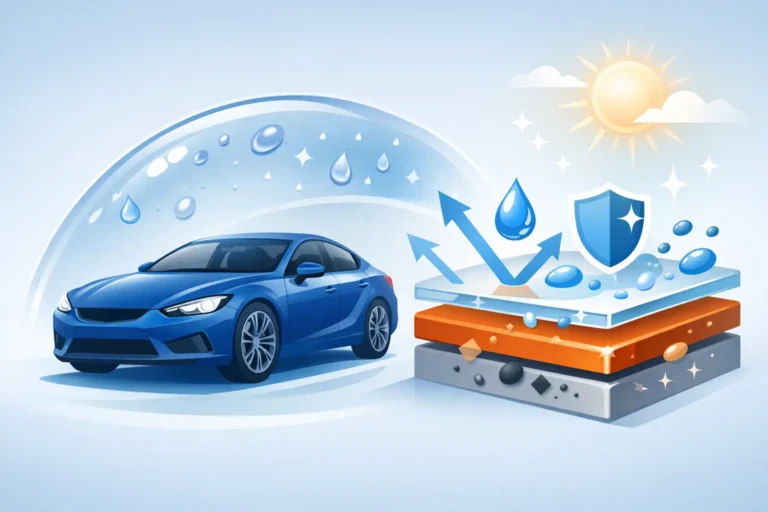
So, what's the absolute best way to protect the paint on your brand-new car? The answer I give most owners is a powerful one-two punch: Paint Protection Film (PPF) on the high-impact zones, paired with a professional ceramic coating over the entire vehicle. This combination gives you tough, physical armor against rock chips and an incredible layer of gloss and chemical protection everywhere else. It’s the closest you can get to a suit of armor for that showroom finish.
Why Your New Car Needs Paint Protection Right Away
That perfect, mirror-like shine on your new car is beautiful, but it's also more delicate than you might think. From the second you drive off the dealer lot, your paint is under constant attack from things that will dull its look and tank its value. Thinking about protection isn't an extra—it’s the first, most important step you should take as a new car owner.
Modern Paint Isn't as Tough as It Looks
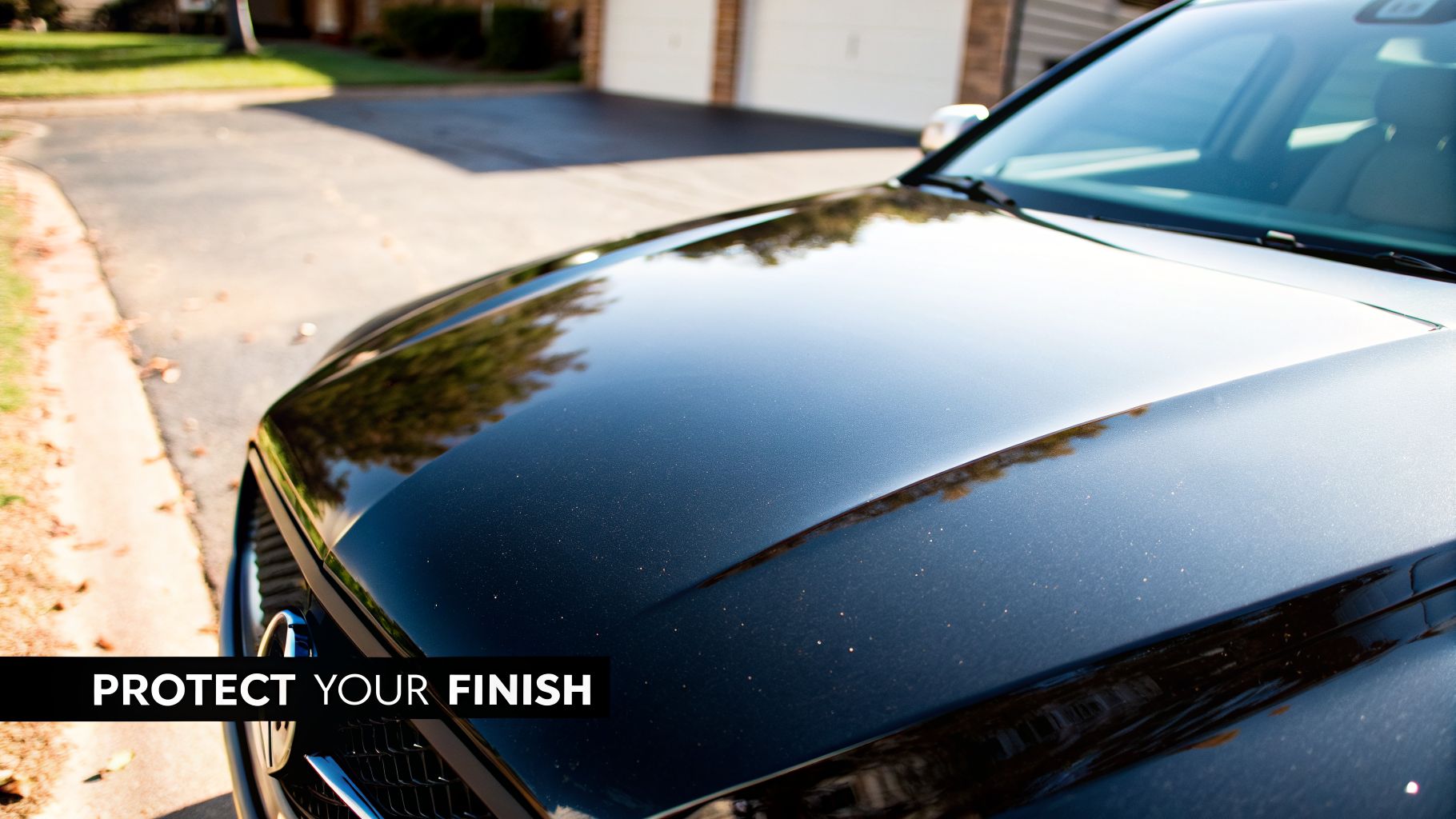
Car manufacturers have moved to more eco-friendly, water-based paints. That’s great for the environment, but it means the finish on your new car is much softer and easier to damage than the paint on older vehicles.
Every drive exposes it to a handful of common enemies:
- Physical Hits: Gravel, small rocks, and other road debris kicked up by traffic can easily chip your paint. The front bumper, hood, and mirrors are hit the hardest.
- Environmental Mess: Bird droppings, bug guts, and tree sap are all acidic. If left sitting for even a short time, they can eat right into the clear coat, leaving a permanent mark. Our guide on how to remove tree sap from car paint shows just how quickly this damage can happen.
- UV Rays: The sun is relentless. Over time, its UV radiation oxidizes your paint, causing it to look faded, hazy, and dull.
- Chemicals and Stains: Things like road salt in the winter, acid rain, and even harsh soaps from a cheap car wash can stain and strip away your car’s finish.
Because new paint is so vulnerable from day one, being proactive is key. It's a growing trend for a reason. The global market for paint protection film was worth over USD 349 million in 2024 and is expected to climb past USD 627 million by 2030 as more owners realize its value.
Protecting a new car is about more than just keeping it shiny—it’s about preserving its integrity and resale value from the very beginning. A single deep rock chip or an acid etch from a bird dropping can permanently ruin a factory finish. Immediate protection is simply the smartest investment you can make.
At a Glance Guide to New Car Paint Protection
To help you get a quick sense of your options, here’s a simple breakdown of the most popular solutions. We’ll get into the specifics of each one a little later in this guide.
| Protection Type | Best For | Durability | Primary Benefit |
|---|---|---|---|
| Paint Protection Film (PPF) | Impact resistance from rocks & debris | 5-10+ years | Physical armor, self-healing |
| Ceramic Coating | Chemical resistance & gloss | 2-7+ years | Extreme hydrophobicity, easy cleaning |
| Paint Sealant | UV protection & shine (budget-friendly) | 6-12 months | Slickness, good entry-level protection |
| Traditional Wax | Temporary gloss enhancement | 1-3 months | Deep, warm shine, low cost |
This table gives you the highlights, but choosing the right one depends on your budget, how you use your car, and how much work you want to put into maintaining it.
Understanding Modern Paint Protection Technologies
So, how do you pick the right protection for your new car? It all comes down to understanding what you're up against. Think of it as a choice between physical armor and a high-tech chemical shield.
Not all protection is created equal. A knight’s plate mail stops a sword differently than a modern vest stops a bullet. In the same way, Paint Protection Film (PPF), ceramic coatings, sealants, and waxes all defend your car in fundamentally different ways. Each one is built for a specific kind of threat.
Paint Protection Film (PPF) The Physical Armor
Paint Protection Film (PPF), or a "clear bra," is the heavy-duty physical armor for your vehicle. It’s a transparent, incredibly tough film made from thermoplastic urethane. This stuff was originally developed for the military to keep helicopter rotor blades from getting shredded by debris.
We apply this urethane film right over your car’s paint, where it acts as a sacrificial layer. It's engineered to absorb the impact from flying rocks, gravel, and other road junk, physically stopping them before they can chip your factory finish.
The real game-changer with modern, high-quality PPF is its self-healing capability. Minor scratches and swirls in the film will literally vanish on their own when they get warm from the sun or a heat gun. This means the film keeps looking perfect for years, even after taking some hits.
PPF is your number one defense against the physical beatings your car takes on high-impact zones like the front bumper, hood, fenders, and side mirrors. It’s simply the best solution for preventing rock chips.
Ceramic Coatings The Chemical Shield
If PPF is the armor, then a ceramic coating is a sophisticated chemical force field. It’s a liquid polymer that's typically based on silica dioxide (SiO₂), the same stuff that makes up glass and quartz. When our team applies it, this liquid forms a covalent bond with your car’s clear coat.
This chemical reaction creates a semi-permanent, glass-like shell of protection that's way harder and more durable than any old wax or sealant. It actually becomes a functional part of your paint, not just a layer sitting on top of it.
A ceramic coating's main jobs are:
- Extreme Hydrophobicity: It makes the surface incredibly slick, forcing water to bead up and fly right off. This "self-cleaning" effect makes it tough for dirt, mud, and grime to get a grip on your paint.
- Chemical and UV Resistance: The coating creates a powerful barrier against nasty environmental threats like bird droppings, bug guts, tree sap, and acid rain. It also fights off paint oxidation from the sun’s harsh UV rays.
- Enhanced Gloss: A professionally applied ceramic coating adds an insane, candy-like gloss that makes your car’s color pop with deep reflections.
It’s important to know that while a ceramic coating does add some scratch resistance, it is not made to stop rock chips. Its real strength is in shielding your paint from environmental damage and making your car unbelievably easy to wash.
Paint Sealants and Waxes Traditional Layers
Before PPF and ceramic coatings took over, paint sealants and traditional carnauba waxes were what everyone used. They still have their place, but they represent an older generation of protection technology.
- Paint Sealants: These are totally synthetic products made to act like wax but last longer. A sealant bonds to the paint, offering decent UV protection and a slick surface for about 6 to 12 months.
- Traditional Waxes: Carnauba wax is a natural product that car lovers prize for the deep, warm glow it adds to paint. Its weakness is durability, as it usually breaks down in just 1 to 3 months.
Both sealants and waxes are just topical layers; they sit on the surface and don’t form that rock-solid chemical bond you get from a ceramic coating. They offer a basic level of protection and shine, but they demand constant reapplication. For a new car owner looking for long-term, low-effort protection, they’re just not in the same league as modern coatings or PPF.
A Practical Comparison of Your Protection Options
Deciding how to protect your new car’s paint isn’t just about picking the most expensive option. It's about understanding what your car will face every day and choosing the right defense for those specific threats. Instead of a generic list of pros and cons, let's break down Paint Protection Film (PPF), ceramic coatings, and paint sealants based on what really matters to you as an owner.
We'll look at each one through four key lenses, clearing up the confusion between physical armor and chemical shields so you can make a smart investment.
Impact And Scratch Resistance
When it comes to stopping physical damage, there’s a clear winner. This is probably the biggest difference between the top-tier protection options on the market today.
Paint Protection Film (PPF) is the undisputed champ here. Its thick, rubber-like material is specifically engineered to absorb the force of flying rocks, gravel, and other road debris. Think of it as a helmet for your car's paint—it’s the only real solution designed to stop a physical impact before it leaves a chip.
Key Differentiator: PPF provides true impact absorption. A ceramic coating might resist a light swirl mark from a bad wash job, but it will not stop a rock chip. Only a physical film can do that.
Ceramic Coatings offer some scratch resistance, but it's important to know their limits. That super-hard, glass-like shell is great at preventing the micro-scratches and swirl marks you get from washing and drying. However, it's a microscopic layer and offers almost no real protection against rock chips. We dive deep into this common misunderstanding in our article on if ceramic coatings can prevent scratches.
Paint Sealants and Waxes provide zero meaningful defense against impacts or scratches. Their job is to make the car look good and offer a bit of protection from the elements, not to act as physical armor.
Chemical And UV Protection
Your car's finish is under constant assault from environmental junk that can cause permanent damage. This is where strong chemical resistance becomes a game-changer.
A Ceramic Coating really shines in this department. Its non-porous surface creates a chemical-proof barrier that shrugs off acidic things like bird droppings, bug guts, and tree sap before they can eat into your clear coat. It also provides top-tier protection against UV rays, which stops your paint from fading and oxidizing over time.
PPF also brings excellent chemical and UV resistance to the table. Modern films have a built-in top coat that stops them from yellowing and helps resist stains from environmental fallout. For the ultimate defense, layering a ceramic coating on top of PPF gives you the best of both worlds.
Paint Sealants offer a good, but very temporary, layer of protection. They create a slick surface that helps contaminants slide off for a few months, but they just don't have the brute strength or durability of a ceramic coating. You'll need to reapply them every 6-12 months to keep them working.
Aesthetic Enhancement And Gloss
Protecting your paint is one thing, but making it look incredible is the other half of the battle. Each option enhances your car’s look in its own unique way.
Ceramic Coatings are famous for the insane depth, clarity, and gloss they produce. They create that "candy-like" wet look that makes paint colors seem deeper and more vibrant. The crazy water-beading (hydrophobicity) also helps the car stay cleaner, longer.
PPF is designed to be optically clear and basically invisible, so it preserves the original look of your paint perfectly. The high-gloss finish of today's films often matches or even improves the factory shine. It's no surprise that the automotive market makes up about 73.64% of the global PPF share in 2024, as noted by Grand View Research. Drivers want that flawless, protected gloss on their new vehicles.
Paint Sealants and Waxes are all about the looks. Waxes, especially natural carnauba, give a warm, deep glow, while synthetic sealants offer a sharper, mirror-like shine. The only downside is this visual boost is short-lived compared to the years of gloss you get from a ceramic coating.
Long-Term Cost And Maintenance
The final piece of the puzzle is the long-term commitment, both in your wallet and in your time.
| Protection Option | Upfront Cost | Durability | Maintenance Effort |
|---|---|---|---|
| PPF | High | 5-10+ years | Low; just simple washes. Stay off the edges with a pressure washer. |
| Ceramic Coating | Moderate | 2-7+ years | Very Low; incredibly easy to wash, no need to wax ever again. |
| Paint Sealant | Low | 6-12 months | Moderate; requires reapplication a couple of times a year. |
| Traditional Wax | Very Low | 1-3 months | High; needs to be reapplied constantly. |
Paint Protection Film has the highest upfront cost, no doubt about it, especially if you wrap the whole car. But when you consider its decade-long lifespan and its ability to prevent expensive paint repairs from rock chips, it can easily be the most cost-effective choice down the road.
Ceramic Coatings offer a fantastic sweet spot between cost and longevity. A professional application lasts for years, completely eliminating the need for regular waxing or sealing. This saves you a ton of time and money on maintenance products, and the sheer ease of washing is a huge long-term win.
Paint Sealants are your budget-friendly ticket into the world of durable protection. While the initial cost is low, you have to factor in the time and money spent reapplying it once or twice a year to keep that protection going. It’s a great place to start, but it demands an ongoing commitment.
Choosing the Right Protection for Your Driving Style
The best paint protection for a new car isn't a one-size-fits-all product. It’s a choice that comes down to how you actually use your vehicle. Your daily commute, where you park, and what you want your car to look like all play a huge role in finding the right fit.
Let's skip the generic advice and talk about real-world drivers. See which profile sounds most like you, and you'll know exactly what your new car needs—without paying for protection you won't use.
The Daily Highway Commuter
If you're on I-80 every day, your car is in a constant battle with road debris. Gravel, sand, and stones kicked up by other vehicles are your paint's number one enemy. Your main goal is stopping that inevitable spray of rock chips across your front end.
- Primary Solution: Paint Protection Film (PPF). For a daily driver, nothing beats the physical armor of PPF. Its self-healing ability to absorb impacts is exactly what you need to keep your front bumper, hood, and mirrors looking brand new.
- Smart Hybrid: "Full Front" PPF + Ceramic Coating. This is the ultimate setup for a commuter. We wrap the entire front of your car in PPF—the bumper, full hood, fenders, and side mirrors. Then, we apply a professional ceramic coating over the rest of the car for outstanding chemical resistance and super easy cleaning.
This flowchart breaks down the core decision.
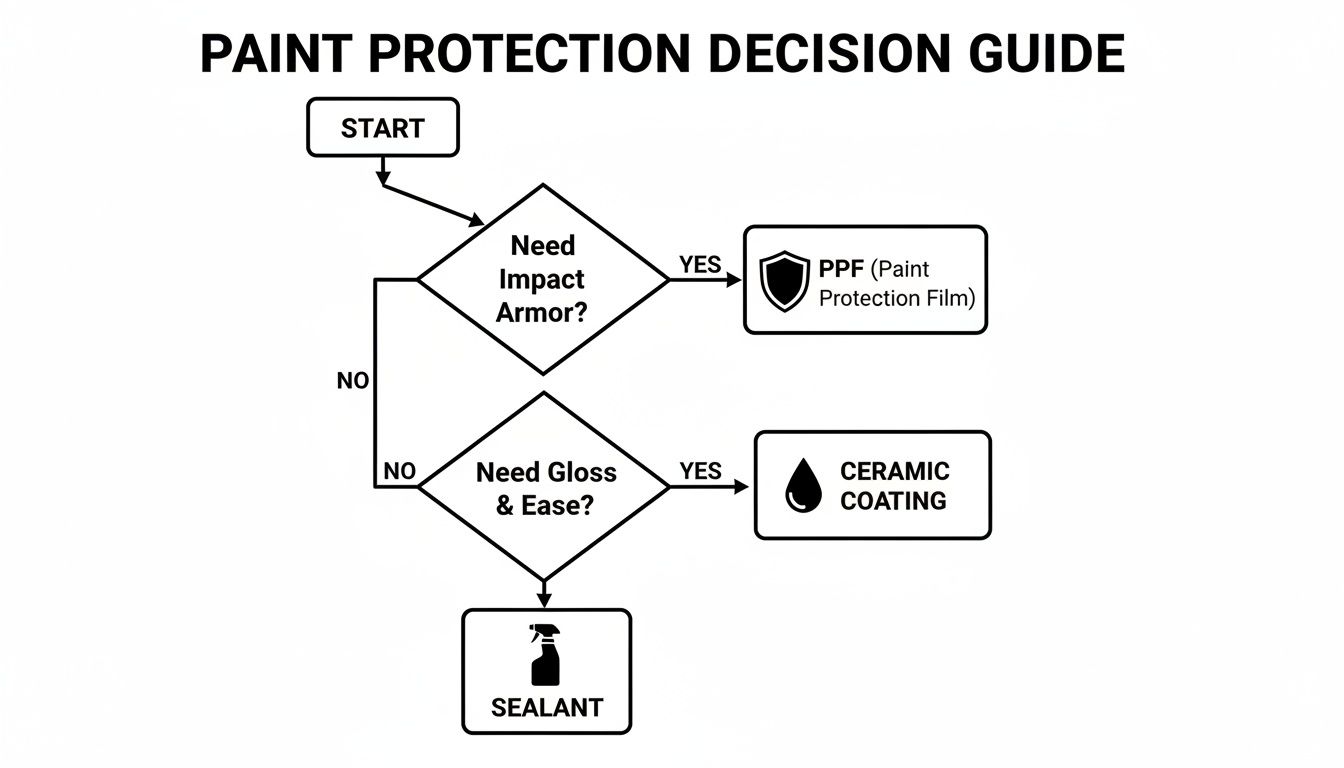
It shows a clear path: if you need to stop physical impacts like rock chips, PPF is the only real answer. If not, the choice between a ceramic coating and a sealant comes down to your budget and how much shine you’re after.
The Weekend Enthusiast
Maybe your new car is your garage-kept pride and joy, brought out only for sunny weekend drives or car shows. It almost never sees bad weather or busy highways. For you, the goal isn't just defense—it's achieving a jaw-dropping, mirror-like shine.
Your main worries are UV rays, dust, and making the cleanup after a Sunday cruise as simple as possible.
- Primary Solution: Professional Ceramic Coating. A multi-year ceramic coating is perfect here. It creates an incredible, candy-like gloss that makes paint look inches deep, provides serious UV protection, and its slick surface means dust and light dirt rinse right off.
- Smart Hybrid: Ceramic Coating + Select PPF. Even a weekend car can get hit by a random rock. We can add PPF to the most vulnerable spot—the front bumper. This gives you peace of mind without the cost of a full front, while the ceramic coating keeps the rest of the car looking spectacular.
The Budget-Conscious Owner
You just made a big investment in a new car and want to protect it, but you're keeping a close eye on your budget. You’re looking for solid, effective protection at a fair price, and you don’t mind a little more maintenance.
The goal here is reliable, renewable protection without the high upfront cost of PPF or a top-of-the-line ceramic coating.
- Primary Solution: Professional Paint Sealant. A high-quality, professionally applied paint sealant is a fantastic starting point. It offers 6-12 months of real protection from UV rays and contaminants while making the paint slick, glossy, and much easier to wash.
- Smart Hybrid: Paint Sealant + DIY Maintenance. Pair a professional sealant application with a good DIY ceramic spray topper every few washes. This "boosts" the sealant, extending its life and hydrophobic properties between professional visits, giving you amped-up protection for a very low cost.
The Importance of Professional Application in Lincoln
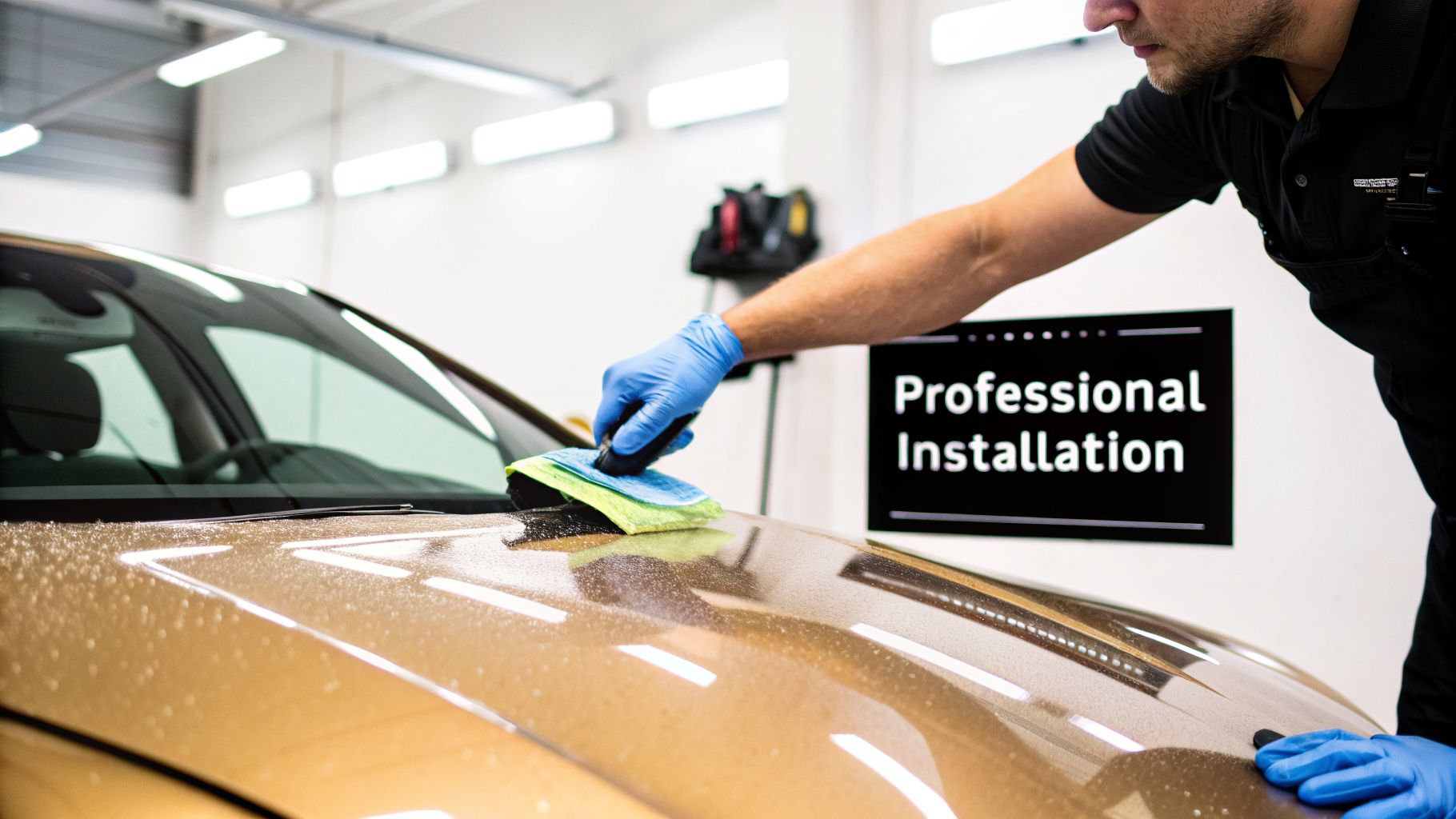
Picking out the best paint protection for your new car is a great first step, but it's only half the job. Even the world’s best product is worthless if it isn’t applied correctly. That's why professional application isn't just a good idea—it's the only way to get the flawless, long-lasting results you want from PPF and ceramic coatings.
You’ve probably seen the DIY kits online promising pro-level results for a tiny fraction of the cost. The hard truth is that applying these products is a true craft, one that demands intense training, specialized tools, and a perfectly clean environment. Without them, you’re just gambling with your car’s finish.
The Dangers of DIY Installation
Trying to apply PPF or a ceramic coating yourself can turn a smart investment into an expensive headache. For coatings this sensitive, your garage or driveway just won't work.
You can run into some common—and costly—DIY failures:
- Bubbling and Peeling: If air or moisture gets trapped under PPF, you’ll see ugly bubbles right away. Soon after, the edges will start to lift and peel, collecting dirt and ruining your car’s clean lines.
- Hazing and High Spots: Ceramic coatings are notorious for leaving an oily, hazy finish if applied incorrectly. Even worse are "high spots," which are dark, streaky patches where extra product wasn't wiped away in time. Fixing these is a difficult, expensive process.
- Trapped Debris: A single speck of dust or a stray hair trapped under PPF becomes a permanent flaw. Professional shops use climate-controlled bays with filtered air to stop this from ever happening.
A professional installer does so much more than just apply the coating. They perform a multi-stage paint decontamination and correction before anything touches your paint, making sure the surface is surgically clean. This prep work is the real secret to a perfect, durable finish.
Why a Professional Detailer in Lincoln Is Essential
That showroom-quality finish demands a unique set of skills and conditions that only a dedicated detailing professional can offer. It’s this focus on perfection that separates an amateur job from a world-class result.
At GP Mobile Car Wash & Detail, our technicians are trained experts in surface preparation and product application. We know the exact techniques needed for both PPF and ceramic coatings to create a solid bond and deliver the protection you paid for. Our Fremont Street detail shop provides the controlled, dust-free environment that’s absolutely critical for a perfect installation.
The demand for high-quality protection is growing fast. The automotive appearance market in North America shows steady growth at a 6.7% CAGR, driven by the popularity of these premium films. This allows specialized shops right here in Lincoln to deliver services that meet tough national quality standards. You can discover why professional paint protection film application is so vital and see the data for yourself.
Our process isn't about just slapping on a product; it’s a complete service designed to protect your investment for years. When you trust our team, you guarantee the best paint protection for your new car will perform exactly as it should, giving you incredible gloss and defense without the risk of a DIY disaster. You can see everything we offer by exploring our Lincoln auto detailing packages and find the perfect fit for your car.
Your New Car Paint Protection Questions Answered
Making that final call on paint protection can bring up a few last-minute questions. We get it. To help you feel confident in your choice, we’ve put together answers to the most common things new car owners ask us.
Think of this as the final check-in before you lock in that showroom shine for good.
How Soon Should I Protect My New Car?
The short answer is: immediately. The moment your car leaves the dealership, its paint is at its most vulnerable. Every mile on the road exposes it to rock chips, bug guts, and road grime that can cause permanent damage before you even hit your first oil change.
If you wait even a few weeks, you’ll likely need paint correction to fix small scratches and swirls that have already shown up. Protecting your car from day one means the film or coating goes over a truly flawless, factory-perfect finish, which gives you the best results and saves you from paying to fix damage that was totally avoidable.
Is Dealership Paint Protection a Good Deal?
Dealerships love to sell paint protection as a convenient add-on, but it's rarely a good value. These packages are usually just a low-grade paint sealant—not a true ceramic coating or PPF—and they're applied in a hurry without the detailed paint prep needed for a solid bond.
Dealerships often charge a premium—sometimes $1,000 or more—for a product that a professional detailer would charge a fraction for. Even worse, the application is frequently rushed by technicians who aren't detailing specialists, leading to a poor finish that might only last a few months.
Putting that money toward a dedicated detailing expert gets you a much better product and a perfect application that will actually last.
Can You Apply a Ceramic Coating Over PPF?
Yes, and honestly, this is the ultimate way to protect your vehicle. Putting a professional ceramic coating over Paint Protection Film gives you the best of both worlds, creating one incredibly tough shield for your paint.
Here’s how this powerful team works:
- PPF is the physical armor: It takes the hit from rock chips and stops deep scratches from ever reaching your paint.
- The ceramic coating is the chemical shield: It makes the surface extremely slick and water-repellent (hydrophobic), so it’s a breeze to clean. It also boosts gloss and adds another defense against UV fading and stains from bird droppings or tree sap.
This combination ensures even the protective film itself stays cleaner and resists damage, getting you the most out of its lifespan and appearance. For owners who want zero compromises, this is the definitive answer.
What Is Maintenance Like for a Coated or Filmed Car?
One of the best parts about modern paint protection is how simple it makes long-term care. The days of waxing your car every few months are over.
For a car with a ceramic coating, washing is surprisingly easy. The slick surface repels dirt, meaning most of it rinses right off. Just use a pH-neutral car soap, a soft wash mitt, and the two-bucket method to keep from adding new swirls.
Care for a car with PPF is very similar. Regular, gentle washing is all it needs. The only major thing to watch out for is a high-pressure washer—avoid spraying it directly at the edges of the film, which could cause it to lift over time. Otherwise, you can wash and dry it just like any other paint.
Ready to give your new vehicle the lasting protection it deserves? The team at GP Mobile Car Wash & Detail provides expert PPF and ceramic coating installations right here in Lincoln, NE. Secure that flawless finish today by visiting https://www.gpmobilecarwash.com to book your appointment.