Professional ceramic coating usually lasts 3 to 5 years or 30,000 to 50,000 miles, while most DIY ceramic coatings hold up for about 1 to 2 years. If you drive in Lincoln through road salt, summer sun, dust, and freeze-thaw swings, where your car lands in that range depends just as much on prep and maintenance as the coating itself.
A lot of Lincoln drivers start looking into ceramic coating at the same moment. They wash the car, stand back, and realize the paint still doesn’t look the way it used to. Maybe the hood feels rough. Maybe water stopped beading. Maybe winter left behind that dull, tired look that never seems to fully come off.
That’s where ceramic coating gets talked about like it’s a miracle product. It isn’t. It’s a practical paint protection system, and when it’s done right, it works very well. When it’s done poorly, or maintained like it needs nothing, it disappoints people fast.
If you’re asking how long does ceramic coating last, the honest answer is simple. Longer than wax by a wide margin, shorter than the marketing on some bottles, and heavily affected by how and where the vehicle lives. In Nebraska, that matters.
Your Car's Shine vs The Real World
A fresh detail can make a vehicle look better than the day it came home. Then real life starts working against it.
Your commute throws dust, grit, bug residue, sprinkler minerals, and road film at the paint. Winter adds salt and slush. Summer bakes the hood and roof under strong sun. If your vehicle sits outside at work, then outside again at home, that finish is taking abuse every day whether the car looks dirty or not.
That’s why so many owners get frustrated with wax. It looks great for a little while, then the slick feel fades and the gloss starts to flatten out. You wash it again, maybe even apply another protectant, and the cycle repeats.
A good coating doesn’t stop your car from getting dirty. It changes how the paint handles dirt, water, UV exposure, and cleanup over time.
That distinction matters. Ceramic coating is not paint armor in the comic-book sense. It’s a harder, more durable sacrificial layer designed to take environmental abuse before your clear coat does. For people who want less upkeep, easier washing, and better long-term appearance, that’s a smart investment.
Lincoln drivers also need a more local answer than the generic internet version. National lifespan claims are useful as a starting point, but Nebraska conditions can push a coating harder than mild climates do. A car that sees salted streets in winter and direct sun in August won’t live the same life as a garage-kept weekend car.
What most owners really want to know
Usually it comes down to a few practical questions:
- Will it outlast wax enough to justify the cost
- Is a professional coating really better than a DIY kit
- How much does Nebraska weather shorten the lifespan
- What do I need to do so it lasts as long as possible
Those are the questions that matter at the shop level. Not hype. Not vague promises. Just what works, what fails early, and what kind of lifespan is realistic on roads around Lincoln.
What Ceramic Coating Actually Is and Why It Matters
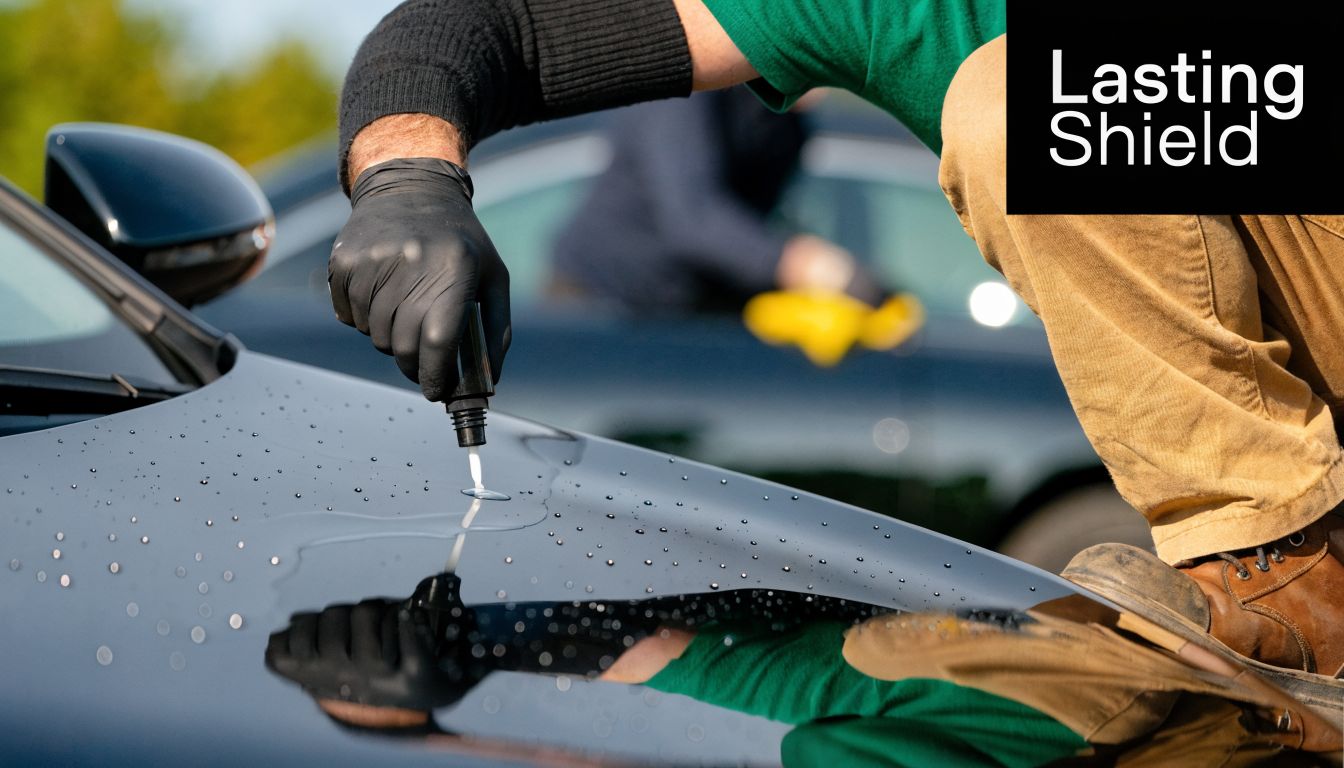
Ceramic coating matters because it behaves differently at the paint surface. Wax and spray protectants sit on top and wear away fairly quickly. A ceramic coating cures into a tighter, more durable layer that bonds to the clear coat and changes how that surface reacts to water, grime, sun, and chemical exposure.
That bond is the whole point.
Most professional coatings are built around silicon dioxide, often written as SiO2. Once applied to properly prepared paint, the coating crosslinks and forms a thin sacrificial layer over the factory clear. The science sounds technical, but the practical result is simple. Road film does not grab as aggressively. Water beads and sheets off more easily. Contaminants spend less time clinging to the paint where they can stain or etch.
How it differs from wax in the real world
The difference shows up fast on a daily driver in Lincoln. A traditional wax can add gloss and some short-term water behavior, but it fades out much sooner. Consumer Reports notes that wax typically lasts weeks to a few months, depending on the product and conditions, in its guide to car waxes and paint sealants.
Ceramic coating is built for a longer fight. That matters here because Nebraska puts protection through two hard tests every year. Winter brings salt, brine, slush, and gritty roads. Summer brings intense sun, heat, and dust. A coating will not make the vehicle invincible, but it gives the clear coat a tougher outer layer to take that abuse first.
Here’s what owners usually notice after a proper coating:
- Washing gets easier because dirt and road film release with less effort
- Water behavior improves which helps the vehicle stay cleaner between washes
- UV exposure does less cosmetic damage over time, helping preserve gloss
- Bug splatter, bird droppings, and tree sap are easier to remove before they mark the finish
Scratch resistance gets misunderstood a lot. Coatings can reduce light wash marring compared with bare paint, but they do not stop rock chips, deep scratches, or damage from bad washing habits. On Nebraska highways, gravel still wins.
Why installation matters as much as the product
A coating is only as good as the surface under it. If the paint still has embedded contamination, leftover polish oils, oxidation, or swirls hidden under filler, the coating cannot bond cleanly or perform the way the label suggests. I see this in the shop all the time. Owners buy a strong product, skip the prep, then assume ceramic coating itself is overrated.
Professional systems last longer because the process is tighter. Paint is washed, decontaminated, corrected if needed, and panel-wiped before coating goes on. Autotrader’s ceramic coating lifespan guide also points to the difference product quality and installation make in long-term durability.
That is why ceramic coating matters. It helps preserve the finish you already paid for, cuts down on maintenance headaches, and gives Lincoln drivers a more durable buffer against the kind of weather and road grime that wear paint down faster.
A Realistic Timeline for Ceramic Coating Lifespan
A Lincoln driver can leave the shop with a freshly coated vehicle in October, face road salt by December, and park under hard summer sun a few months later. That is why the honest answer is not a single number. Ceramic coating life depends on the product, the install, and how that vehicle lives here in Nebraska.
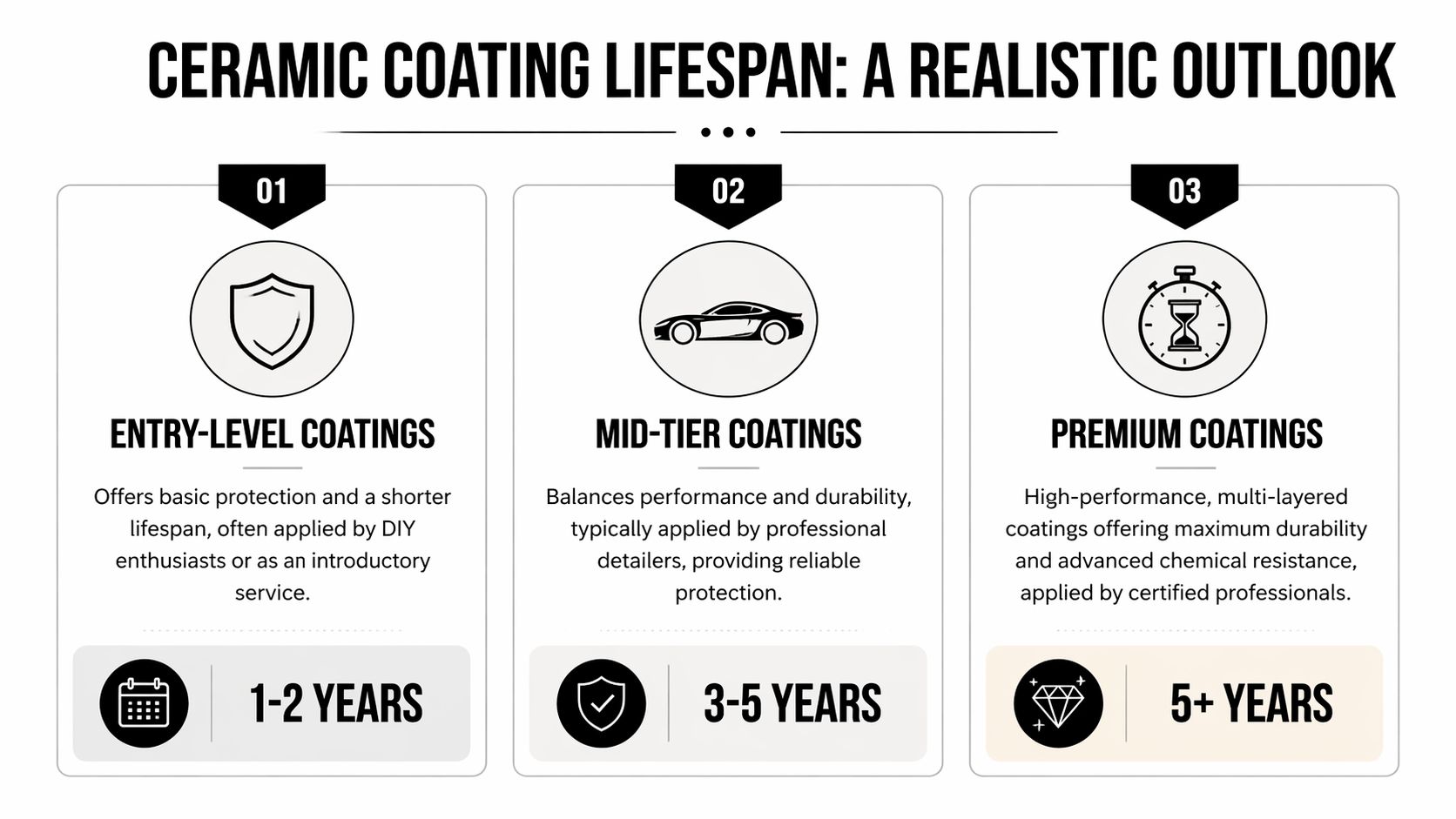
The three lifespan tiers
| Coating type | Realistic lifespan | Best fit |
|---|---|---|
| Entry-level DIY | 12 to 24 months | Owners who want a lower-cost starting point |
| Mid-tier professional | 3 to 5 years | Daily drivers that need solid long-term protection |
| Premium professional | 5 to 10+ years under ideal conditions | Owners willing to pay more and stay consistent with maintenance |
Those ranges are realistic, not promotional.
DIY coatings usually sit at the short end of the scale. They can work well for an owner who enjoys detailing and plans to reapply as needed, but they tend to fade faster under heavy UV, winter grime, and inconsistent washing. Shamrock Detail’s explanation of DIY ceramic coating lifespan lines up with what I see in the shop. Consumer products can give good gloss and water behavior, but they rarely hold on like a properly installed professional coating.
What entry-level really means
Entry-level makes sense for a weekend project, a leased vehicle, or someone testing whether they even like coated-car maintenance. It makes less sense for a daily driver that spends January on salted roads, sits outside at work, and goes through quick wash tunnels.
That is where expectations go sideways.
A coating can be sold as "up to" a certain number of years, but Lincoln conditions trim that number fast if the paint was not prepped well or the owner treats the car like bare paint. Winter brine, bug acids, hard water spotting, and strong detergents all chip away at performance. The coating does not usually fail in one dramatic moment. It slowly loses slickness, water behavior, and chemical resistance.
Where most daily drivers land
For most vehicles around Lincoln, the practical target is the mid-tier professional range of 3 to 5 years. That is the category I recommend most often because the cost-to-value ratio is strong. Owners get meaningful protection, easier washing, and better gloss retention without paying for the longest advertised warranty on the menu.
This range fits how people drive here. School runs. Highway miles to Omaha. Gravel roads outside town. Outdoor parking in summer. A good mid-tier professional coating can handle that life well if the owner keeps up with basic maintenance.
Premium coatings and long-term expectations
Premium coatings can last 5 to 10+ years in the right conditions. That usually means careful prep, controlled installation, solid cure time, and an owner who avoids habits that wear the surface down. Car and Driver’s guide to ceramic coatings notes that higher-end products can provide multi-year protection, but real-world life still depends on care and environment.
That trade-off matters. A premium coating on a garage-kept vehicle with careful hand washing can perform for a long time. The same coating on a daily commuter that sees winter salt, brush washes, and baked-on bug remains may not look or behave like a premium job for nearly as long.
So if you want the plain answer to how long ceramic coating lasts in Lincoln, it usually looks like this:
- DIY: about 1 to 2 years if you are comfortable reapplying
- Mid-tier pro: about 3 to 5 years for the average daily driver
- Premium pro: about 5 years or more if the vehicle gets proper care and the install was done right
The smart buy is not always the longest claim on the label. It is the coating tier that matches how you drive, where you park, and how much upkeep you will do.
Key Factors That Determine Coating Durability
A coating can be installed on two similar vehicles in Lincoln and wear very differently within the first year. The gap usually comes from prep quality, install conditions, product choice, and how the car is cared for after it leaves the shop.
Preparation decides whether the coating bonds or just sits there
Ceramic coating bonds best to bare, properly corrected paint. Any leftover polishing oils, embedded fallout, water spotting, bug residue, or road film can weaken that bond and shorten the useful life of the coating.
Good prep takes time. It usually includes a thorough wash, chemical decontamination, clay treatment when needed, paint correction, and a final panel wipe. Skip steps, and the coating may still look good at delivery, but it often loses slickness and water behavior sooner than it should.
That matters in Nebraska because local vehicles collect contamination fast. Winter salt residue, brake dust, hard-water minerals, and bug remains after a summer run on I-80 can stay lodged in the paint longer than drivers expect.
Application quality changes the outcome
Professional coatings are installed indoors for good reason. Temperature, humidity, lighting, and cure time all affect how evenly the coating flashes, levels, and hardens.
An experienced installer is watching for problems that shorten durability:
- High spots that cure unevenly
- Inconsistent flashing from panel to panel
- Too much product on the surface
- Thin or missed coverage near trim, edges, badges, and body lines
The practical trade-off is simple. A strong coating installed carelessly will not hold up like a mid-tier product applied on properly prepped paint with the right curing conditions. In the shop, I would take disciplined prep and clean installation over marketing claims on a bottle every time.
A short visual on the process helps show why installation quality matters so much:
Chemistry still matters
Not all ceramic coatings use the same resin system, solvent package, or solids content. That shows up in real use. Some coatings resist chemicals better. Some hold slickness longer. Some stand up to UV exposure and repeated washing with less drop-off, which is a big deal for drivers who park outside and deal with full summer sun. If that is your situation, this guide on protecting car paint from sun damage in Nebraska heat pairs well with a coating plan.
A professional-grade coating can deliver long service life, but only if the full process is right. Gtechniq’s ceramic coating overview explains the same core point detailers see every day. Surface preparation, product selection, and aftercare all affect how long the protection keeps doing its job.
Here is the practical version:
- Higher-grade chemistry usually gives better resistance to UV, contamination, and wash wear
- Layered systems can add durability when the product line is designed for that approach
- Maintenance products help preserve water behavior and reduce premature decline
Maximum lifespan comes from treating coating durability as a three-part job. The paint has to be properly prepared. The coating has to be installed with care. The owner has to wash and maintain it in a way that does not grind that protective layer down.
How Nebraska Weather Degrades Your Coating
Generic lifespan claims leave out the part that matters to local drivers. Nebraska is hard on exterior surfaces.
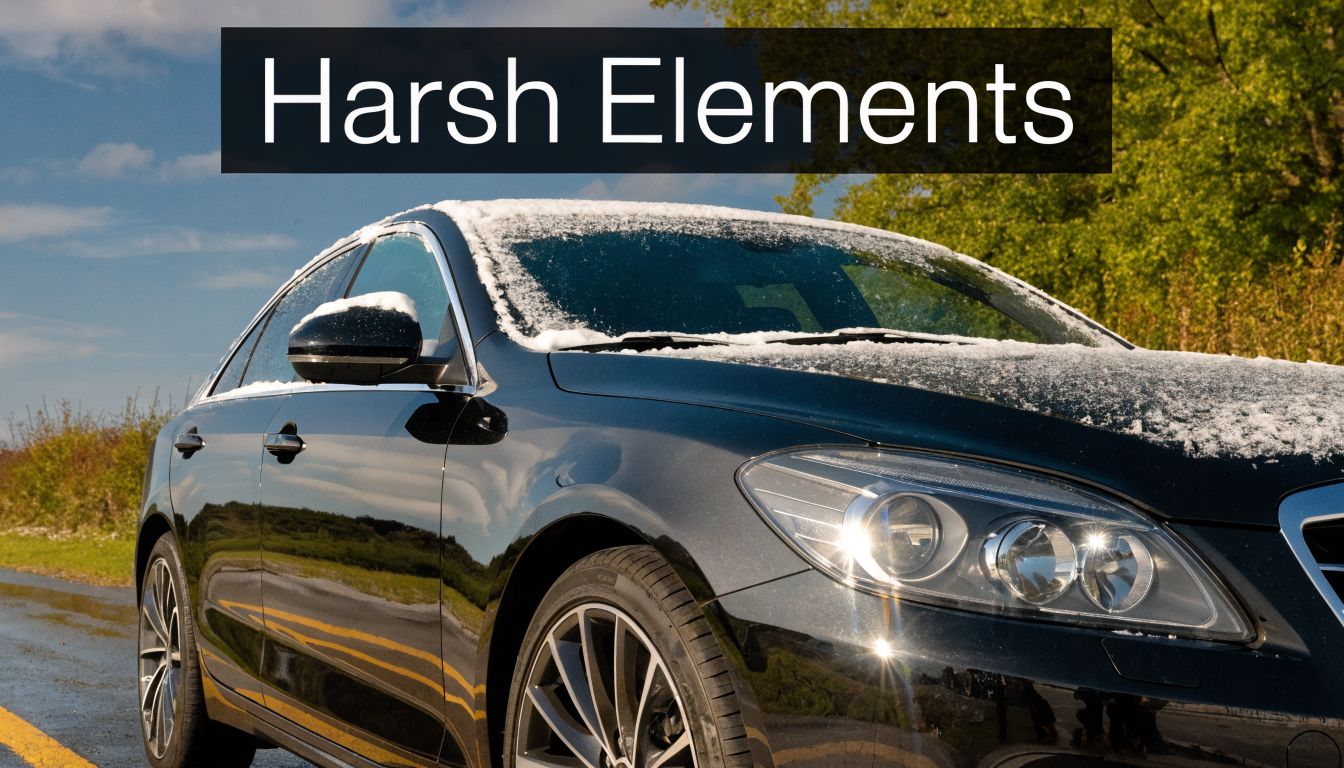
Winter stress is real in Lincoln
Road salt and de-icing residue don’t care how nice the vehicle is. They get pulled up into lower doors, rocker panels, wheels, and rear panels every time the roads are wet. Add freeze-thaw cycles, and the surface is constantly going from cold, wet, and contaminated to dry and stressed.
That local durability gap is a significant issue. Generic claims often don’t account for how Nebraska’s freeze-thaw cycles, road salt, and UV exposure can change the actual 2 to 5 year baseline, as noted in Ceramic Pro’s discussion of climate-related coating lifespan gaps.
If your car spends winter outside, the coating is working harder than a brochure suggests.
Summer does its own kind of damage
Nebraska summers don’t need road salt to be harsh. UV exposure pounds horizontal panels, especially dark colors parked outside. Dust, pollen, and grit build up fast, and if that vehicle also sees highway miles, the front end takes repeated contamination from bugs and road film.
For local drivers worried about fading and oxidation, sun damage to car paint in Nebraska conditions is a separate issue worth understanding alongside coating lifespan. Ceramic coating helps, but strong UV and neglected contamination still wear the system down over time.
Why local expectations should be stricter
A mild-climate estimate can mislead a Lincoln owner into thinking maintenance doesn’t matter much. It does.
Here’s where coatings lose ground faster around here:
- Salt stays on the lower body if winter washes get skipped
- Dust and fine grit create more friction during poor wash technique
- Direct sun exposure stresses the hood, roof, and trunk lid
- Wide temperature swings put repeated stress on paint and the protective layer above it
That doesn’t mean ceramic coating isn’t worth it in Nebraska. It means a stronger, professionally installed coating makes more sense here than it does in gentler climates. On roads like ours, durability is not just about the product. It’s about giving the paint a fighting chance.
Practical Maintenance for Maximum Coating Life
A ceramic coating lasts longer when it gets steady, low-drama care. Around Lincoln, that matters more than people expect. Winter salt sticks to rocker panels and behind wheels, summer bugs bake onto the front end, and both shorten performance if they sit too long.
I tell customers to treat a coated vehicle like a good set of work boots. The protection helps, but dirt, chemicals, and neglect still wear it down.
The maintenance habits that actually help
Good maintenance is simple. It just needs to be consistent.
Wash the vehicle on a regular schedule so road film, salt, pollen, and bug residue do not stay on the surface for weeks. Use a pH-neutral soap made for coated vehicles. Dry with clean microfiber towels or forced air so you are not rubbing leftover grit across the paint.
A practical routine looks like this:
- Wash regularly so contamination does not bond to the surface
- Use coating-safe soap instead of harsh cleaners that can weaken water behavior
- Dry with clean towels or air to reduce marring
- Use a compatible topper or maintenance spray when the coating starts feeling less slick or stops shedding water as well
- Clean off bird droppings, bug splatter, and tree sap quickly before they etch the finish
If you want a straightforward upkeep plan, this guide on how to maintain a ceramic coated car lays out the process in plain language.
What usually ruins a good coating early
Poor washing does more harm than normal driving.
Brush tunnel washes are a common problem. They do clean the vehicle, but the brushes can leave fine marring that dulls gloss over time. Cheap towels, dirty mitts, and strong degreasers cause their own problems. The coating may still be there, but it will not look or behave the way it should.
Avoid these habits if you want the coating to keep doing its job:
- Brush automatic car washes
- Dirty wash media or bargain towels
- Letting salt, bugs, or droppings sit too long
- Using random chemicals without checking if they are coating-safe
A good rule is simple. If a wash method would be risky on soft black paint, it is still risky on a coated vehicle.
Maintenance costs less than early failure
The phrase "low maintenance" causes a lot of confusion. Ceramic coating cuts down the work involved in keeping paint clean, but it does not replace washing or basic care.
That is the trade-off. Pay a little attention through the year, especially after Nebraska storms, winter roads, and bug-heavy highway miles, and the coating keeps its gloss, slickness, and easier washability much longer. Ignore it, and the coating usually fades in performance long before the warranty paperwork sounds like it should.
Protect Your Investment with Lincoln's Coating Experts
Ceramic coating lifespan isn’t one fixed number. It’s the result of three things working together. Product quality, installer skill, and owner maintenance.
That’s why the smartest buyers don’t just ask how long does ceramic coating last. They ask what kind of coating it is, how the paint is prepared, how the vehicle is used, and what care routine follows the install. Those questions lead to better results than chasing the longest warranty language.
For Lincoln drivers, that local piece matters. Salt, UV, dust, and seasonal swings can take a respectable national estimate and shorten it if the coating is weak, the prep is rushed, or the vehicle is washed carelessly. On the other hand, a properly installed coating on well-maintained paint can keep a daily driver looking sharper and washing easier for years.
If you’re comparing options, look for a shop that understands realistic durability, not just sales language. A good place to start is learning what separates the best ceramic coating options for cars from entry-level products and where your vehicle fits based on driving habits, parking, and budget.
The right ceramic coating should feel like a long-term decision, not an experiment. When the prep is thorough and the expectations are honest, it becomes one of the most practical ways to protect a vehicle in Nebraska.
If you want help choosing the right coating package for your vehicle, GP Mobile Car Wash & Detail offers licensed and insured ceramic coating services for Lincoln drivers who need real protection, honest guidance, and the choice of mobile service or shop drop-off. Whether you drive a daily commuter, manage a fleet, or want lasting gloss on a vehicle you care about, their team can match the coating and prep process to how your car lives.