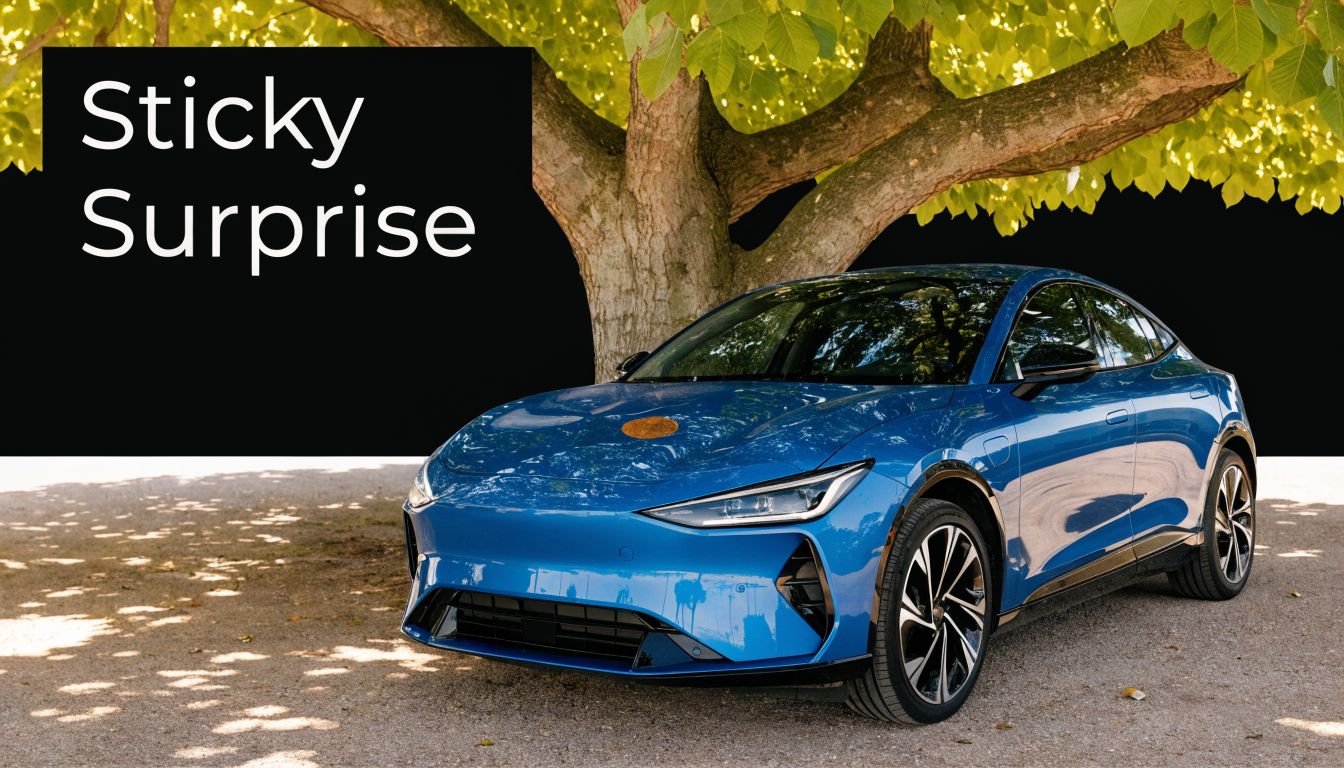
You park under a tree because it keeps the cabin cooler. You come back from work, soccer practice, or a Costco run and notice little amber dots on the hood, roof, or windshield. They look harmless at first. They’re just sticky spots.
Then a few days pass.
Now they feel hard, they won’t wash off easily, and you start wondering the question almost every car owner asks at some point: does tree sap damage car paint? Yes, it does. The issue isn’t just the sap itself. It’s how long it sits there, how much sun hits it, and whether your paint has any protection on it.
If you live in Lincoln, this matters more than people think. In summer, a car parked outside at work can go from “easy wipe-off” to “this may need correction” much faster than generic car care articles suggest. In cooler or overcast conditions, you may have a little more breathing room. That difference is what confuses people.
This guide breaks it down in plain language. You’ll see what sap is doing to your paint, how to judge whether you need to act now or later today, how to remove it safely at home, and when a protective coating changes the whole equation.
That Sticky Surprise The Truth About Tree Sap on Your Car
A lot of people first notice sap when the car is already dirty. That makes it harder to tell what’s dust, what’s pollen, and what’s a paint risk. Sap usually gives itself away by feel. It’s tacky when fresh, then turns into a small hard bump that grabs at your wash mitt or microfiber.
The short answer is simple. Yes, tree sap can damage car paint. But the practical answer is more useful. Fresh sap is often removable with gentle methods. Older sap, especially after heat and sun exposure, can bond to the finish, stain the surface, and leave behind a dull mark even after the blob is gone.
That’s why two people can have very different experiences. One driver wipes off fresh sap the same evening and sees no issue. Another leaves the car outside for several sunny days and ends up with a ring in the clear coat.
Why people underestimate it
Sap doesn’t look dramatic the way bird droppings or a scratch does. It just sits there. Because it starts soft, drivers often assume they can deal with it next weekend.
That delay is where trouble starts.
- Fresh sap seems harmless because it still feels gummy.
- Hardened sap tricks you because it looks small, but it may already be bonding to the finish.
- The stain left after removal is the part people don’t expect. They think the mess is gone, but the paint has already been etched.
Practical rule: If you spot sap on your paint, treat it like spilled syrup on a hardwood floor, not like harmless dust on a countertop.
The question you really need answered
Most articles stop at “remove it quickly.” That’s not enough when you’re busy. You need to know how urgent “quickly” really is.
In plain terms, same-day removal is the safest move. If the car is sitting in strong Nebraska sun, that advice becomes more urgent. If it’s cool and cloudy, you may have a little grace period. Not unlimited time, just a bit more room before the problem gets expensive or permanent.
How Tree Sap Chemically Attacks Your Car's Paint
Your paint has a sacrificial top layer called the clear coat. It is the glossy skin that takes the abuse so the color underneath does not have to. Industry paint references from PistonHeads discussion and detailing benchmarks note that this layer is very thin, which helps explain why a small sap drop can leave a visible mark.
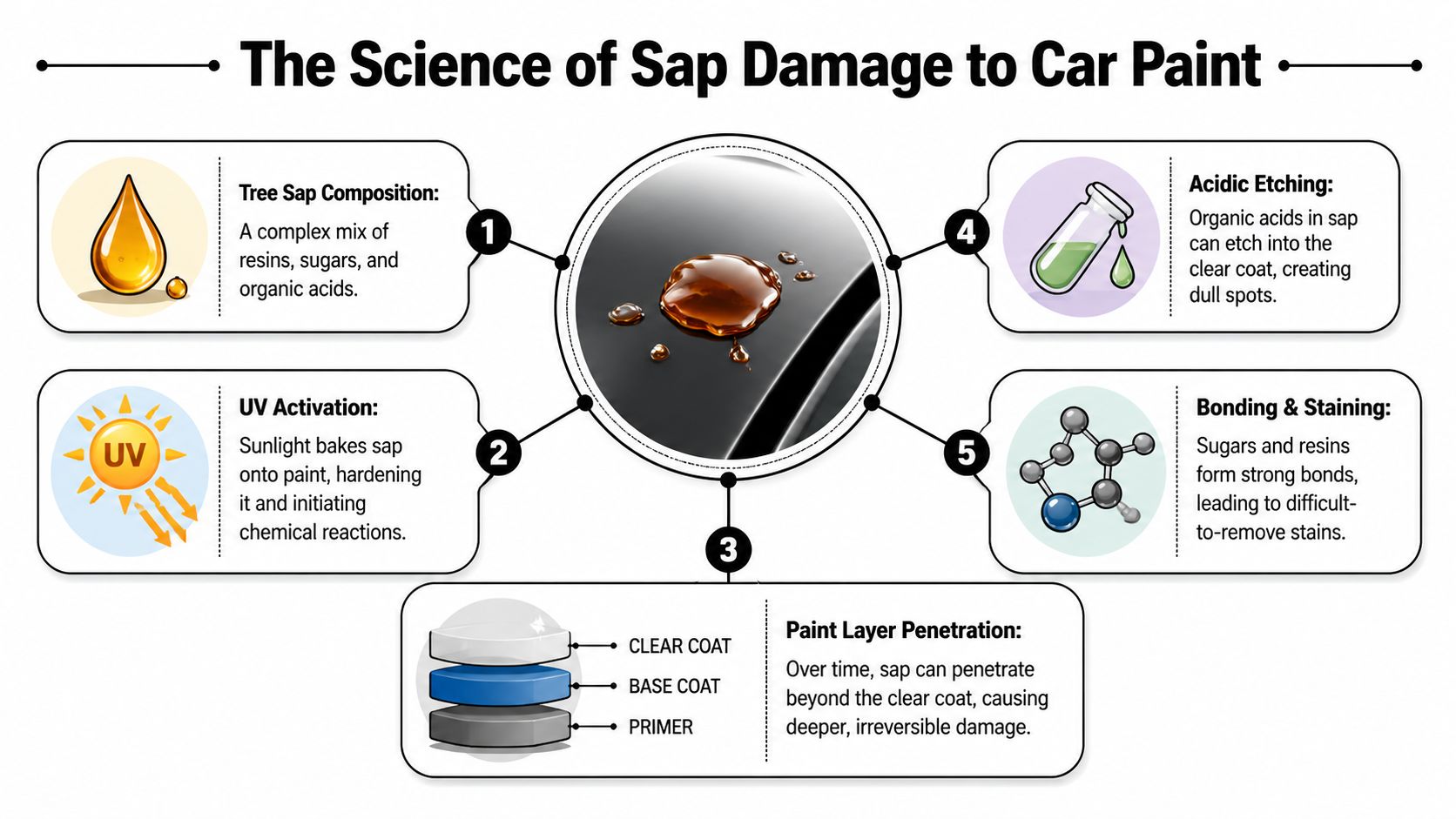
Sap hurts paint through a combination of chemistry, heat, and time.
Fresh sap contains sticky plant compounds such as sugars, resins, and acids. On a cool morning in Lincoln, that blob may sit on top of the paint and stay soft for a while. Put that same car outside during a bright Nebraska afternoon, and the process speeds up. Sunlight warms the panel, UV exposure helps harden the resin, and the sap starts behaving more like glue than syrup.
That change matters.
As the sap cures, it loses softness and grips the surface more tightly. It can also contract as it dries. A simple comparison is a drop of glue on a table. Wet glue wipes away. Dried glue grabs, tightens, and leaves residue behind. On a car, that residue is sitting on a thin clear coat that already expands and contracts with daily heat cycles.
Lincoln drivers deal with one factor many generic articles skip. Summer UV and panel temperatures can climb fast on clear days, especially on dark vehicles parked at offices, schools, or driveways with no shade. Under those conditions, the window for easy removal can shrink from a couple of days to closer to same day or next day. In cooler, cloudy weather, you may get a little more time before the sap hardens and starts leaving a ring.
Here is the chemistry in plain English:
Contact
Sap lands and sticks to the clear coat.Curing
Sun, oxygen, and heat harden the resins.Bonding
The hardened sap clings more firmly and becomes harder to lift safely.Etching or staining
Acidic compounds and prolonged contact can leave a dull spot, ring, or discoloration in the clear coat.Correction gets harder
At this point, a wash will not solve it. The mark may need polishing, paint correction, or in severe cases refinishing.
The key point is simple. Sap damage is not only a surface mess. It is a time-and-temperature problem. The hotter and sunnier the conditions, the faster that sticky drop shifts from easy cleanup to bonded contamination.
That is why I tell Lincoln customers to judge sap the way they would judge spilled syrup on a wood floor in direct sun. If you catch it early, cleanup is usually straightforward. If it bakes for days, the cleanup is harder and the finish underneath may already be marked.
Left long enough, the issue can move past DIY territory. A light stain may polish out. Deeper etching may need machine correction, and once the clear coat is compromised, protection becomes the next priority. That is where a professional detailer can correct the damage and help shield the paint afterward with a better long-term barrier, including ceramic coating.
Identifying the Stages of Tree Sap Paint Damage
You don’t need a microscope to judge whether sap is becoming a paint problem. Most of the time, the paint tells you what stage you’re in if you know what to look for.
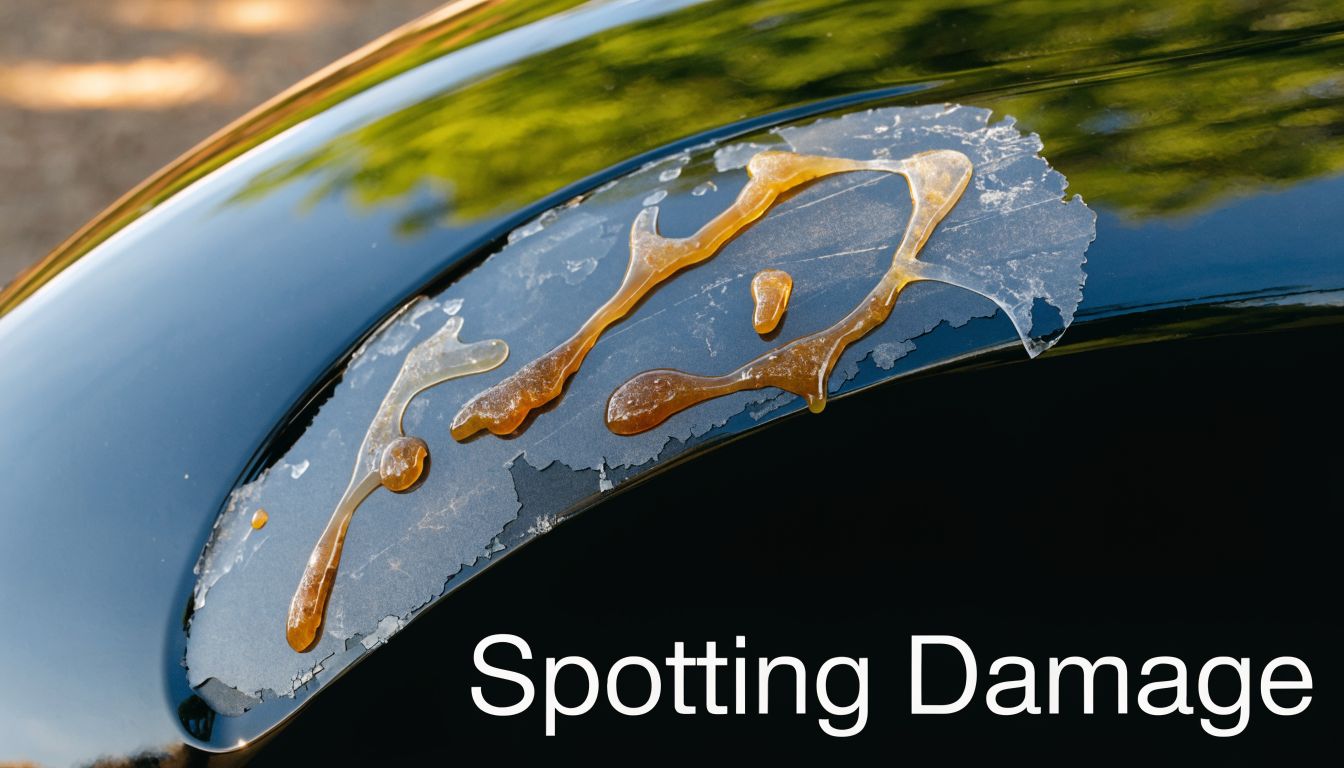
Stage one looks minor
Fresh sap usually appears as a glossy or clear droplet. It may feel tacky if you lightly touch it with a glove or microfiber. At this point, it often sits on top of the surface rather than feeling fused to it.
This is the best-case stage. Removal is usually easiest here.
Stage two is where people get into trouble
Older sap turns amber or darker and starts to feel hard. It may sit higher on the paint like a tiny raised bump. When you wash the vehicle, water flows around it instead of lifting it.
That hardened look means the sap has had time to bake and bond. In practical terms, this is the stage where scrubbing gets risky. If you attack it with pressure, you can add scratches to a contamination problem.
Stage three is the after-image
You remove the blob, but a faint ring or dull spot remains. That mark often means the clear coat itself has been etched or stained. The sap is gone, yet the evidence stays behind.
That’s the point where people say, “I cleaned it off, but it still looks damaged.” They’re usually right.
A useful timeline for Lincoln drivers
The damage clock isn’t the same every day of the year. Verified guidance notes that UV exposure accelerates the bonding process, and in a high-UV environment like a Nebraska summer, irreversible etching can happen in as little as 24 to 48 hours, while cooler, overcast conditions may give you a somewhat longer window, according to the verified summary from Bliss Car Wash on UV-accelerated sap damage.
A simple way to judge urgency:
| What you see | Likely condition | How urgent it is |
|---|---|---|
| Clear, sticky droplet | Fresh sap | Handle it as soon as you can today |
| Hardened amber bump | Bonding has started | Don’t wait another sunny day |
| Dull ring after removal | Clear coat may be etched | DIY may not fully restore it |
On a hot, bright summer day, “I’ll deal with it tomorrow” can be enough to move sap from nuisance to paint correction territory.
Environmental clues matter
Pay attention to where the car sat.
- Full sun all day raises the risk.
- Black or dark paint can make the surface hotter.
- Garage parking overnight may slow the process compared with continuous outdoor exposure.
- Cool, cloudy weather may buy you some time, but it doesn’t make sap safe.
If the vehicle sat under a dripping tree through multiple sunny afternoons, assume the risk level is high even if the spots look small.
Your Guide to Safe DIY Tree Sap Removal
If the sap is still fresh or only mildly hardened, you can often remove it safely at home. The key is patience. The goal isn’t to scrape the spot off. The goal is to soften, dissolve, and lift it without grinding it into the paint.
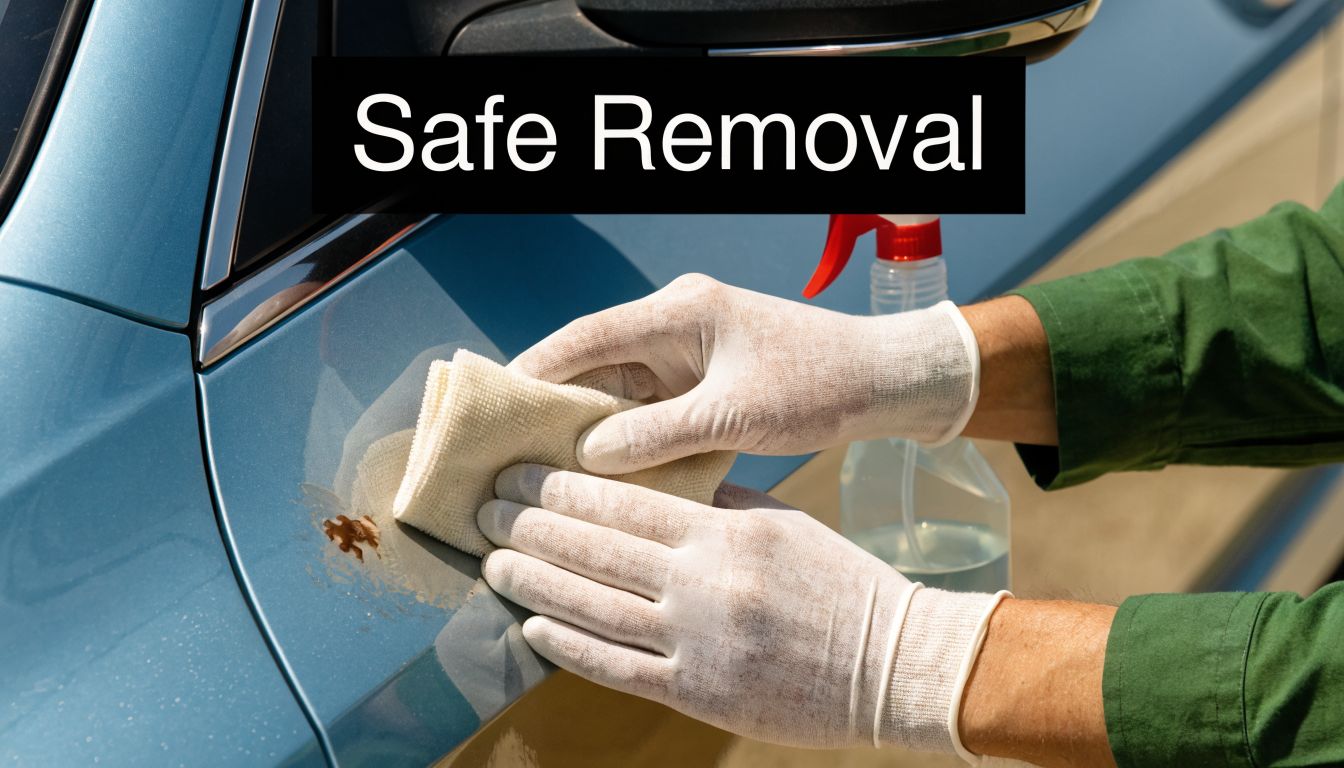
Start with the least aggressive method
Fresh sap doesn’t always need specialty chemicals. Try the gentle route first.
Wash the area first
Use car shampoo and water to remove loose dirt. This prevents you from rubbing grit across the paint.Soften the sap
Hold a warm, damp microfiber on the spot for a short time. You’re giving the sap a chance to loosen.Wipe with light pressure
Fold the microfiber and wipe gently. Don’t dig with your fingernail.
If it comes off, wash the area again and dry it. Then inspect the finish in good light.
Move to stronger but paint-safe options when needed
For stubborn spots, the verified guidance supports isopropyl alcohol at 90%+ or citrus-based solvents such as d-Limonene, noted as non-abrasive on clear coat in ASTM D1308 tests, according to the verified benchmark summary linked in the earlier source set. Apply the product to a towel, not by flooding the whole panel, and let it dwell briefly so the solvent can do the work.
Then wipe gently and repeat if needed.
A safe progression looks like this:
- Warm water and shampoo for fresh deposits
- 90%+ isopropyl alcohol for more stubborn residue
- Citrus-based solvent for hardened spots that still won’t release
- Clay bar decontamination if the surface feels rough after removal
If you’ve never used clay before, this guide on what clay bar treatment does for car paint helps explain why it’s useful after sap removal.
What not to do
Most paint damage during DIY removal comes from the wrong tools, not the sap itself.
- Don’t scrape with a razor or fingernail. That can gouge the clear coat.
- Don’t use kitchen scrub pads. They’re too abrasive for automotive paint.
- Don’t attack dry sap on a dry surface. Friction is how you create scratches.
- Don’t use random household chemicals unless you know they’re paint-safe.
If you have to force it, you’re using the wrong method.
A quick visual demo helps
If you’d like to see the general process before trying it yourself, this video gives a useful visual reference:
Aftercare matters too
Once the sap is gone, run your clean fingertips lightly across the paint inside a plastic bag. If the surface still feels rough, contamination may remain. That’s where clay can help.
Then protect the area. Even a clean panel is more vulnerable if you leave it bare after solvent use and washing. You don’t need to overcomplicate it. The basic idea is to restore some protection so the next contaminant doesn’t bond as easily.
Preventing Tree Sap Damage with Waxes Sealants and Ceramic Coatings
Removing sap is one part of the problem. Keeping it from bonding so aggressively is the smarter part. That’s where protective products matter.
Think of paint protection as a sacrificial layer. You want sap interacting with that layer first, not with your factory clear coat.
Wax gives basic short-term help
Traditional wax can add gloss and some slickness. That can make fresh contamination easier to wash away. If you park outside occasionally and stay on top of maintenance, wax is better than leaving paint completely exposed.
But wax has limits. It’s softer, less chemically resistant, and it doesn’t hold up nearly as well when sap sits in the sun.
Sealants improve on wax
Paint sealants are synthetic and usually more durable than old-school wax. For many daily drivers, they’re a practical middle ground. They don’t make sap harmless, but they can reduce how aggressively it grabs the surface.
For someone with regular outdoor parking, that extra buffer can make routine cleanup easier.
Ceramic coating changes the timeline
This is the category that makes the biggest difference for sap-prone vehicles. Verified data states that ceramic coatings are SiO2-based sacrificial layers about 2 to 5 microns thick, with pH 2 to 12 resistance, and that sap on coated surfaces can bead up with a contact angle greater than 110°. The same verified source notes that sap’s ability to etch paint is delayed by 10 to 20 times, giving owners weeks, not days, to remove it more safely on coated surfaces, according to High-Def Detailing’s tree sap and ceramic coating explanation.
That doesn’t mean ceramic makes your car immune. It means the coating takes the abuse first and buys you time.
A simple comparison
| Protection type | What it does with sap | Main limitation |
|---|---|---|
| Wax | Adds temporary slickness | Sap acids can eat through it quickly |
| Sealant | Offers stronger synthetic protection | Still not the best for repeated sap exposure |
| Ceramic coating | Creates a harder sacrificial layer and delays etching far longer | Needs proper prep and maintenance |
Why this matters in a tree-heavy area
If your driveway, office parking lot, or kids’ school pickup line puts your vehicle under trees often, protection isn’t just about shine. It’s about reducing the odds that one forgotten sap spot turns into polishing, sanding, or repainting.
The practical benefits are easy to understand:
- More cleanup time when life gets busy
- Less aggressive removal needed for many spots
- Better chance the paint underneath stays untouched
- Easier routine washing because contaminants don’t grip as hard
A coating also changes your maintenance routine. If you already have one, this guide on how to maintain a ceramic coated car properly is worth reviewing so you don’t shorten its useful life with the wrong products or wash habits.
A ceramic coating isn’t a force field. It’s more like a rain jacket for your paint. The storm still happens, but the jacket takes the hit first.
Is it worth it
For drivers who rarely park under trees, maybe not. For drivers in shaded neighborhoods, apartment lots, office campuses, or homes with mature trees, the logic gets stronger fast. Ceramic coating won’t prevent every possible mark forever, but it can delay etching significantly and make removal dramatically easier. That’s why many detailers think of it as practical protection, not just cosmetic upgrade.
Knowing When to Contact a Professional Detailer
DIY makes sense when the sap is fresh, limited to a few spots, and the finish still looks normal after removal. The moment those conditions change, it’s smart to stop experimenting.
A good rule is this: if you’ve removed the blob and the panel still looks off, you’re no longer dealing with a cleaning problem alone.
Clear signs it’s time to hand it over
- The sap has been sitting for a long time and feels rock hard.
- You removed it but a dull ring remains.
- There are spots on multiple panels, especially the hood, roof, and trunk.
- You’re working on dark paint, where marring and etching show more easily.
- You’ve already tried rubbing and the finish now looks worse.
At that stage, a professional can assess whether the panel needs decontamination, polishing, or a more advanced correction approach. Severe cases may call for processes beyond normal at-home work.
Why prevention also becomes a professional conversation
One useful way to think about professional protection is as sap-damage insurance. Verified guidance in the supplied data explains that a professional ceramic coating does not stop etching forever, but it does delay it significantly and makes removal much easier, which helps justify the upfront cost against future paint correction expenses that can reach the thousands on severely neglected vehicles, based on the verified summary from the referenced YouTube discussion on ceramic coating ROI.
That’s the key distinction people need. Professional help isn’t only for fixing damage. It’s also for reducing how often you end up in repair mode.
If your schedule is packed and your vehicle lives outside, working with a mobile detailer in Lincoln for paint-safe decontamination and protection can be the easiest way to stay ahead of repeat sap exposure without turning every weekend into a driveway project.
Answering Your Top Questions About Tree Sap Damage
Is pine sap worse than other tree sap
Pine sap is often the one people complain about most because it tends to be extra resinous and stubborn. In real-world cleanup, that usually means it feels stickier, hardens more noticeably, and may need stronger but paint-safe removal methods. The safe response is the same either way. Remove it early.
Can I use hand sanitizer or WD-40
Be careful with improvised products. Some may loosen sap, but that doesn’t make them ideal for automotive paint, trim, or coatings. If you don’t know exactly how a product behaves on clear coat, skip it. Car shampoo, high-strength isopropyl alcohol, and paint-safe citrus removers are more predictable choices.
Does tree sap damage windows and plastic trim too
Yes, sap can create problems on glass and trim as well. On glass, it usually becomes a visibility and cleanup issue first. On textured plastic trim, it can be especially annoying because residue gets trapped in the texture and is harder to clean evenly. Paint is the most expensive surface to repair, but sap definitely isn’t exclusive to paint.
If I removed the sap and the paint feels smooth, am I in the clear
Usually that’s a good sign. Smooth paint with no visible ring in bright light often means you caught it early enough. Still, inspect the spot later in direct sun or under garage lighting, because faint etching is easier to see at an angle.
If you’ve got sap on your vehicle and you’re not sure whether it’s still a simple cleanup or already a paint correction issue, GP Mobile Car Wash & Detail can help. They serve Lincoln and surrounding areas with mobile service or shop drop-off, and they handle everything from safe exterior decontamination to longer-term paint protection like ceramic coating. If your car, truck, fleet vehicle, RV, or boat spends time under trees, getting expert eyes on the finish now can save you a much bigger repair later.