A lot of car care advice still says, “Add wax for extra shine.” That advice made sense before ceramic coatings became common. It doesn’t make much sense after you’ve paid for a surface that was built to do the job wax used to do, only with a different chemistry and a much longer working life.
So, can you wax a ceramic coated car? Technically, yes. The better question is should you. In most cases, no. Wax doesn’t upgrade a coating. It usually covers the coating’s best traits with a softer, shorter-lived layer that changes how the surface behaves.
That’s where people get tripped up. They assume more layers must mean more protection. With paint care, that’s not always true. A ceramic coating is already the purpose-built protective layer. Putting wax over it is often like putting an older, weaker material on top of a newer, higher-performing one.
For Lincoln drivers dealing with sun, dust, pollen, road grime, and winter mess, that difference matters. If you invested in ceramic and now you’re wondering whether old waxing habits still belong in your routine, the answer starts with understanding what ceramic is doing. If you’re still deciding whether a coating makes sense in the first place, this guide on whether ceramic coating is worth it helps frame the bigger picture.
The Question Every Coated Car Owner Asks
Most owners ask the same thing right after a coating is installed. Can you wax a ceramic coated car? They usually ask because waxing feels familiar. It’s what people have done for years to make paint look better and shed water.
The problem is that ceramic changes the rules.
A ceramic coating isn’t just another shine product. It’s the layer you chose instead of relying on frequent wax applications. That’s why the issue isn’t whether wax can sit on top. It’s whether adding wax helps the coating do its job better. In normal maintenance, it usually doesn’t.
Practical rule: If a product makes you ask whether it might block, mask, or interfere with your coating, it probably isn’t the first product you should reach for.
That may sound backward if you grew up around paste wax, foam applicators, and Sunday afternoon detail sessions. But ceramic care is less about piling products on and more about using compatible products. The goal is to preserve the coating’s slickness, water behavior, and easy-clean surface, not to bury those traits under a temporary film.
A lot of confusion comes from the word “protection.” Wax protects in one way. Ceramic protects in another. Those aren’t equal systems, and they don’t play together as neatly as people assume.
Why this question keeps coming up
Three habits keep this myth alive:
- Old routine thinking: Many owners still believe every glossy finish needs wax.
- More-is-better logic: If one protective layer is good, two must be better.
- Show-car nostalgia: Some people remember the warm look of carnauba and assume it should go over everything.
Those ideas sound reasonable until you look at the chemistry. That’s where the conflict becomes obvious.
The Core Conflict Why Wax and Ceramic Dont Mix
Ceramic coating and wax aren’t teammates. They’re more like two materials trying to control the same surface in two very different ways.
Think of a ceramic coating like a high-tech rain jacket. It’s slick, tightly woven, and designed to let water roll off while resisting grime. Wax is more like rubbing a soft, oily sweater over that jacket. You may change the feel for a while, but you also change how the jacket performs.
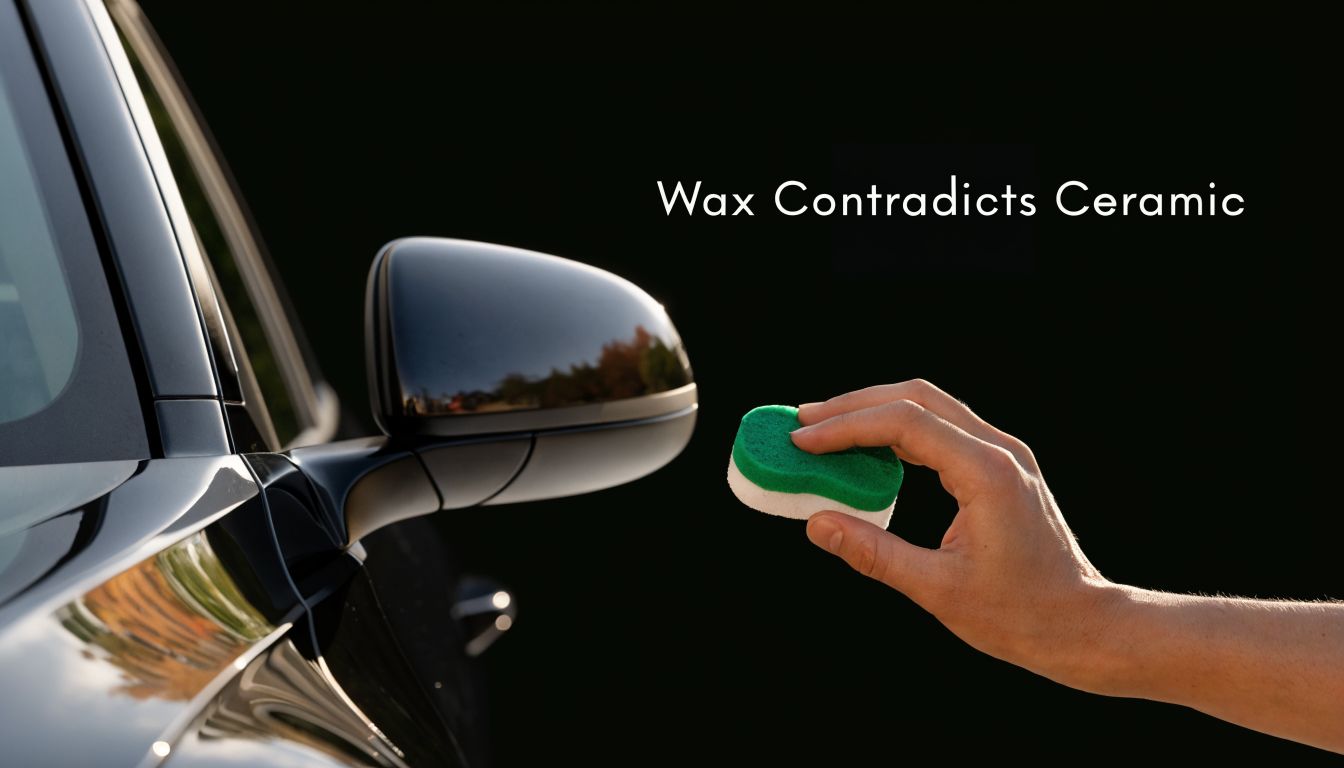
One layer is engineered, the other is temporary
Ceramic coatings are built for long-term surface behavior. Traditional wax is built for short-term appearance and short-term protection. That difference shows up clearly in durability. Ceramic coatings last 2 to 5 years with proper maintenance, while carnauba wax lasts 1 to 3 months and synthetic wax lasts 3 to 6 months, according to Ceramic Pro’s comparison of wax and ceramic coating longevity.
That single comparison explains a lot. When you apply wax on top of ceramic, you’re putting the shorter-lived material in control of the outer surface. The paint doesn’t “feel” the coating first anymore. Dirt, water, wash media, and the environment interact with the wax layer you just added.
Why that matters in daily driving
A ceramic-coated vehicle is supposed to be easier to wash and harder for grime to cling to. Wax can work against that by leaving behind an oily residue on the surface. In plain English, you’re covering a dirt-shedding skin with something that can behave more like a dust grabber.
That’s why many owners say the car looked great right after waxing, then felt disappointing later. The coating didn’t suddenly fail. The wax changed the top surface.
Wax over ceramic is often a downgrade in function, even if it looks good for a short time.
The habit that causes the problem
People wax coated cars for understandable reasons:
- They want extra gloss
- They want to “protect the coating”
- They assume maintenance means re-waxing
- They don’t trust a product they can’t see
But ceramic already is the visible and invisible protection system. If you add a product on top, that product should support the coating’s chemistry, not compete with it.
The clash becomes easier to understand once you separate bonded glass-like protection from soft organic residue.
The Science Behind the Shine A Tale of Two Chemistries
The biggest misunderstanding is thinking wax and ceramic are just different versions of the same thing. They’re not. They behave differently because they’re made differently and attach to paint differently.
What ceramic is doing on the paint
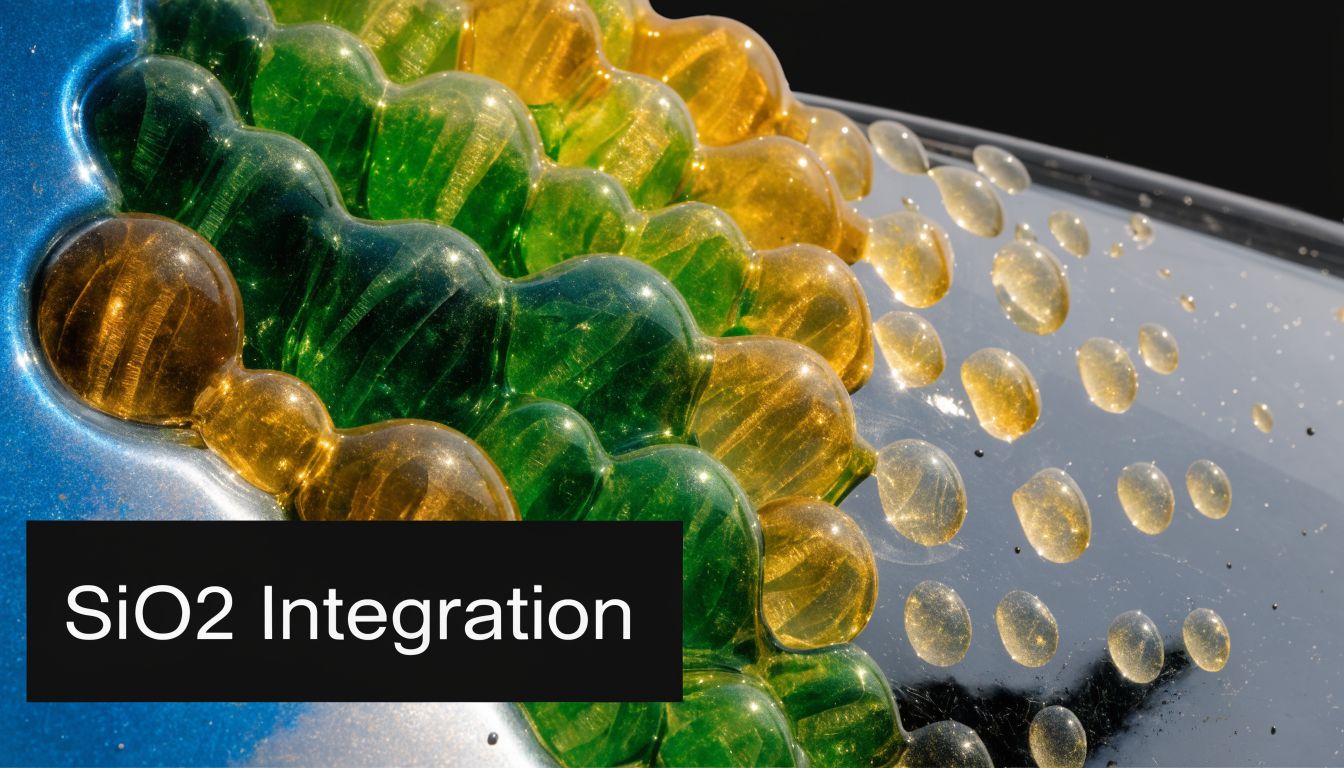
Ceramic coatings typically use SiO2, or silicon dioxide. Once applied and cured, they form a covalent bond with the vehicle’s clear coat. That matters because the coating isn’t just resting on the paint like a temporary dressing. It becomes a bonded, semi-permanent layer with a hard, slick surface.
That slickness changes how water behaves. Ceramic coatings achieve contact angles exceeding 110°, while traditional carnauba wax typically sits between 80° and 100°, which helps explain why ceramic tends to bead water more aggressively and maintain stronger self-cleaning behavior, as noted in this technical overview of ceramic coating hydrophobicity.
If “contact angle” sounds too technical, here’s the simple version. A higher contact angle means water stands up taller and rounds up more easily on the surface instead of flattening out. Rounded water droplets pick up less dirt, move off faster, and leave less behind.
What wax is doing on top of that
Wax is softer and more organic in behavior. It sits on the surface rather than becoming part of it. That can create a brief cosmetic change. Some people notice a warmer glow or a smoother hand feel right after application.
The downside is in the tradeoff. That wax film can cover the ceramic’s slick outer face with a material that doesn’t resist contamination the same way. So instead of “protecting the protector,” you’re often muting the exact feature you paid for.
A simple chemistry analogy
Use this mental picture:
- Ceramic is glass-like armor: bonded, hard, and built to face the environment
- Wax is furniture polish: soft, temporary, and easy to smear
- Putting wax on ceramic: like taping a soft film over a non-stick pan
The pan still exists underneath. But the outer surface no longer behaves like the pan was designed to behave.
A ceramic coating wants direct contact with the environment so it can do its job. Wax gets in the middle.
Why owners confuse shine with performance
Gloss can fool people. A freshly waxed coated car may look rich under soft light. But appearance in the first few hours isn’t the same as long-term behavior after dust, pollen, rain, and routine washing hit the surface.
That’s why detailers separate two questions:
| Surface question | Better answer |
|---|---|
| What looks good right now? | Either one can look good |
| What works better over time? | Ceramic-compatible maintenance wins |
If your goal is the deep shine of a coated vehicle, the answer usually isn’t wax. It’s keeping the coating clean, decontaminated, and topped with products designed for ceramic surfaces.
The Hidden Risks of Waxing Your Coated Car
The downside to waxing a coated vehicle usually doesn’t show up in the driveway. It shows up a little later, when the car starts behaving differently than it did right after the coating cured.
Risk one, weaker self-cleaning behavior
A ceramic coating’s big advantage is how little it wants to hold onto contamination. Wax can reduce that benefit by changing the top surface. Dust, pollen, and road film may cling more easily, especially when the car sits outside or gets driven through mixed weather.
Owners often read that as “my coating is fading.” Sometimes the coating is fine. The wax is what changed the behavior.
Risk two, streaks and uneven residue
Ceramic is very slick. That sounds like it should make waxing easier, but it can create the opposite problem. Wax may not settle evenly on that surface, and removal can become fussy.
According to GoDetail’s discussion of waxing over ceramic coatings, technical evidence from detailing forums shows wax fillers often cause streaking on super-slick ceramic surfaces, with 70% of users reporting high-spotting after 1 to 2 washes. That’s one of the most common frustrations people notice after trying to “improve” an already coated finish.
Risk three, wasted effort
If you already have ceramic, the whole point is to get away from constant reapplication habits. Adding wax puts you back into that old cycle. You spend time applying and buffing a product that won’t outlast the coating underneath and may make maintenance more annoying in the meantime.
If your coating is healthy, wax usually adds work faster than it adds value.
The practical version of the problem
For Lincoln-area drivers, this usually shows up in simple ways:
- Your wash mitt drags more than expected
- The car gets dusty sooner
- Water behavior looks inconsistent
- You see haze or smears in direct sun
None of those are what people want after investing in ceramic. Most of the time, they’re avoidable if you stop thinking in wax terms and start thinking in coating-compatible maintenance.
Smarter Maintenance What Your Coating Really Needs
Once you stop asking “what wax should I use?” the care routine gets simpler. A ceramic-coated vehicle doesn’t need old-school topping. It needs compatible upkeep.
Start with safe washing
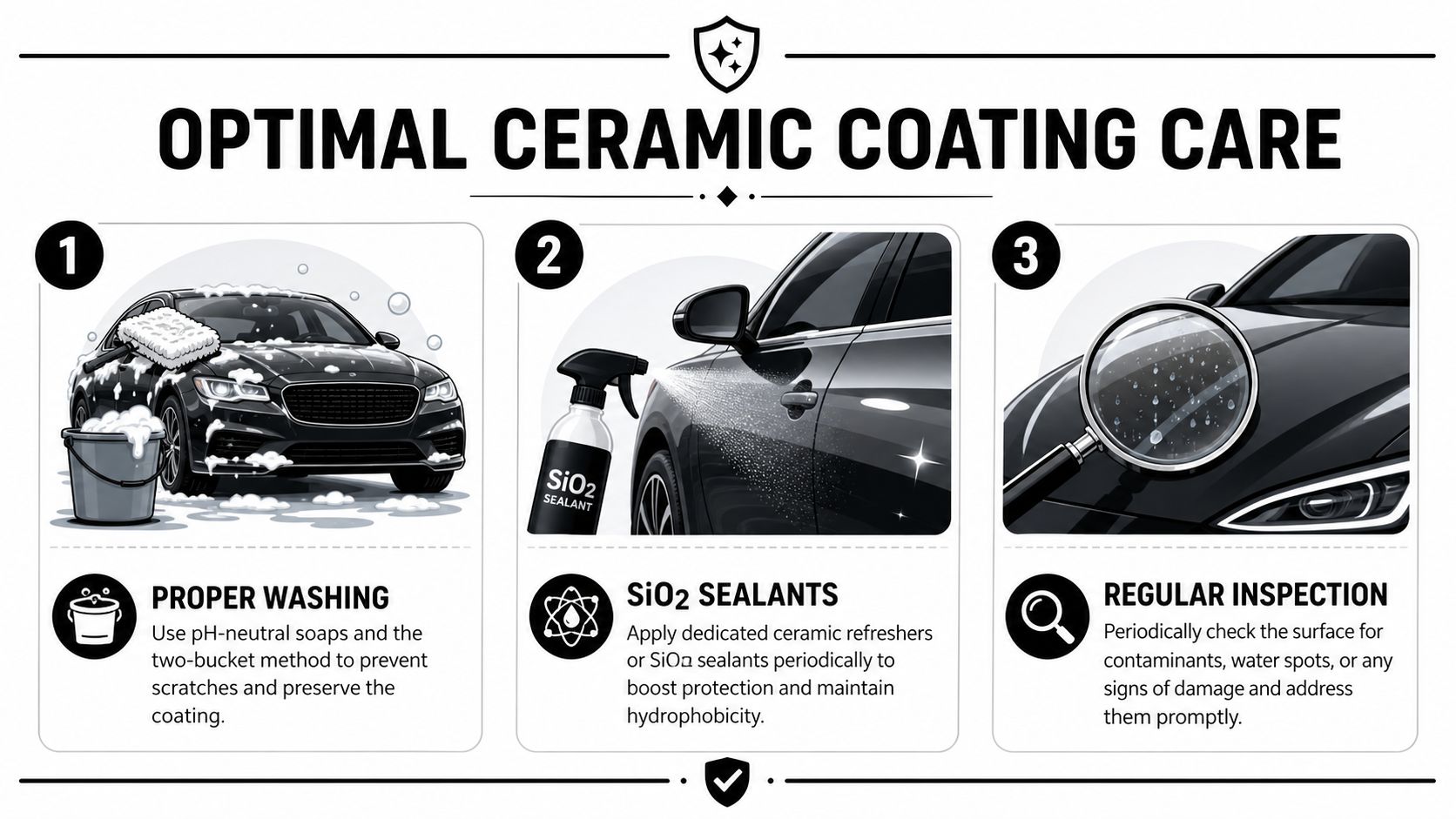
The foundation is regular washing with a pH-neutral car shampoo and good wash technique. The verified guidance here is straightforward: wash every 2 weeks with pH-neutral shampoo to preserve hydrophobic behavior, and avoid wax products that can attract dirt and pollen, as described in this ceramic coating maintenance guidance.
The two-bucket method still matters. One bucket holds your shampoo solution. The other rinses the mitt. That keeps grit from circling back onto the paint.
A simple routine works well:
- Use a dedicated wash mitt: Keep it clean and soft.
- Wash in the shade: Heat makes soaps and minerals dry too fast.
- Dry with quality microfiber towels: Don’t let minerals sit and spot.
- Skip combo wash-and-wax soaps: They add the wrong kind of residue.
Use ceramic-compatible toppers
If you want to refresh gloss or revive water behavior, use a ceramic booster or SiO2 spray sealant, not a traditional wax. These products are made to cooperate with the coating instead of covering it with oils.
Some owners call these “toppers” or “refresh sprays.” The names vary, but the idea is the same. You’re supporting the existing coating with a chemically similar product.
Maintenance mindset: Don’t cover the coating. Feed the coating with products designed for coated surfaces.
Keep inspection in the routine
A coated car can still collect contamination. Water spots, bug residue, and bonded grime need attention before they pile up. A quick inspection under good light tells you whether the surface just needs a wash, a decontamination step, or a maintenance topper.
If you’d rather hand that off, GP Mobile Car Wash & Detail offers ceramic coating and maintenance-oriented detailing for Lincoln-area vehicles, which is useful for owners who want coating-safe washing without guessing at products or process.
Ceramic Coating Maintenance Product Comparison
| Product Type | Primary Use | Frequency | Chemical Compatibility |
|---|---|---|---|
| pH-neutral shampoo | Routine washing without leaving waxy residue | Every 2 weeks | High |
| SiO2 booster or ceramic topper | Refresh slickness and water behavior | Periodically, based on condition | High |
| Ceramic-safe quick detailer | Light dust, fingerprints, fresh smudges | As needed between washes | High |
| Traditional paste or liquid wax | Temporary gloss layer | Not recommended on coated paint | Low |
What your coating really wants is simple. Clean it safely. Dry it carefully. Use ceramic-friendly maintenance products when needed. Leave wax out of the equation.
Oops I Waxed My Car A Simple Removal Guide
If you already waxed your coated car, don’t panic. In most cases, you’re dealing with residue management, not permanent damage. The goal is to remove the wax without grinding on the surface or using harsh abrasives.
Step one, do a proper wash
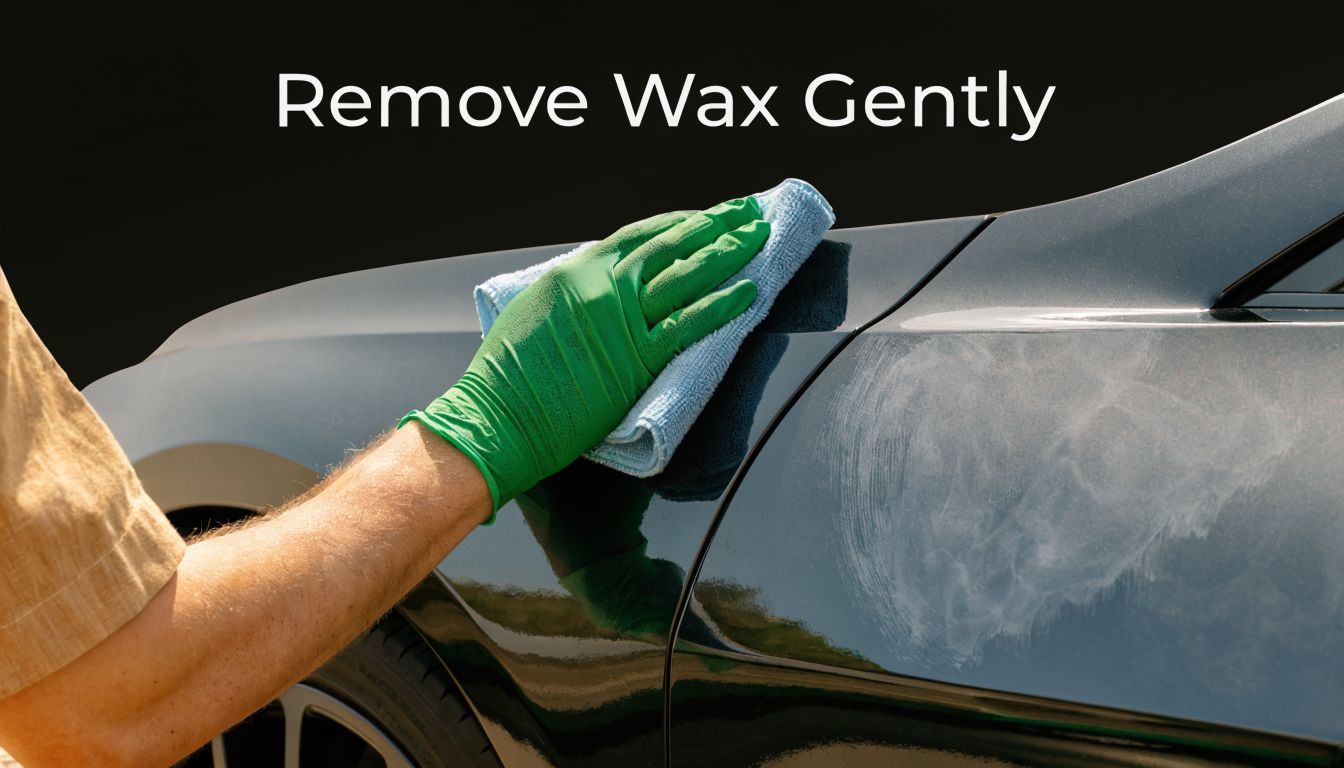
Start with a thorough wash using a strong but coating-safe soap or a panel-prep style cleanser intended to remove residue. Work in a cool, shaded area. Use clean microfiber wash media and rinse well.
If the car feels rough after washing, don’t jump straight to aggressive scrubbing. Sometimes the roughness is bonded contamination, not leftover wax. If you’re not sure what clay does in that situation, this guide on what clay bar treatment is for cars explains when that step makes sense.
Step two, use an IPA wipe-down carefully
After the wash and dry, use a diluted isopropyl alcohol wipe-down to break down oily wax residue. Apply it to a microfiber towel rather than flooding the panel. Wipe gently, flip the towel often, and avoid working on hot paint.
The point here isn’t force. Let the solution dissolve the residue so the towel can lift it away.
Step three, check the surface behavior
Once the residue is off, watch how the surface responds to water after the next rinse or wash. If the coating’s water behavior improves and the smearing disappears, you likely removed the wax film successfully.
A short visual walkthrough can help if you want to see residue removal techniques in action.
When to stop and get help
Stop the DIY process if you notice any of these:
- Persistent haze: especially in direct light
- Stubborn water spotting: that doesn’t wash away
- Heavy contamination: where the surface still feels gritty
- Uncertainty about the coating’s condition: if you don’t know whether you’re looking at wax, minerals, or wear
A calm approach works better than an aggressive one. Most problems come from overcorrecting with harsh products, rough towels, or too much pressure.
When to Call the Pros at GP Mobile Car Wash & Detail
Some coating issues are easy to sort out at home. Others are worth handing to a trained detailer, especially when you’re trying to protect a finish you already invested in.
Cases where professional help makes sense
Call for help when the problem goes beyond basic residue removal:
- Initial coating installation: Surface prep matters as much as the coating itself.
- Annual inspection: A coated vehicle benefits from periodic checkups and decontamination.
- Heavy water spotting: Mineral deposits can be more stubborn than wax residue.
- Light defects or marring: Polishing around a coating takes judgment.
- You’re unsure what’s on the paint: Wax, traffic film, minerals, and fallout can look similar.
A professional detailer can inspect the surface, identify what’s sitting on top of the coating, and choose the least aggressive correction method. That matters because random trial-and-error product use is how small issues become bigger ones.
For busy owners in Lincoln, mobile service also solves the schedule problem. You don’t have to carve out a full day, gather products, and hope you bought the right towels and chemicals. You can have the car assessed and maintained with the right process from the start.
If you’re guessing, you’re more likely to over-treat the paint than to help it.
That’s especially true for coated daily drivers, work vehicles, RVs, and anything that spends a lot of time outside.
Frequently Asked Questions About Ceramic Coatings and Wax
Can you wax a ceramic coated car if you just want more shine
You can, but it usually isn’t the smart move. Wax may change the look temporarily, but it can also mask the coating’s slickness and water behavior. A ceramic-compatible topper is usually the better path.
Will wax damage the ceramic coating
Usually, the bigger issue is interference, not direct damage. Wax tends to sit on top and change how the coated surface behaves. That can make the coating seem weaker even when the coating itself is still there.
What should you use instead of wax
Use a pH-neutral shampoo for regular washing, then add a ceramic-safe booster or quick detailer when the finish needs a refresh. Those products are made to work with coated paint.
Why does my coated car seem less hydrophobic after waxing
Because the environment is touching the wax layer first. If the outermost layer is softer or more residue-prone, water and grime won’t react the same way they did on the bare coating.
Can wash-and-wax soap cause the same problem
It can. Anything that leaves a waxy film can alter the coating’s surface behavior. If your goal is to preserve the coating, choose soaps made for ceramic-coated vehicles.
If I already waxed it, do I need the coating redone
Not necessarily. Many times, a proper wash and residue removal process restores the coating’s behavior. If the finish still looks off after that, have a detailer inspect it before assuming the coating failed.
If you want help maintaining a coated vehicle without the wax confusion, GP Mobile Car Wash & Detail can handle ceramic-safe washing, inspection, and paint care for Lincoln-area drivers at your location or at their shop.