Your car is dusty, the glass has that hazy film, and the lower doors are wearing a week’s worth of road grime. You want it clean, but you don’t want to be the person who accidentally puts a web of swirl marks into the paint while trying to take care of it.
That’s the core tension in hand washing cars. Done well, it’s careful, satisfying, and safe. Done casually, it can leave damage that only shows up later in direct sun. The difference usually isn’t effort. It’s method.
A proper hand wash is less about scrubbing and more about controlling contamination. You’re managing dirt, water, heat, and contact points so the paint stays protected. If you wash at home, that should be your standard. Clean is nice. Clean without adding defects is the goal.
Gathering Your Car Washing Tools and Supplies
The tools matter as much as the technique. Most paint damage during a wash starts with the wrong materials touching the surface, or the right materials being used in the wrong place.
If you want a professional-grade result at home, build your setup around lubrication, separation, and clean contact. That means soap made for automotive finishes, tools that trap debris away from the paint, and dedicated items for the dirty parts of the vehicle.
What belongs in a safe wash kit
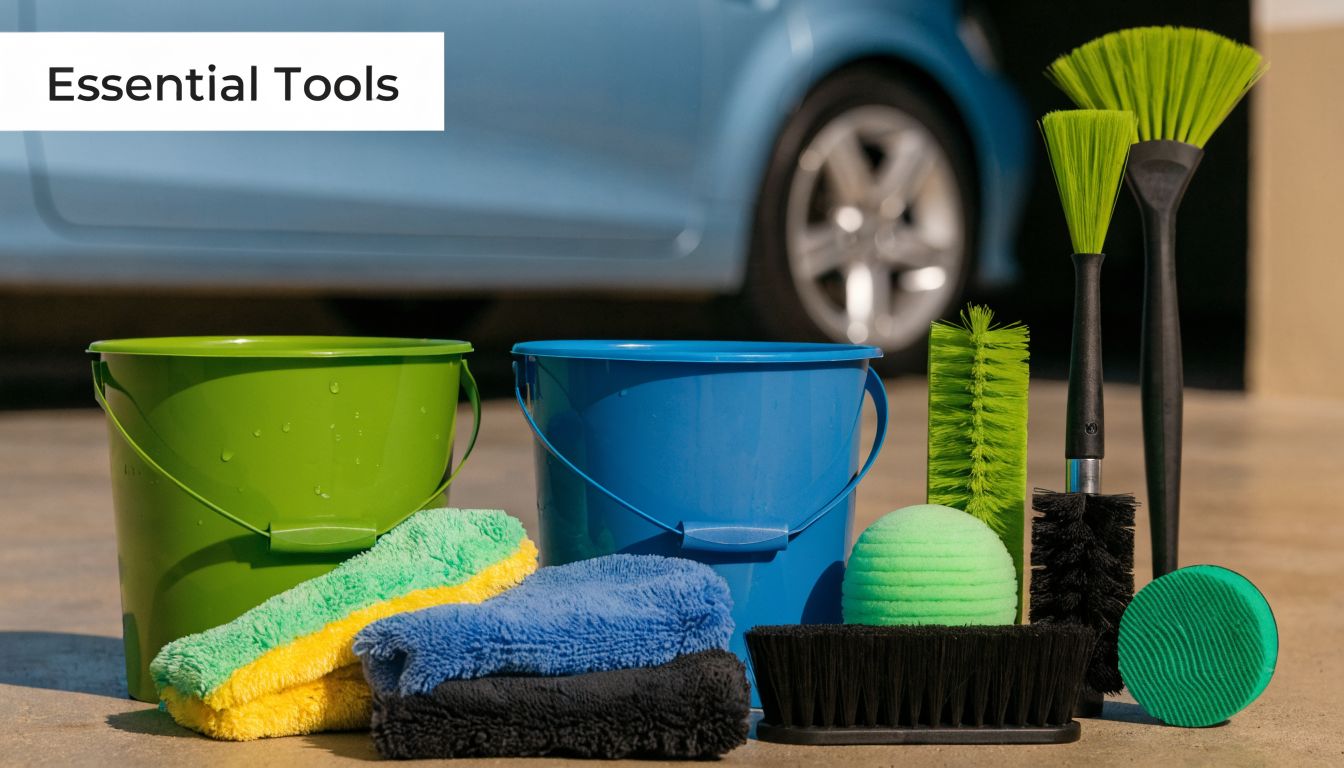
Start with these basics:
- Two buckets. One holds your soap solution. The other holds clean rinse water for your mitt. The point isn’t convenience. It’s contamination control.
- pH-balanced car soap. Use a soap made for painted automotive surfaces. Gentle, non-toxic formulas are a smart choice for both the vehicle and runoff.
- Microfiber wash mitt. Microfiber wash mitts are essential because standard sponges lack the fiber density to create adequate lubrication, significantly increasing scratch risk, as noted in Coverstore’s hand-washing guide.
- Microfiber drying towels. Save your old bath towels for the house. Paint needs soft, clean microfiber only.
- Dedicated wheel brushes and towels. Wheels carry brake dust and road grit. Those tools should never touch paint afterward.
- A hose nozzle with shutoff. This gives you control over water use between rinse stages.
- Optional air blower. Helpful for mirrors, grilles, trim edges, and badges where water likes to hide.
Practical rule: If a tool touches wheels, rocker panels, or the ground, it doesn’t go back on the paint until it’s cleaned.
Essential Hand Washing Checklist
| Item | Purpose | Pro Tip |
|---|---|---|
| Two buckets | Keep soap water separate from rinse water | Label them so you never mix them up |
| pH-balanced car soap | Clean without harsh stripping | Mix only what you need |
| Microfiber wash mitt | Lift dirt away from the surface | Rinse it often and inspect it visually |
| Drying towels | Remove water without scratching | Keep a separate towel for lower panels |
| Wheel brush | Clean brake dust and grime safely | Use wheel-only tools |
| Hose nozzle | Reduce water waste | Shut water off whenever you’re not actively rinsing |
| Glass towel | Prevent streaking on windows | Fold into quarters and rotate to a dry side often |
Product choices that make sense
Skip household dish soap, abrasive sponges, and random towels from the laundry pile. For hand washing cars, the safest products are usually the simplest ones: automotive soap, clean microfiber, and dedicated brushes for specific surfaces.
If you want a fuller home process after the wash, GP Mobile Car Wash & Detail has a practical article on how to detail a car at home for professional results. It aligns with the same principle that matters most here: don’t let dirty tools and rushed technique undo good intentions.
The Professional Two-Bucket Washing Method
The two-bucket method is the core of a safe hand wash. Without it, you’re dragging old dirt back into your soap and then back across the paint.
The method is simple. One bucket carries your wash solution. The second carries clean water for rinsing the mitt. According to Chemical Guys’ washing guide, the two-bucket method is foundational, and circular washing motions are a primary cause of swirl marks. The safer approach is linear, side-to-side motion with single or double passes per panel.
A quick visual helps before you start:
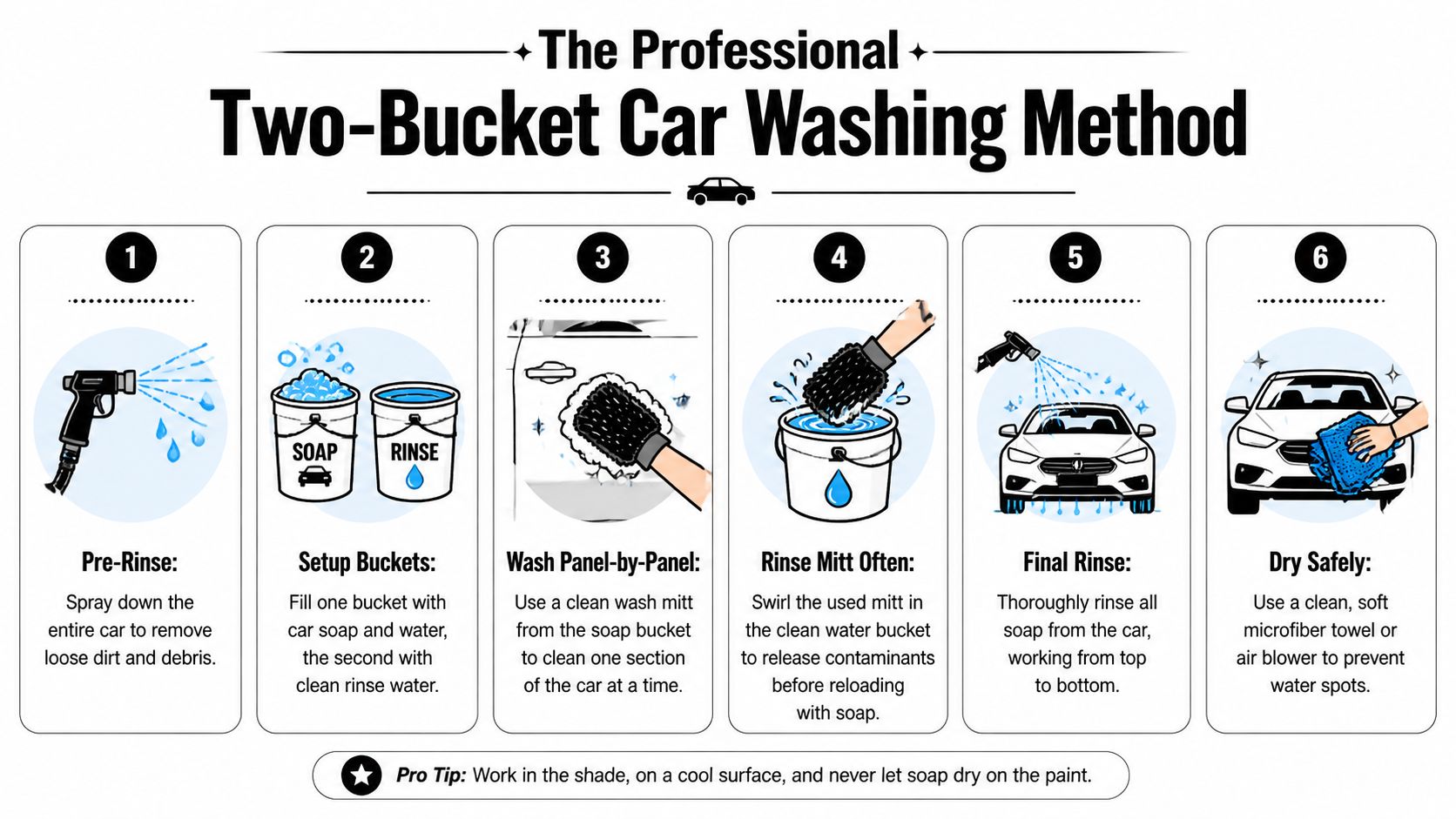
The wash sequence that protects paint
Follow this order:
Pre-rinse the whole vehicle
Use water pressure to remove loose dirt and grit before any mitt touches the paint. This matters most on lower doors, bumpers, and behind the wheels.Load the mitt from the soap bucket
Saturation helps the mitt glide. More lubrication means less friction against the clear coat.Wash one panel at a time
Don’t roam around the car randomly. Finish a section, then reset.Rinse the mitt in the clean-water bucket
Agitate it in the rinse bucket to release debris.Reload with soap
Go back to the soap bucket only after the mitt is clean.Repeat from the cleanest areas to the dirtiest
Roof first. Lower panels last.
Start at the top because gravity helps you. Soap and loosened grime move downward, so upper panels stay cleaner while you work.
That top-down rule isn’t just habit. It keeps dirty runoff from revisiting surfaces you already washed. Roof, glass, hood, and upper doors should always come before rocker panels, bumpers, and the rear hatch area.
The right hand motion
Many amateurs create swirl marks with good intentions and bad movement. They scrub in circles because it feels thorough. It isn’t.
Use straight, overlapping lines. Side to side works well on most panels. Keep pressure light. Let the soap and mitt do the work. If a spot doesn’t release easily, don’t grind at it. Re-wet it, soften it, and come back to it with patience.
Here’s a useful demonstration of the overall process:
A panel-by-panel rhythm
A safe wash has a rhythm to it:
- Wash small sections so soap doesn’t dry on the surface.
- Inspect the mitt often if the vehicle is especially dirty.
- Use single or double passes per panel instead of repeated scrubbing.
- Leave the dirtiest lower sections for last because they carry the heaviest grit load.
If the mitt stops gliding, stop washing. Add more water, more soap, or both.
That’s how professionals approach hand washing cars. It looks slower from a distance, but it prevents the kind of damage that takes polishing to fix.
Caring for Wheels, Glass, and Trim
A basic wash gets the paint clean. A finished wash handles the details without cross-contaminating the rest of the vehicle.
Wheels, glass, and trim each need different tools and a different mindset. If you treat them all the same, the result usually looks half-done even when the body panels are spotless.
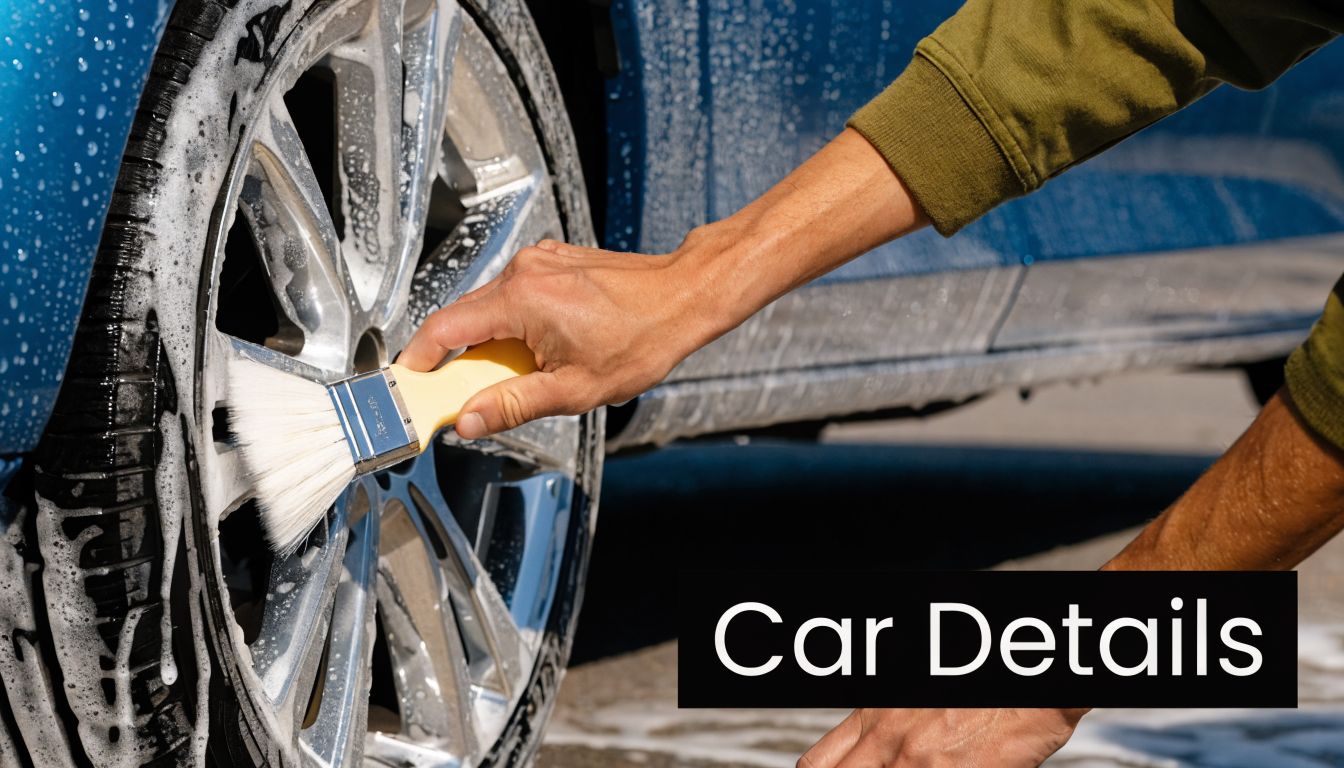
Wheels first, or at least separately
Wheels are the grittiest part of the vehicle. They collect brake dust, road film, and stubborn residue that you never want transferred onto paint.
Use a dedicated wheel brush, wheel-only towels, and a separate wash tool for tires if needed. If you clean wheels after washing the body, you risk splashing grime back onto clean panels. If you prefer washing the body first, keep your wheel work fully isolated and expect to do a light final rinse around those areas.
A good wheel routine looks like this:
- Rinse thoroughly to knock off loose grit.
- Agitate with soft brushes in barrels, faces, and around lug areas.
- Clean tires separately because old dressing and road film build up there.
- Rinse again before moving on.
Glass needs its own process
Streak-free glass rarely comes from using more cleaner. It comes from using cleaner and towels with discipline.
Use an ammonia-free glass cleaner and the two-towel method. One towel does the cleaning pass. The second towel does the final buff. Fold both towels so you can keep rotating to a clean side.
For interior and exterior glass, wipe in one direction on one side and a different direction on the other. If you see a streak later, you’ll know which side caused it.
Clean glass last if overspray from the wash or trim dressing is likely to land on it.
Trim is where a wash starts to look like a detail
Plastic trim and rubber seals hold onto residue. They also show neglect quickly. Wash them gently, rinse them well, and apply a trim-safe protectant if the material looks dry or faded.
Avoid slinging greasy dressing onto paint and glass. Less product, worked in evenly, usually looks better than a heavy shiny coating.
Larger vehicles add another layer of difficulty. RVs, boats, tall trucks, and fleet units have more seams, more textured surfaces, and more area where water can hide. That’s one reason professional service becomes practical, not indulgent, once the vehicle is beyond a simple passenger car.
Common Hand Washing Mistakes That Ruin Your Paint
You might think you’re helping your car, but some common habits are doing the opposite.
Most wash damage doesn’t come from one dramatic mistake. It comes from small, repeated shortcuts. A dirty mitt. Hot paint. Circular scrubbing. A towel that looked clean enough.
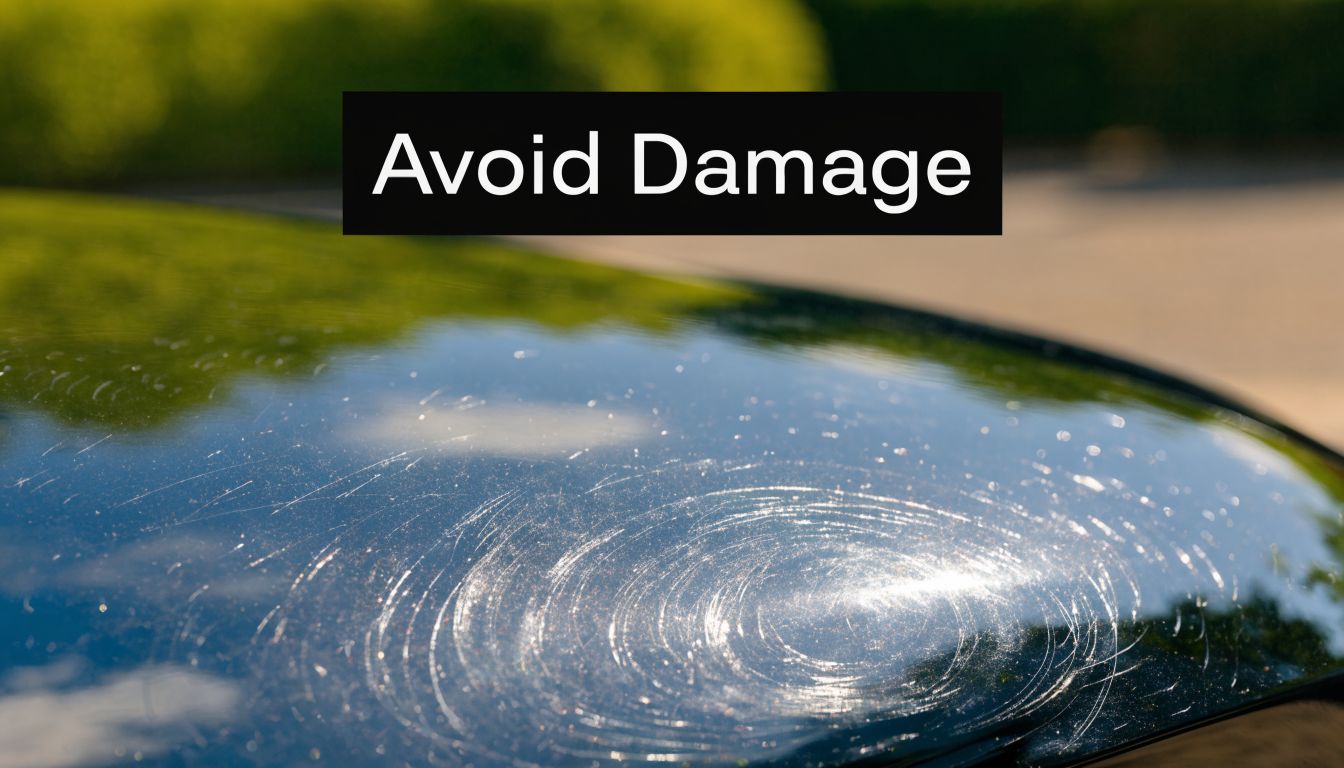
The damage often starts sooner than people think
A University of Texas study found that a single home hand wash can create scratches penetrating as deep as 10% of the paint’s total thickness, while professional automatic washing equipment left paint in “very good condition” after the equivalent of a year’s worth of washes, according to the University of Texas car wash study summary.
That finding should change how you think about casual washing. A car can look clean right after a wash and still be accumulating fine damage.
Habits pros avoid
Here are the repeat offenders:
Using one bucket
This turns your wash water into a dirt bath. Once grit is in the bucket, it keeps coming back to the paint.Washing in circles
Circular motion tends to create visible swirl patterns under sunlight and shop lighting.Working in direct sunlight
Water and soap dry too fast on hot surfaces. That leaves spotting, streaking, and residue that’s harder to remove safely.Using dish soap or harsh household cleaners
These aren’t designed for automotive finishes or protective layers.Dropping the mitt and keeping going
If the mitt touches the ground, assume it picked up abrasive grit. Clean it thoroughly or replace it before it touches paint again.
Drying mistakes count too
Many people wash carefully and then undo the whole job during drying.
A rough towel, circular wiping, or letting rinse water air-dry on the surface can leave marks behind. If your paint already has that spiderweb look, a proper wash won’t remove it. It only prevents adding more. For existing defects, this guide on how to remove swirl marks from car paint explains what correction entails.
The safest wash is the one where every contact with the paint is intentional.
Water-Wise Washing and Eco-Friendly Practices
A careful wash should protect more than the paint. It should also reduce unnecessary water use and limit what flows into the street.
That matters at home because driveway washing can be surprisingly wasteful. According to the U.S. car wash and detailing industry overview from Maher CR, professional car washes use 30 to 40 gallons of fresh water per vehicle through recirculation systems, while washing at home with a hose can use over 100 gallons. That’s a 60% to 75% reduction in water usage when a pro service handles the wash.
How to waste less water at home
You probably won’t match a recirculating professional system in a driveway, but you can avoid the biggest forms of waste.
- Use a shutoff nozzle so water isn’t running while you move buckets, change tools, or inspect a panel.
- Pre-rinse with purpose instead of flooding the car for too long.
- Wash in the shade so you don’t have to re-rinse panels that dried too quickly.
- Work one section at a time to keep the process controlled.
Water-conscious washing also means avoiding products that create more cleanup problems than they solve. Choose biodegradable, non-toxic, phosphate-free soaps when possible. If runoff reaches pavement and drainage areas, milder chemistry is the responsible move.
Drying without creating a second problem
A water-wise wash can still go wrong if you leave standing water all over the vehicle. The answer isn’t another long rinse cycle. It’s better drying.
Use air first for mirrors, badges, trim edges, and panel gaps. Then follow with clean microfiber towels using straight, sweeping strokes. If hard-water spotting is already part of the problem, this article on how to remove water spots from car paint will help you tell the difference between fresh spotting and more stubborn mineral etching.
When eco-friendly also means hands-off
For lightly dusty vehicles, rinseless or water-saving wash approaches can make sense if you use high-quality towels and disciplined technique. But once the vehicle is muddy or gritty, trying to force a low-water method can increase paint contact with abrasive debris.
That’s the trade-off many people miss. Saving water doesn’t mean using too little for the job. It means using the right amount, in the right way, with the right chemistry.
Knowing When to Call a Professional Detailer
DIY washing makes sense when the vehicle is moderately dirty, the paint is in decent shape, and you have the time to do it carefully. It stops making sense when the work goes beyond maintenance and into correction, restoration, or high-stakes appearance.
A lot of drivers have already made that call. The car wash industry information published by the International Carwash Association shows that 48% of drivers used professional washes most often in 1994, and that figure is now nearly 80%. That shift points to something practical: people increasingly see professional washing as a normal part of vehicle care, not an occasional luxury.
Good DIY situations
Home hand washing works well when:
- The vehicle has light to moderate dirt.
- You can wash in shade on a cool surface.
- You have clean microfiber, proper soap, and enough time.
- You’re maintaining a vehicle between more intensive services.
For many owners, that’s the right lane. A careful maintenance wash helps preserve appearance and keeps dirt from building up.
Times to hand it off
Professional detailing is the smarter choice when the job involves more than routine washing:
- Paint correction needs. If swirls, haze, or light scratches are already visible, washing won’t fix them.
- Sale preparation. First impressions matter when you’re listing a vehicle.
- Fleet care. Consistency matters when multiple vehicles represent a business.
- Large vehicles. RVs and boats require more reach, time, and specialized handling.
- Busy schedules. If you rush the process, the risk of mistakes goes up fast.
Paying for professional help isn’t admitting defeat. It’s deciding that your time, paint, and convenience are worth protecting.
A simple decision test
Ask yourself three questions:
- Am I maintaining the car, or trying to restore it?
- Do I have the right tools clean and ready right now?
- Can I do the job without rushing?
If the answer to any of those is no, a professional detailer usually becomes the safer option.
Frequently Asked Questions About Hand Washing
How often should I hand wash my car?
Wash based on how the vehicle is used and what’s sitting on it. Road film, bug residue, bird droppings, and winter grime shouldn’t sit on paint longer than necessary. A lightly used garage-kept vehicle can go longer than a daily driver parked outside.
Is hand washing always safer than a professional wash?
Not automatically. Technique decides that. Poor hand washing can do real damage, especially if the mitt, water, and motion aren’t controlled carefully. A careful home wash can be excellent, but it has to be done like a process, not a chore.
Can I use one mitt for the whole vehicle?
You can, but it’s safer to be selective. Many detailers separate upper-body washing from the dirtiest lower areas. At minimum, inspect and rinse the mitt constantly, and never use wheel tools on paint.
What’s the safest way to dry the car?
Blow water out of cracks and trim first, then dry with clean microfiber towels using long, straight strokes. Don’t rub in circles, and don’t let water bake onto warm paint.
Should I wash the engine bay during a regular hand wash?
Not as part of a casual driveway wash unless you know what you’re doing and can protect sensitive components properly. Engine cleaning is a separate task with different risks.
Are non-toxic soaps strong enough?
Yes, when they’re made for automotive use and matched to the job. Safe chemistry plus good technique beats harsh chemistry and poor technique almost every time.
If you’d rather skip the setup, avoid the common mistakes, and have the job handled with surface-safe methods, GP Mobile Car Wash & Detail offers mobile and shop-based detailing for drivers in Lincoln and surrounding areas. They handle everything from maintenance washes to deeper exterior and interior care, with non-toxic, fragrance-free products and water-conscious methods that fit busy schedules.