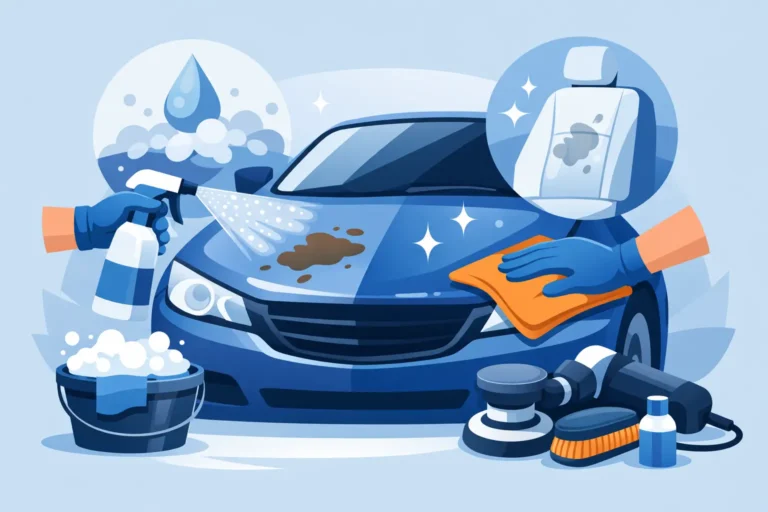
You wash the car carefully, dry it, step back into the sun, and see what looks like a gray haze of fine lines across the paint. Then you notice lint on the glass and streaks on the piano-black trim. Most of the time, that didn't happen because you worked too fast. It happened because the towel touched the surface the wrong way.
Old cotton bath towels, bargain-bin rags, and paper towels are common paint killers. They don't manage dirt well, they leave debris behind, and they can drag contamination across the clear coat instead of lifting it away. On modern paint, that's all it takes to create swirls.
That's why professional detailers build their process around microfiber. If you care about gloss, safe drying, ceramic coating maintenance, and scratch prevention, microfiber isn't an accessory. It's the tool that makes the rest of your process work.
The Secret to a Swirl-Free Shine Starts Here
A swirl-free finish starts before polish, wax, or coating. It starts with what physically touches the paint. If the towel can't safely pick up leftover moisture, dust, road film, or product residue, it becomes part of the problem.
That's why microfiber towels changed car care. They gave detailers a reusable cloth that's soft, paint-safe, and far better suited to glossy surfaces than cotton or paper. If you've been chasing better wash results, the towel choice matters just as much as your soap and technique.
A safer wash routine always comes down to friction control. The less you grind dirt into the clear coat, the better your finish survives. If you want a full breakdown of wash technique, this guide on the best way to wash a car without scratching pairs well with the towel selection advice here.
What usually goes wrong
Most paint damage during routine washing comes from a few avoidable mistakes:
- Using household towels: Bath towels and shop rags often feel soft in your hand but act rougher on paint.
- Reusing a dirty towel: Once a towel loads up with grit, it stops being safe.
- Using one towel for every task: Wheels, paint, glass, interior plastics, and coating removal shouldn't share the same cloth.
- Ignoring towel condition: A towel with matted fibers, hardened edges, or embedded debris can scratch surprisingly fast.
The towel that dries your paint should never be an afterthought. It's one of the last things to touch the surface, so it has a huge effect on how the finish looks afterward.
Microfiber towel benefits show up immediately when you use the right towel for the right step. Drying gets easier. Glass comes out cleaner. Wax removal takes less effort. Final wipe-downs leave less lint and fewer streaks. Most important, you lower the chance of putting fresh marks into paint you just spent time cleaning.
What Makes Microfiber a Detailing Game Changer
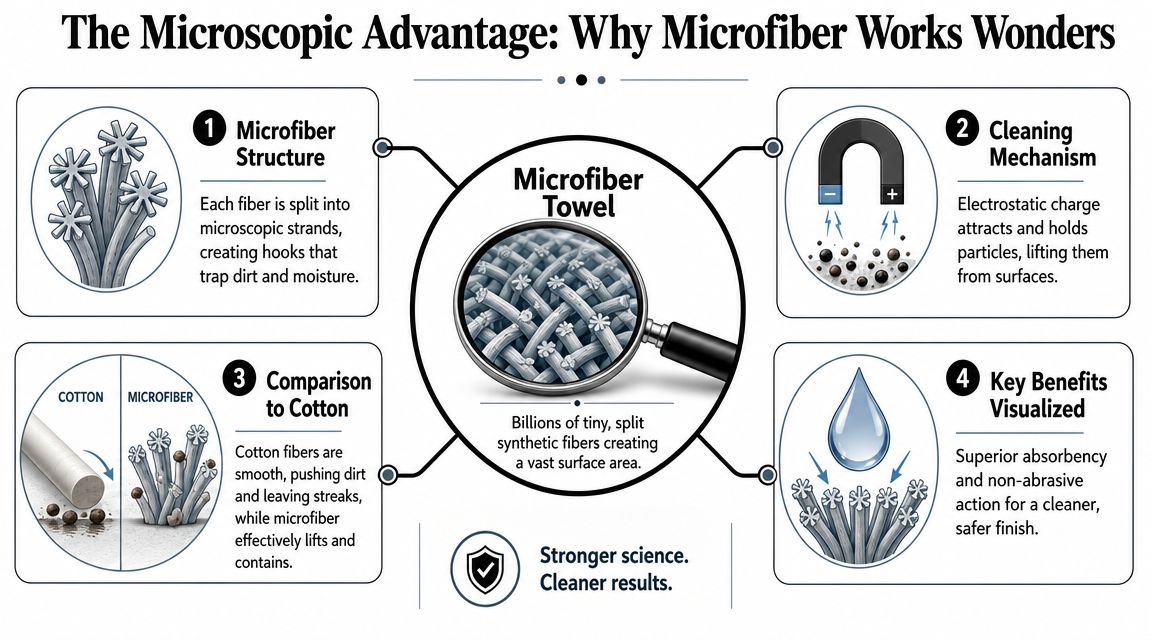
At a glance, microfiber looks simple. Under magnification, it's a different story. Its effectiveness comes from structure, not hype.
A UCSF microfiber fact sheet explains that a microfiber cloth has the same surface area as a cotton cloth four times as large, can absorb seven times its weight in water, and can remove contaminants using 95% less water and chemicals than traditional cotton materials (UCSF microfiber fact sheet). That's the reason it behaves differently on paint, glass, trim, and interiors.
Why the structure matters on a car
Think of microfiber as a field of tiny dirt grabbers instead of a flat cloth. A basic rag tends to push contamination around. Microfiber is better at pulling it into the towel's structure and away from the surface you're wiping.
That matters in detailing because nearly every step involves leftover residue. Water spots waiting to form. Dust settling during a final wipe. Polish oils hanging on the paint. Interior cleaner sitting on a dashboard. The towel has to collect that material without smearing it back across the panel.
Why pros trust it on delicate finishes
On soft black paint, piano-black trim, glossy screens, and tinted glass, your towel choice gets exposed fast. The wrong material leaves lint, haze, or marring. Microfiber works because it combines softness with useful bite. It can pick up material without acting abrasive when it's clean and well maintained.
Practical rule: A microfiber towel is only as safe as its condition. Clean fibers lift contamination. Contaminated fibers drag it.
The microfiber towel benefits people notice first are usually drying speed and softness. The bigger benefit is control. It lets you match the towel's structure to the job so you can dry, clean, buff, and level product with much less risk.
Top 6 Microfiber Towel Benefits for Your Vehicle
You finish washing the car, grab whatever towel is nearby, and the paint suddenly feels grabby. A few wipes later, the water is gone, but the finish looks streaky in the sun. That usually is not a soap problem. It is a towel problem.
Better drying with less struggle
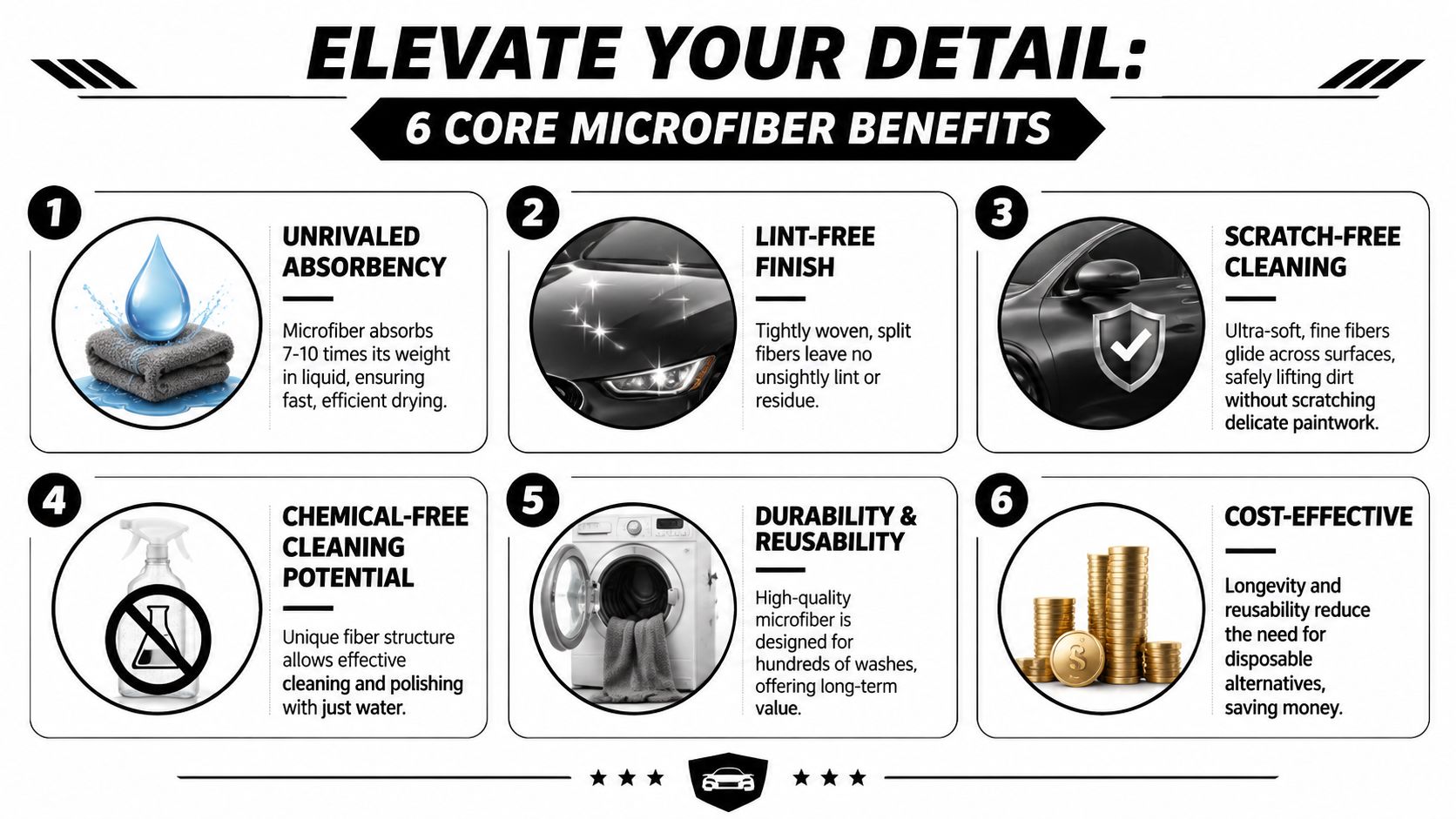
A proper drying towel pulls water off the panel quickly, so you spend less time dragging fabric across the paint. That matters on dark colors and soft clear coats, where extra wiping often creates light marring.
For drying, the benefit is simple. Fewer passes mean less friction, fewer missed drips, and a lower chance of spotting before you finish the car.
Safer contact with paint
Paint-safe contact is the reason detailers keep quality microfiber in bulk. On wash day, during drying, or while removing wax residue, a clean towel gives dirt and residue somewhere to go instead of grinding it against the surface.
That does not mean every microfiber towel is automatically safe. Cheap towels with stiff edges, low-quality fibers, or embedded debris can still mark paint. If your finish already shows defects, this guide on removing swirl marks from car paint covers the correction side. The right towel helps you avoid putting those marks right back in.
Cleaner glass and trim
Glass is one of the fastest ways to judge a towel. A bad towel leaves lint, smears cleaner, and forces a second or third wipe. A good microfiber glass towel leaves the surface clear on the first pass if you use the right cleaner and keep the towel dedicated to glass only.
The same goes for piano black trim, gauge clusters, and glossy interior panels. These surfaces show haze and light scratches fast, so towel choice matters more than people expect.
Better results with coatings and protectants
Beyond basic cleaning, microfiber becomes a process tool. Applying spray sealants, buffing wax, leveling a ceramic coating, or removing polish residue all require a towel that matches the task.
Use the wrong towel and you get streaking, lint in the product, uneven leveling, or high spots that harden in place. Use the right one and the work becomes more controlled. That is a real benefit when you are protecting expensive paint, trim, or wheels.
Reduced chemical dependence
A quality microfiber towel does more mechanical cleaning on its own, so you often need less product to finish the job. On interior wipe-downs, maintenance washes, and final detail spray work, that usually means less overspray, less residue, and less cleanup afterward.
There is a trade-off. The towel loads up faster when it is doing more work. Fold it often, switch to a fresh side before it gets saturated, and stop using it once it starts pushing residue around.
Reusability that makes sense
Microfiber pays off over time because one good towel can handle repeated detailing tasks if you wash and store it properly. Results stay more consistent once you assign towels by job, such as drying, paint buffing, glass, wheels, and interior plastics.
That consistency matters more than the raw cost of the towel. Disposable or bargain-bin options may seem convenient, but they are usually less predictable on delicate finishes.
The practical payoff
- Drying: Less wiping and better water pickup on paint, glass, and trim
- Buffing: Cleaner removal of wax, sealant, polish oils, and dust
- Glass: Better clarity with less lint and fewer streaks
- Maintenance washes: Safer wiping on lightly contaminated vehicles
- Interior work: Better pickup on fingerprints, dust, skin oils, and cleaner residue
- Coating work: More control during application, leveling, and final wipe-downs
How to Choose the Right Microfiber for Every Job
You wash the car carefully, dry it, wipe off a little residue, and then catch faint swirls in the sun. In a lot of cases, the problem is not the product. It is the towel choice.
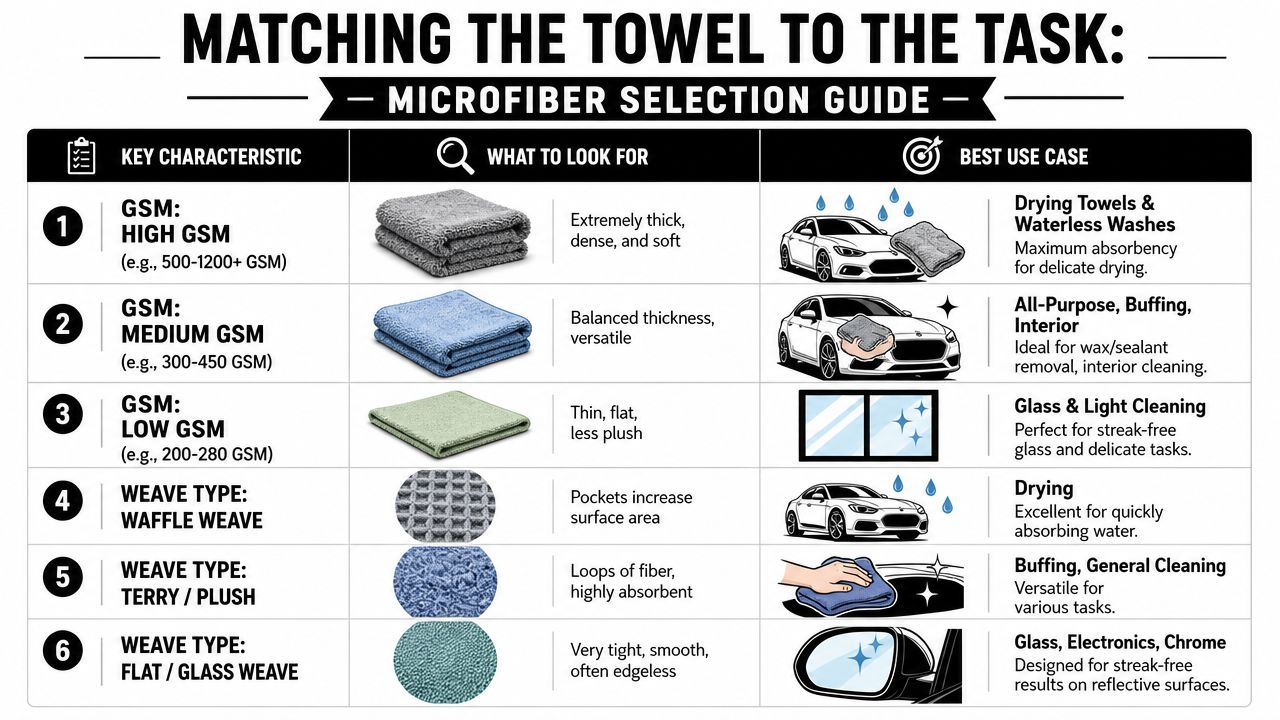
Professional results come from matching the towel to the task. Drying towels need to pull in water fast without dragging. Glass towels need to wipe clean without lint. Coating towels need controlled bite so you can level product evenly without fighting the surface. Color helps with organization, but construction is what changes the result on paint.
Start with blend, pile, weave, and edge quality. Towels built with a softer blend and better stitching usually feel more controlled on sensitive surfaces, while cheap towels tend to grab, smear, or leave lint behind. I do not judge a towel by how plush it feels in the package. I judge it by what job it can do safely, and when it should be retired to dirtier work.
Match the towel to the job
Use this framework to choose faster and make fewer mistakes:
| Job | What to look for | Why it works |
|---|---|---|
| Drying paint | Large waffle weave or plush drying towel | Pulls in water quickly and covers more surface with less wiping |
| Buffing wax or sealant | Soft medium-to-high pile towel | Lifts residue without forcing pressure into the paint |
| Cleaning glass | Low-pile or flat-weave towel | Leaves less lint and gives better streak control |
| Interior cleaning | Medium GSM all-purpose towel | Handles plastics, leather, and trim without feeling too bulky |
| Final inspection wipe | Edgeless soft towel | Reduces the chance of marring from stitched edges |
| Ceramic coating leveling | Tight, purpose-built microfiber or suede applicator towel | Gives better control during leveling and residue removal |
That last category matters more than many car owners realize. A towel that works well for wax removal can be the wrong choice for ceramic coating because too much pile can grab unevenly or hold onto product longer than you want.
What GSM Tells You
GSM tells you how heavy and dense a towel is, but it does not tell you everything. Higher GSM usually means a thicker, softer towel, which can work well for drying and buffing. Lower-pile, lighter towels often do better on glass and navigation screens because they release residue more cleanly.
The mistake is buying one thick towel and trying to use it everywhere.
A heavy towel loaded with polish dust, road film, or coating residue is still a risk to the surface. A clean towel chosen for one job is safer than a plush towel used for five different ones. That is why detailers separate towels by task from the start, then downgrade them over time from paint to interior, and from interior to wheels or jambs.
If you want to see how towels fit into a safer wash setup, this guide to mobile car wash supplies for different detailing tasks gives a useful overview.
A quick visual can help if you're comparing towel styles and use cases.
Buy microfiber by category, not as one mixed bundle. Keep separate towels for paint, glass, interiors, wheels, and coating work.
Practical Uses for Exterior and Interior Detailing
A microfiber towel only proves itself when it's in your hand on a real car. The right towel changes how the job feels. It glides instead of grabs, clears residue instead of smearing it, and leaves the panel looking finished instead of halfway done.
Exterior work that benefits most
Start with drying. On a washed vehicle, a large drying towel works best when you blot or gently pull it across a wet panel with almost no pressure. That keeps contact light and avoids turning the drying step into another scrubbing step. On softer paint, that alone can make a visible difference over time.
For wax or sealant removal, use a plush towel with enough nap to pick up residue without forcing you to press down. Fold it into quarters, use one side until it loads up, then flip to a clean side. Once all sides are spent, switch towels. Trying to finish a whole vehicle with one overloaded towel is how streaking starts.
Glass needs its own dedicated towel. A low-pile or flat-weave microfiber gives better feedback and leaves fewer fibers behind. One towel can spread the cleaner. A second dry towel can finish the glass. That two-towel method is simple and reliable.
Interior jobs where towel choice matters
On dashboards, door panels, center consoles, and leather seating, a general-purpose microfiber handles most maintenance cleaning well. Spray product into the towel or onto an applicator when appropriate, then wipe with controlled pressure. The towel should remove dust, skin oils, and cleaner residue without leaving a greasy film behind.
Screens, piano-black trim, gauge clusters, and glossy interior panels need more caution. Use a clean, softer towel reserved for delicate surfaces. If the towel touched interior dirt traps like door jambs, pedals, or cupholders, it shouldn't go back onto sensitive trim.
Where specialized towels earn their keep
Ceramic coating application is the clearest example of task-specific microfiber use. During coating work, detailers often use purpose-built applicator materials and separate towels for leveling and final wipe-down. That's because coating residue behaves differently from wash water or spray wax. If the towel isn't suited for that job, high spots and smears become harder to control.
For a final inspection wipe, an edgeless towel often makes the most sense. On dark paint especially, that last pass is where you catch leftover smudges, polish dust, or missed residue without introducing fresh marks.
How to Clean and Maintain Your Microfiber Towels
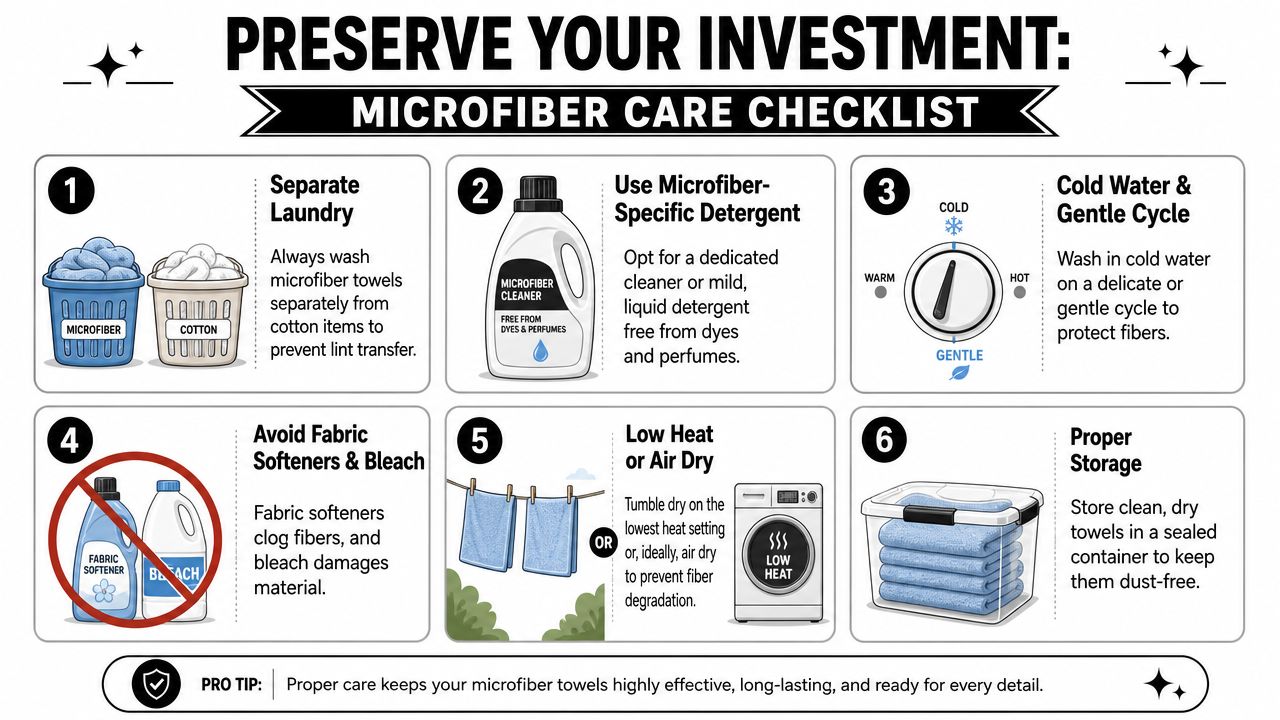
A quality towel can become unsafe long before it looks worn out. Microfiber performance depends on its structure, and using fabric softeners or high heat can melt the fibers and clog their pores, destroying absorbency and turning them into lint-shedding, scratch-inducing cloths, as noted in this microfiber care discussion.
The non-negotiable rules
If you want your towels to stay paint-safe, follow a strict routine:
- Wash microfiber separately: Cotton lint is the enemy. Mixing towels with regular laundry contaminates them fast.
- Skip fabric softener completely: Softener coats the fibers and kills the towel's ability to absorb and release contamination properly.
- Avoid high heat: Excess heat can damage the fibers and reduce performance.
- Sort by job: Paint towels, glass towels, interior towels, and wheel towels should stay in separate groups.
- Inspect before reuse: If a towel has debris stuck in it, hardened product, or rough edges, retire it from paint duty.
A simple maintenance system
The easiest way to keep order is to color-code or label towel groups. One bin for paint. One for glass. One for interior work. One for dirty jobs like jambs, exhaust tips, and wheels. That removes guesswork, which is where most cross-contamination happens.
After washing, fold and store towels in a clean enclosed container. Open shelves in a dusty garage are fine for tools. They're not ideal for towels that will touch polished paint or display screens.
A microfiber towel doesn't fail all at once. First it loses absorbency. Then it starts smearing. Then it begins leaving lint or light marring. Retire it before it reaches that last stage.
When to demote a towel
A towel doesn't need to go in the trash just because it's no longer paint-safe. Move it down the ladder. Former paint towels can become interior towels. Old interior towels can handle door jambs, engine bay wiping, or dirty trim. Wheel towels should stay wheel towels for the rest of their life.
Debunking Myths and Understanding Towel Lifecycle
One of the worst myths in car care is that all microfiber is the same. It isn't. Weave, pile, edge quality, absorbency, and maintenance all change how a towel behaves. A towel that works well on glass may be a poor choice for drying paint. A plush buffing towel may be terrible for coating leveling.
Another myth is that microfiber is automatically an eco-perfect solution. It has a real tradeoff. Microfiber is a synthetic polyester and polyamide product, and it can shed microfibers during washing, which creates an environmental consideration, as discussed in this review of microfiber benefits and downsides. That doesn't mean microfiber has no place in responsible detailing. It means owners should wash carefully, avoid unnecessary replacement, and get full use out of each towel through proper task rotation.
What long-term value actually looks like
The better way to think about towel value is lifecycle, not purchase price.
- New premium towels: Reserve for paint, drying, final buffing, and delicate interior screens
- Mid-life towels: Use for interior plastics, leather, trim, and general cleanup
- Old but usable towels: Assign to jambs, wheels, engine bays, and dirty work only
That approach gets the most practical use out of each towel while reducing the chances of damaging a sensitive surface with a worn cloth.
Cheap towels cost less at checkout. They often cost more in rework, frustration, and paint correction later.
When to Call the Professionals in Lincoln NE
Microfiber towels are the single most useful upgrade many car owners can make to their wash kit. They help you wash, dry, buff, and maintain your vehicle with far less risk than household towels or disposable paper products. For maintenance care, that goes a long way.
Some jobs still need professional control. Paint correction, heavy defect removal, and ceramic coating installation depend on more than a good towel. They require machine polishing knowledge, lighting, product pairing, prep discipline, and a clean working environment. The towel still matters, but it's only one part of the system.
If your paint already has visible swirls, if your black trim shows haze no matter what you do, or if you want a coating installed without guessing through the wipe-off window, it makes sense to hand the vehicle over to trained detailers. In Lincoln, that can mean using a mobile service or dropping the vehicle off at a shop, depending on the work needed. GP Mobile Car Wash & Detail is one local option for interior and exterior detailing, ceramic coating, and maintenance cleaning in Lincoln and nearby areas.
The practical takeaway is simple. Use quality microfiber at home for safe upkeep. Bring in a professional when the finish needs correction, specialized protection, or a level of precision that's hard to replicate in a driveway.
If your vehicle needs more than a maintenance wash, GP Mobile Car Wash & Detail offers mobile and shop-based detailing in Lincoln, Nebraska, including interior cleaning, exterior detailing, and ceramic coating services. If you want help choosing the right level of service for your car, truck, RV, boat, or fleet vehicle, contact the team and describe the vehicle, condition, and goals.