Car detailing is thorough cleaning, restoration, and finishing of a vehicle, not just a rinse and wipe-down, and it sits inside a global market projected at USD 42.6 billion in 2026 according to Persistence Market Research. If your car looks “clean” after a wash but still has dull paint, interior odors, smudged trim, or gritty surfaces, detailing is the service that addresses what a regular wash leaves behind.
A lot of drivers in Lincoln know this feeling. You run the car through a wash, the loose dirt is gone, and from twenty feet away it looks fine. Then you open the door and notice crumbs in the seat rails, dust baked into the vents, a haze on the paint, water spots on the glass, and that tired look a vehicle gets when it's been used hard and cleaned lightly.
That's where the confusion usually starts. People ask what is car detailing service because the term gets used for everything from a quick vacuum to a full paint correction. In practice, real detailing is a craft. It's the difference between making a vehicle presentable and bringing it back to the best condition its current age and wear will allow.
The Core Purpose of Car Detailing
A Lincoln driver runs the car through a wash on Saturday, parks it in the driveway, and notices the same things once the water dries. The paint still looks dull. The cupholders are sticky. Dust is packed into the vents, and the interior still carries that used, slightly tired smell. The vehicle is cleaner, but it does not feel renewed.
Car detailing solves that problem by treating the vehicle like a set of materials that each need the right kind of care. Paint, plastic trim, carpet, leather, glass, wheels, and rubber all wear differently. A proper detail cleans them with that in mind, then corrects or protects what can be improved. At GP Mobile Car Wash & Detail, that can mean anything from a mobile interior reset at your home or office to ceramic protection for a newer vehicle, eco-friendly wash methods for customers who care about water use, or fleet detailing that keeps work vehicles presentable and easier to maintain.
What detailing means in practice
Car detailing is methodical cleaning, surface improvement, and protection. The goal is not only to remove visible dirt. The goal is to deal with the grime, staining, haze, buildup, and early wear that a routine wash leaves behind.
That difference matters on Nebraska roads. Winter salt, gravel dust, bug residue, pollen, hard water spots, and strong sun all age a vehicle faster than many owners expect. A detail addresses those conditions before they turn into permanent staining, faded trim, or paint that never quite looks clear again.
A good detail also helps you avoid bad habits. Many drivers learn the hard way that automatic car wash damage to paint and trim is not just a theory. Brush marks, fine swirls, and worn exterior pieces usually show up over time, not in one visit.
Why people actually book a detail
In the shop and on mobile appointments, the reasons are usually practical:
- Reset a vehicle that has fallen behind. Salt tracks, dog hair, food spills, and months of dust add up.
- Improve how the paint looks in daylight. Light oxidation, water spotting, and contamination can make a newer car look older.
- Make the cabin feel better to use. Clean seats, touchpoints, vents, and glass change the driving experience more than people expect.
- Protect surfaces that cost real money to replace. Clear coat, leather, trim, and carpet last longer when they are cleaned and protected properly.
- Keep business vehicles presentable. Fleet detailing is often about brand image, driver comfort, and easier upkeep, not vanity.
That is the core purpose of detailing. It restores what can be restored, protects what is still in good shape, and makes a vehicle easier to live with day to day.
Car Wash vs Car Detailing What Is the Difference
A customer in Lincoln might stop at a tunnel wash on Tuesday, then call us on Friday asking why the paint still looks dull and the interior still feels grimy. The answer is simple. A wash removes surface dirt. Detailing goes after the contamination, wear, and neglected areas that keep a vehicle from looking and feeling clean.
That difference affects price, time, and results. At GP Mobile Car Wash & Detail, it also affects where the work happens. A quick maintenance wash fits one kind of need. A mobile detail, ceramic service, or fleet cleanup fits another.
Car Wash vs. Full Detail at a Glance
| Feature | Standard Car Wash | Professional Car Detailing |
|---|---|---|
| Primary goal | Remove loose dirt and road film | Restore, refine, and protect vehicle surfaces |
| Process | Quick exterior cleaning, sometimes basic interior touch-up | Systematic interior and exterior deep cleaning plus corrective work |
| Paint care | Limited | Decontamination, polishing, protection |
| Interior work | Light vacuum or wipe-down | Deep cleaning of carpets, seats, plastics, crevices, and high-touch areas |
| Problem solving | Minimal | Targets stains, odors, haze, embedded grime, and neglected surfaces |
| Time required | Short visit | Varies by vehicle condition and service depth |
| Convenience options | Often fixed-location tunnel or self-serve | Shop-based or mobile, depending on provider |
| Result | Cleaner vehicle | Cleaner, better-looking, better-protected vehicle |
What a wash does well and where it stops
A good wash is useful. It clears off fresh dust, bug residue, road film, and loose grime before they sit on the surface too long.
But a wash has limits. It usually does not clean deep into carpet fibers, lift stains from seats, remove bonded contamination from paint, polish out light swirls, or treat trim and surfaces that have started to dry out. If the vehicle has months of buildup, pet hair, salt residue, brake dust, or water spotting, a wash improves the appearance without fixing the underlying problem.
Paint is a good example. Clean paint and corrected paint are not the same thing.
That is also why repeated fast washes can leave a vehicle looking worse over time. Brushes, worn contact materials, and rushed drying often create the fine marring people notice later in direct sun. Our guide to automatic car wash damage to paint and trim explains where that wear usually shows up first.
Why detailing now includes mobile, ceramic, and fleet work
Detailing used to sound like a shop-only service for show cars. In real day-to-day use, it is much broader than that. As noted in an industry summary, the car detailing market covers cleaning, restoration, and finishing work across personal vehicles and mobile service models, not just traditional fixed-location detailing (detailing market summary).
That lines up with what we see locally. Mobile detailing works well for busy households, office parking lots, and vehicles that are easier to service on-site. Ceramic coating makes sense for owners who want longer-term paint protection and easier washing. Fleet detailing is about keeping work trucks, vans, and service vehicles presentable without pulling them out of rotation any longer than necessary. Eco-friendly methods matter too, especially when customers want the vehicle cleaned responsibly and local runoff kept in mind.
A wash is regular upkeep. Detailing is the service you book when condition, protection, and long-term appearance matter.
A Look Inside a Complete Detailing Service
A complete detail is really a chain of small steps done in the right order. Skip steps and the finish suffers. Rush steps and the results don't last.
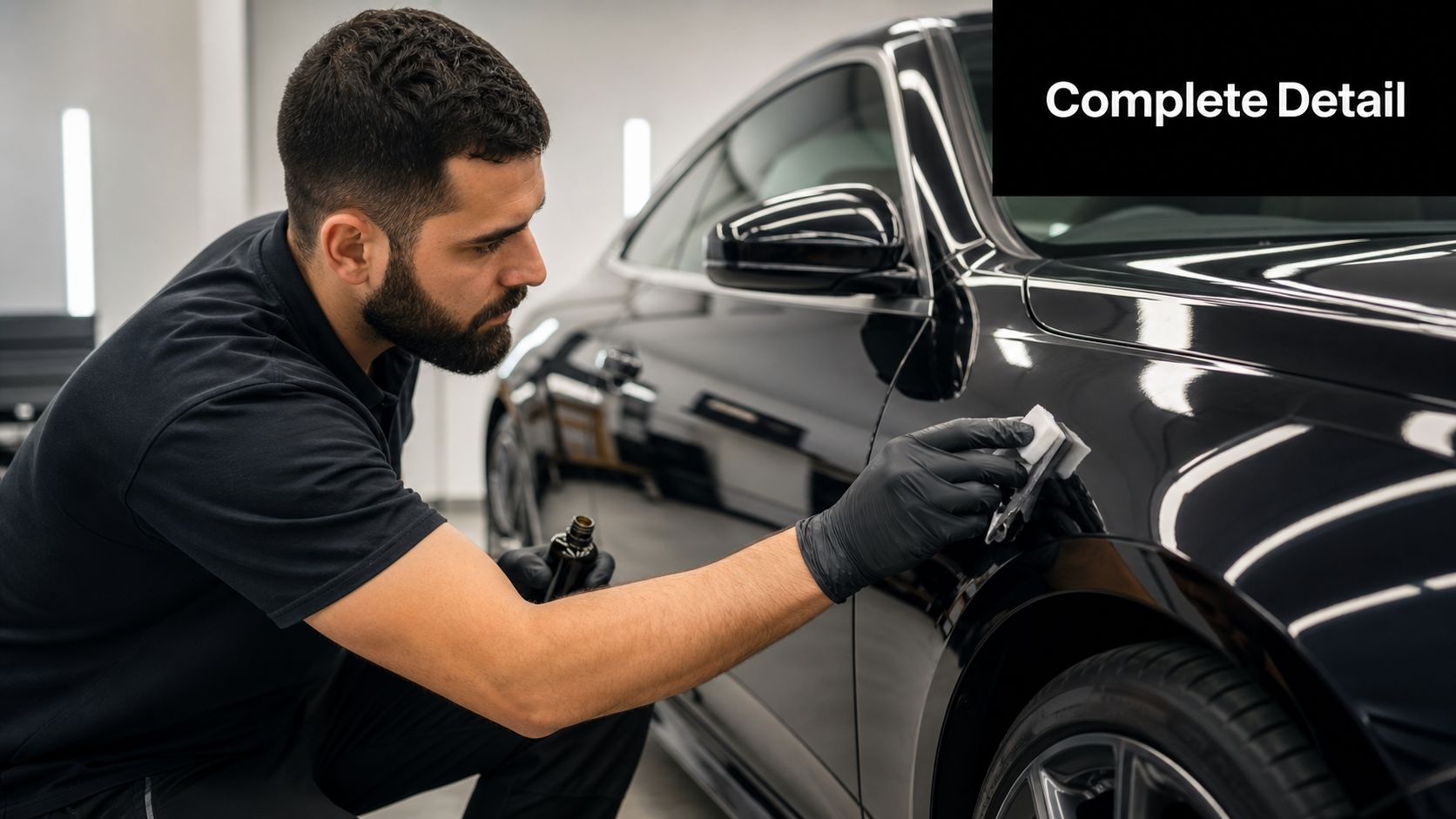
Exterior work that goes past surface cleaning
On the outside, a proper detail usually starts with a safe wash process. The point isn't just to remove dirt. It's to remove dirt without grinding it into the paint.
A typical exterior detail may include:
- Wheel and tire cleaning: Brake dust and road grime are often the dirtiest material on the vehicle, so wheels get handled early with separate tools.
- Hand wash: Many detailers use a careful wash method with dedicated mitts, buckets, and panel-by-panel rinsing to reduce marring.
- Chemical decontamination: This helps loosen bonded contaminants such as road fallout and stubborn grime that a normal wash won't remove.
- Clay treatment: A clay bar or synthetic clay media removes embedded roughness from paint and glass.
- Drying with proper towels or air tools: This avoids dragging residue across the finish.
- Polishing: If the paint has haze, oxidation, light swirls, or water-spot etching, machine polishing helps refine gloss.
- Protection: Wax, sealant, or ceramic-based protection is applied after the surface is cleaned and prepped.
The difference is easy to feel with your hand. Freshly washed paint can still feel gritty. Properly decontaminated paint feels smooth.
Interior work that changes how the vehicle feels
Interior detailing is where many drivers get the biggest quality-of-life boost. A vehicle can look decent outside and still feel worn out inside.
A full interior detail often includes these jobs:
- Vacuuming beyond the obvious: Under seats, in seat rails, around pedals, in trunk corners, and along tight trim edges.
- Carpet and upholstery cleaning: Stains and ground-in grime often need extraction, shampooing, or targeted spot treatment.
- Steam or detailed surface cleaning: Good for cup holders, buttons, cracks, vents, and textured plastics where dust packs in.
- Leather cleaning and conditioning: The goal is to remove body oils and grime without leaving the surface slick or greasy.
- Glass cleaning: Interior glass haze is one of the fastest ways to make a car feel unfinished.
- Trim protection: Plastics and vinyl benefit from products that leave them clean and natural-looking rather than shiny and sticky.
A short walk-through of professional technique helps make that concrete:
Why the order matters
A detailer who knows the trade thinks in sequence. You don't polish contaminated paint. You don't dress trim before cleaning residue out of seams. You don't shampoo carpets and then sling grime back into the cabin from dirty jambs and tools.
That order is what customers are paying for as much as the products themselves.
The best detailing work often looks effortless when it's done. It only looks that way because someone paid attention to the unglamorous steps first.
Beyond the Basics Specialty Detailing and Add-Ons
Some vehicles need more than a standard interior and exterior detail. Not because the owner is picky, but because certain problems call for specialized work.
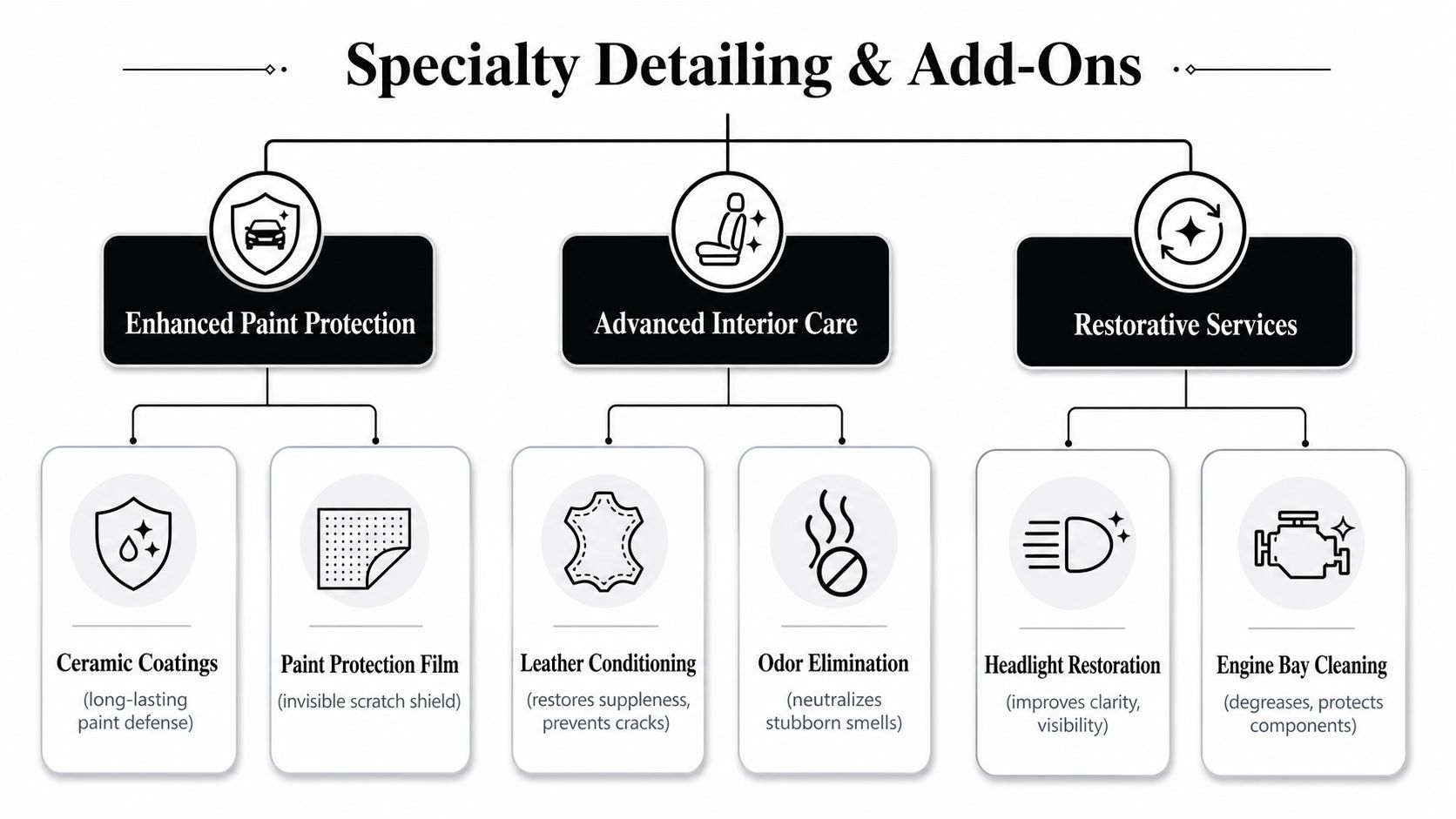
Ceramic coating and paint protection
Ceramic coating is one of the most requested upgrades because it addresses a frustration almost every driver has. You get the car looking sharp, and then weather, washing, and daily use start knocking that finish back down.
A coating is applied to prepared paint so the surface has a more durable protective layer than a simple wax-style finish. That doesn't make the vehicle invincible. It does make cleaning easier and helps maintain gloss more consistently when the prep work is done right. For a practical example of what that service involves, this ceramic coating paint protection page shows the kind of paint-focused protection many drivers ask for once they understand the maintenance side of detailing.
Restorative services that solve specific problems
A few add-ons earn their keep quickly because they fix issues that affect both looks and usability.
- Headlight restoration: Cloudy headlights age a vehicle fast and can hurt nighttime visibility.
- Engine bay cleaning: Useful when done carefully. The point isn't a greasy shine. It's controlled cleaning and dressing of accessible surfaces.
- Odor removal: This goes beyond spraying fragrance. Real odor work means locating the source and cleaning the material holding it.
- Leather conditioning: Best for interiors that feel dry, neglected, or stiff from age and exposure.
Larger vehicles and specialty units
The same principles apply to trucks, fleet units, RVs, and boats, but the work changes with the materials and scale involved. Larger interiors collect more dust and foot traffic. Exterior surfaces may include gel coat, broad side panels, ladders, compartments, or heavy-use trim.
That's where a provider like GP Mobile Car Wash & Detail fits the modern detailing model. They offer mobile and shop-based detailing, ceramic coating, fleet service, and specialized cleaning for RVs and boats using non-toxic, fragrance-free, water-conscious methods. Those details matter because specialty vehicles usually need practical service plans, not one-size-fits-all packages.
The Detailing Process What to Expect on Appointment Day
Most good appointments start with a conversation, not a hose.
The detailer looks at the vehicle, asks what bothers you most, and matches the service to the condition. That sounds simple, but it prevents a lot of disappointment. If your main issue is dog hair and interior odor, you don't need the same plan as someone trying to improve black paint that's full of wash marks.
The first inspection
A proper check-in usually covers:
- Overall condition: Paint contamination, interior buildup, stains, trim wear, and problem areas.
- Your priorities: Resale prep, family-car reset, coating prep, seasonal cleanup, or maintenance.
- Service setting: Mobile service at your home or workplace, or drop-off at a shop.
- Expectation setting: What will improve, what may only improve partially, and what likely won't change without more advanced correction.
The workflow most professionals follow
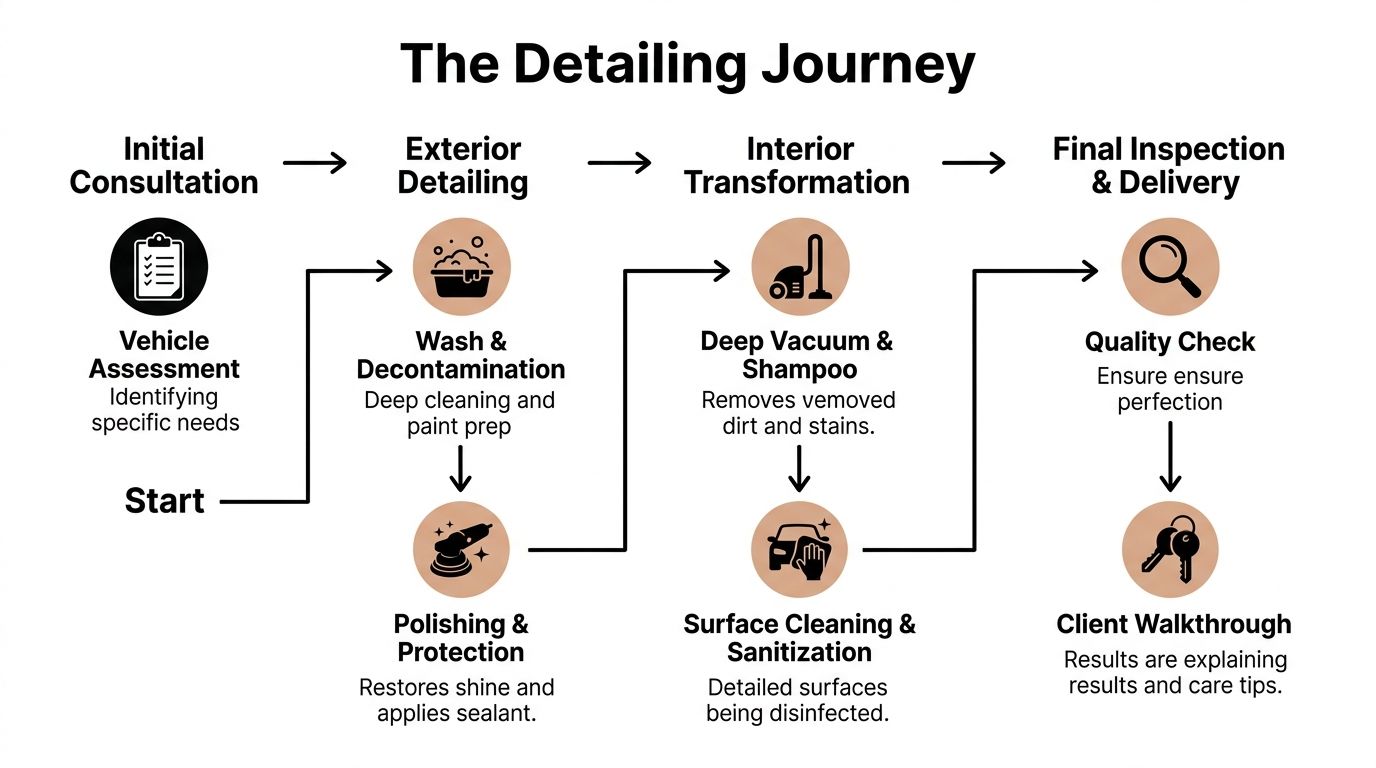
The exact order changes by package, but the sequence usually looks something like this:
- Inspection and setup
- Exterior pre-clean and wash
- Decontamination if needed
- Interior vacuuming and deep cleaning
- Paint polishing or other corrective work if included
- Protection applied to paint and interior surfaces
- Final check and customer walk-through
If you want a service-level example of that sequence, this car detailing steps page gives a useful overview of how detailers structure the work.
Why time can vary so much
Customers sometimes expect all detailing jobs to fit into the same time slot. They don't.
A lightly used commuter that gets regular upkeep is straightforward. A neglected family SUV with pet hair, food spills, mineral spotting, and packed cargo areas can take much more effort. Add polishing or coating prep and the labor expands again because every surface has to be corrected before protection is applied.
When a detail takes longer, it's usually because the vehicle needs more correction, not because someone is trying to make the job look complicated.
That's why honest inspection matters before the first tool comes out.
How to Choose the Right Car Detailing Service
A customer in Lincoln calls and says, “I got a full detail somewhere else last month, so why does my truck still feel dirty?” After a few questions, the answer is usually simple. The last service was a light cleanup sold under a bigger name.
That is why choosing a detailer starts with definitions, not price.
“Full detail” is not a regulated term. One provider may include clay treatment, stain removal, door jamb cleaning, and a real paint sealant. Another may wash the exterior, vacuum the seats, wipe the dash, and stop there. If the scope is vague, the result usually is too.
Understand why prices change
Detailing prices swing because labor swings. Condition matters as much as vehicle size, and sometimes more.
According to Synchrony's car detailing cost guide, higher-end restoration work or engine detailing can run into the four-figure range or be billed hourly. That lines up with what detailers see every day. A clean commuter sedan that gets serviced regularly is straightforward. A farm truck, family SUV, or fleet unit with pet hair, salt, stains, and packed debris takes far more hands-on time.
Flat packages are fine for maintenance work. They break down when the vehicle needs correction, not just cleaning.
Mobile versus shop service
This choice affects convenience, finish quality, and what can realistically be done in one visit.
Mobile service works well when the goal is upkeep and time savings. That is a big reason local companies like GP Mobile Car Wash & Detail offer on-site service for daily drivers, family vehicles, and fleets. If the vehicle is staying at your house or jobsite anyway, it often makes sense to bring the service to it.
A shop setting usually makes more sense for work that depends on tighter control. Paint correction, ceramic coating prep, and longer jobs benefit from stable lighting, weather protection, and enough time to let products cure properly. A good detailer should tell you which setting fits the work instead of forcing every job into the same format.
What to ask before you book
Good detailers do not get annoyed by clear questions. They answer them plainly.
Ask these before you commit:
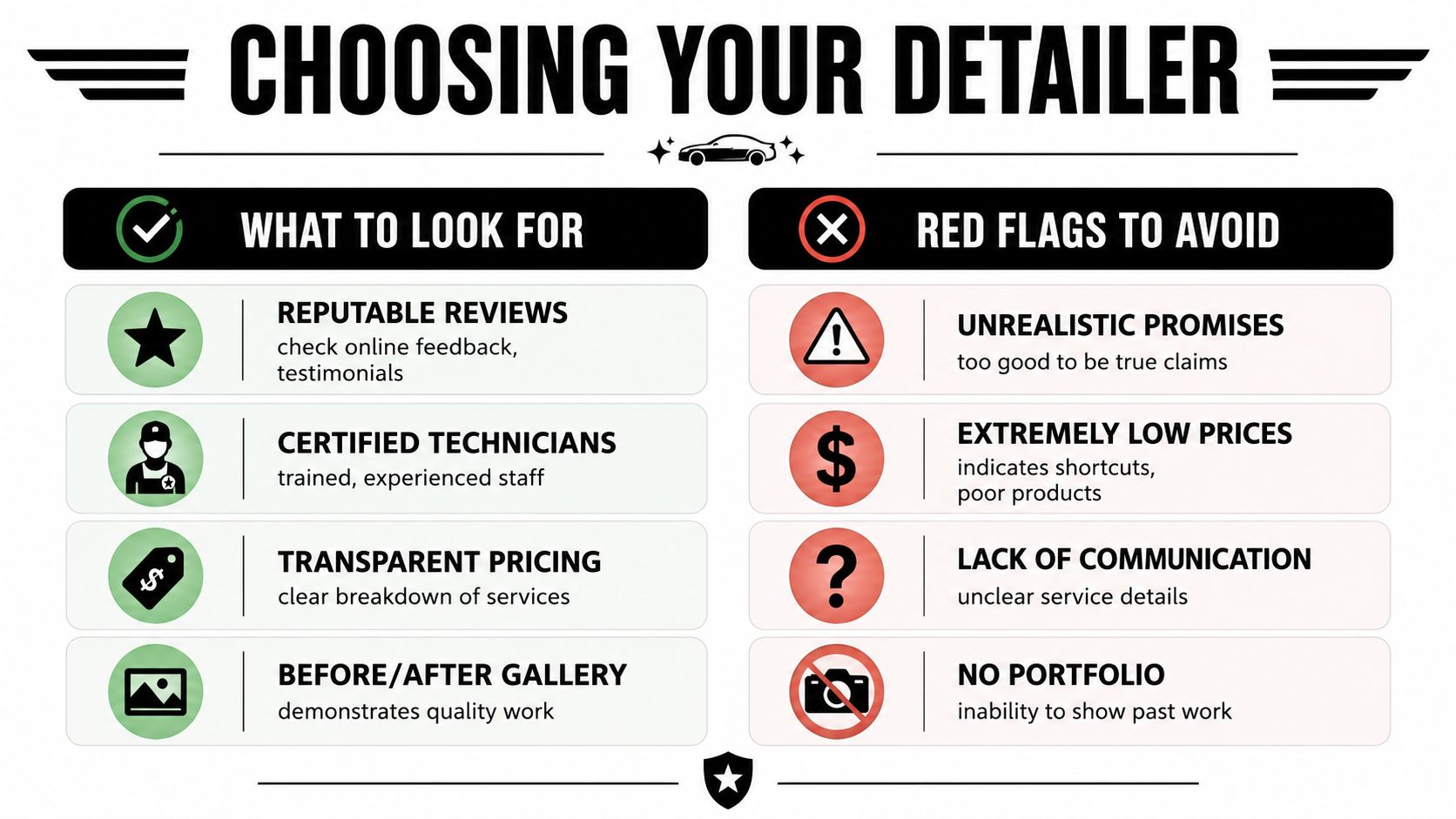
- What is included in this package? Ask for specifics, not category labels.
- What usually costs extra? Heavy pet hair, bio messes, overspray, sap, and deep stain work often fall outside a base package.
- Do you inspect the vehicle before confirming the final price? Serious shops and mobile operators usually do.
- What products and methods do you use? This matters if you care about surface safety, odors, or water-conscious cleaning.
- Can you show recent work? Before-and-after photos help, but consistent close-up results help more.
- Are you insured? If someone is working around paint, electronics, and interior materials, that question is fair.
Red flags that usually mean shortcuts
A few warning signs come up again and again.
- Vague menu language. If “premium” or “full” is doing all the work in the description, ask more questions.
- One price for every vehicle. A two-door coupe and a three-row SUV do not take the same effort.
- No discussion of limits. Honest detailers will tell you some scratches, stains, and odors may improve only partially.
- Heavy shine used as proof of quality. Greasy dressings can hide poor cleaning for a day or two.
- No interest in the vehicle's condition or use. A work truck, coated weekend car, and kid-hauler need different approaches.
The right provider usually sounds practical, not flashy. They inspect first, explain the trade-offs, and match the service to how you use the vehicle.
Frequently Asked Questions About Car Detailing
Can detailing remove scratches
Sometimes. Light surface marks and swirl-type defects often improve through polishing. Deep scratches that have gone far into the paint may only improve partially or may need body shop repair instead of detailing.
How often should a vehicle be detailed
That depends on how you use it. A daily driver with kids, pets, or long commutes needs more attention than a weekend car. Most owners do well by treating detailing as periodic maintenance rather than waiting until the vehicle feels far gone.
Should I empty my car before the appointment
Yes. Remove personal items, valuables, paperwork you need, child seats if you want full access underneath them, and anything fragile. A cleaner starting point helps the detailer spend more time on surfaces and less time moving belongings.
If you're in Lincoln or nearby and want a practical assessment of what your vehicle needs, GP Mobile Car Wash & Detail offers mobile service and shop drop-off options for interior detailing, exterior care, ceramic coating, fleet vehicles, RVs, and boats. You can book around your schedule and get a service recommendation based on your vehicle's condition, not just a generic package name.